CM Bhajan Lal Sharma at Ministry of Cooperation's 5th Foundation Day
Synopsis
Rajasthan Chief Minister Bhajan Lal Sharma joined the Ministry of Cooperation's 5th Foundation Day in New Delhi on 6 July 2026, marking five years of the Union government's dedicated cooperative ministry and signalling Rajasthan's alignment with national cooperative policy.
Key Takeaways
The Ministry of Cooperation was established on 6 July 2021 and completed five years on 6 July 2026.
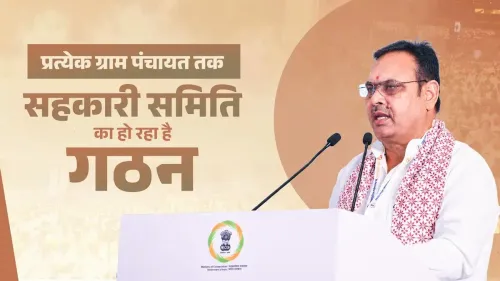
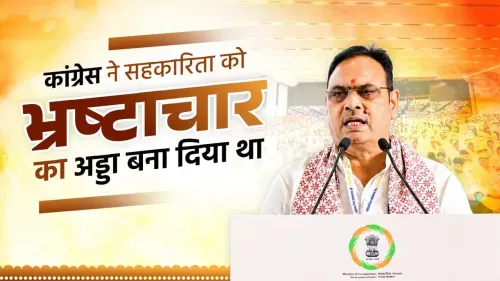
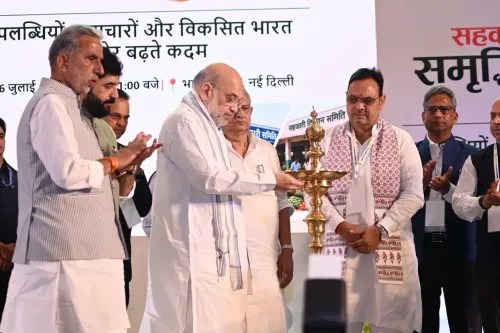
Rajasthan CM Bhajan Lal Sharma attended the foundation day ceremony in New Delhi and shared a live broadcast of the event.
The ministry was created to position cooperatives as a third pillar of the Indian economy alongside public and private sectors.
The 97th Constitutional Amendment (2011) inserted Article 43B and Part IXB, providing constitutional recognition to cooperative societies.
Rural farmers and cooperative societies in agriculture, dairy, credit and housing are the primary beneficiaries of ministry programmes.
Proposed amendments to the Multi-State Cooperative Societies Act and state-level scheme adoption in Rajasthan remain key items to watch.
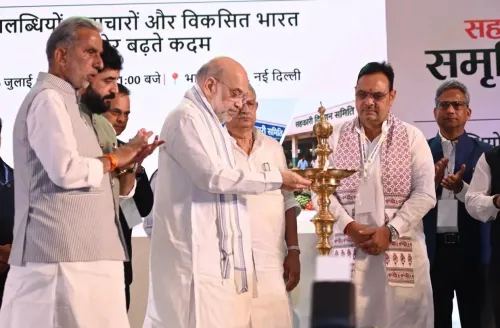
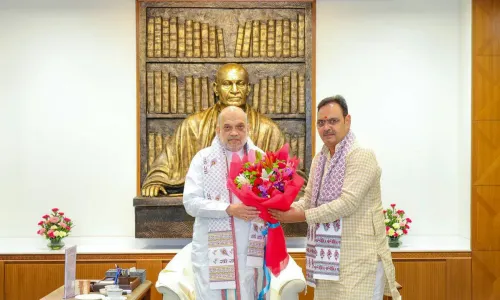
Rajasthan Chief Minister Bhajan Lal Sharma attended the 5th Foundation Day celebration of the Ministry of Cooperation in New Delhi on Monday, 6 July 2026, marking five years since the Union government established a dedicated ministry for the cooperative sector.
Context
The Ministry of Cooperation was created on 6 July 2021 by the Government of India to provide focused, dedicated attention to strengthening and modernising the country's cooperative sector. The ministry's creation was a significant structural step, positioning cooperatives as a distinct pillar of the Indian economy alongside the public and private sectors. Union Home and Cooperation Minister Amit Shah holds the cooperation portfolio and has been the principal architect of the ministry's policy framework.
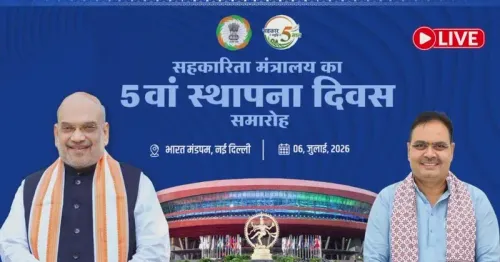
CM Sharma shared a live broadcast of the event on his official social media handle, writing 'सहकारिता मंत्रालय का 5वां स्थापना दिवस समारोह, नई दिल्ली' — ['5th Foundation Day ceremony of the Ministry of Cooperation, New Delhi']. His attendance signals Rajasthan's active engagement with central cooperative initiatives.
Policy Backdrop
The constitutional foundation for cooperatives was laid by the 97th Constitutional Amendment of 2011, which inserted Article 43B and Part IXB into the Constitution, granting formal recognition and rights to cooperative societies across India. The standalone ministry built on this framework by creating a dedicated administrative structure to translate constitutional provisions into operational policy. Key areas of focus have included agriculture, dairy, fisheries, credit cooperatives, and the push for digitalisation of cooperative institutions.
The central government's broader strategy envisions cooperatives as vehicles for rural economic empowerment, with an emphasis on expanding coverage in underserved districts and bringing uniformity to national cooperative standards. Proposed amendments to the Multi-State Cooperative Societies Act remain a legislative item to watch as the ministry enters its sixth year.
Stakeholders and Impact
Cooperative societies — member-owned institutions active in agriculture, dairy, credit and housing — are the primary beneficiaries of the ministry's programmes. Rural farmers across states like Rajasthan, which has a substantial agricultural cooperative network, stand to gain directly from improved policy coordination between the Centre and state governments. CM Sharma's presence at the event reflects an effort to align Rajasthan's state-level cooperative policies with the national framework being advanced from New Delhi.
State leaders' participation in ministry foundation day events has become a visible marker of cooperative federalism, with chief ministers demonstrating institutional buy-in for centrally driven cooperative reforms. For Rajasthan, this alignment could translate into smoother implementation of centrally sponsored cooperative schemes at the district and block levels.
What's Next
With the ministry completing five years, attention will turn to the pace of state-level adoption of central cooperative schemes in Rajasthan and other BJP-governed states. Parliamentary discussions on the proposed amendments to the Multi-State Cooperative Societies Act are expected to gather momentum in the coming legislative sessions. The anniversary event is likely to set the tone for the ministry's agenda in its sixth year, with digitalisation and rural credit access among the priorities on the table.
Point of View
Where state governments are expected to serve as active implementation partners for centrally designed cooperative reforms. For Rajasthan, a state with a large agrarian economy and extensive cooperative networks, this alignment has practical stakes beyond optics: access to central funding, scheme rollouts, and legislative support for state-level cooperative reform. As the ministry enters its sixth year, the degree to which state governments translate central policy into ground-level outcomes will be the real test of this model.
NationPress
6 Jul 2026
Frequently Asked Questions
When was the Ministry of Cooperation established in India?
The Ministry of Cooperation was established on 6 July 2021 by the Government of India to provide dedicated focus on strengthening the cooperative sector.
Who is the Union Minister for Cooperation?
Amit Shah holds the Cooperation portfolio alongside his role as Union Home Minister, making him the principal authority on national cooperative policy.
Why did Rajasthan CM Bhajan Lal Sharma attend the Ministry of Cooperation event?
CM Sharma attended the 5th Foundation Day ceremony in New Delhi to mark five years of the ministry and to signal Rajasthan's alignment with central cooperative initiatives.
What is the 97th Constitutional Amendment related to cooperatives?
The 97th Constitutional Amendment of 2011 inserted Article 43B and Part IXB into the Constitution, granting formal recognition and rights to cooperative societies across India.
What is the Multi-State Cooperative Societies Act?
The Multi-State Cooperative Societies Act governs cooperative societies that operate across more than one state in India; proposed amendments to this law are expected to be a key legislative focus as the ministry enters its sixth year.