CM Bhajan Lal Sharma Backs Secretariat Staff, Cites Key Service Reforms
Synopsis
Rajasthan CM Bhajan Lal Sharma attended a secretariat staff felicitation on 12 July 2026, reaffirming his government's commitment to employee welfare. He cited two 'historic' decisions: creation of new secretariat posts and a two-year relaxation in promotion eligibility criteria, framing both as part of his 'Aapno Agrani Rajasthan' vision.
Key Takeaways
CM Bhajan Lal Sharma attended a felicitation ceremony organised by Rajasthan Secretariat employees on 12 July 2026 .
The government has announced creation of new posts in secretariat services to address vacancies and career bottlenecks.
A two-year relaxation in the experience required for promotions has been granted to secretariat employees, described by CM Sharma as a 'historic decision.' CM Sharma framed both measures as part of his administration's commitment to the welfare of state government employees.
The moves align with a broader pattern of BJP-governed states periodically adjusting secretariat staffing and promotion rules to reduce litigation and improve bureaucratic capacity.
Detailed government orders specifying the number of new posts and cadre-wise application of the relaxation are awaited.
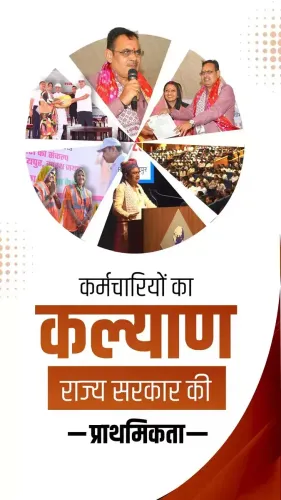
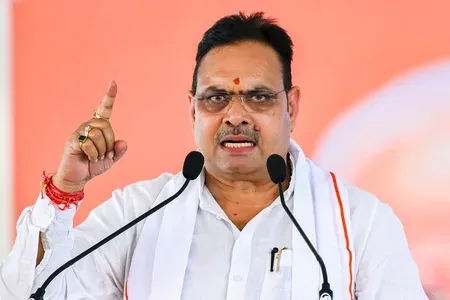
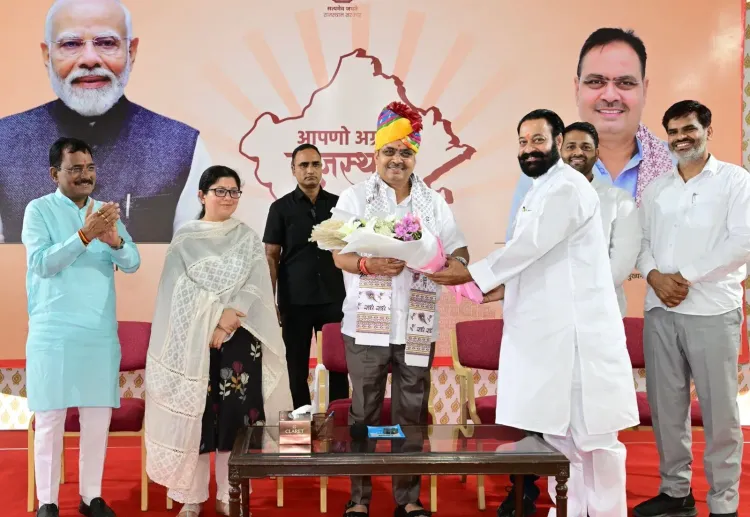
Rajasthan Chief Minister Bhajan Lal Sharma on Sunday, 12 July 2026 expressed gratitude to officers and employees of the Rajasthan Secretariat after attending a felicitation ceremony organised in his honour by the secretariat staff, reaffirming his government's commitment to the welfare of state government employees.
Addressing the gathering, CM Sharma said — in translation from Hindi — 'I am deeply grateful to all officers and employees for the immense affection and warmth shown at the felicitation ceremony organised by the secretariat family.' He added that the government is 'fully committed to protecting the interests and welfare of the hardworking employees of the state.'
Context
The event, referred to in the post as an abhinandan samaroh (felicitation ceremony), was organised by what CM Sharma called the 'secretariat family' — the collective body of officers and staff who form the administrative backbone of the Rajasthan state government. The Chief Minister's attendance and his public acknowledgement of their support signals an effort to strengthen ties between the elected government and the permanent bureaucracy.
In his post, Sharma described the energy and trust of secretariat employees as a source of 'continuous new strength' for his government's vision of building 'Aapno Agrani Rajasthan' — 'Our Leading Rajasthan' — a phrase that has become a recurring motif in his administration's public messaging.
Policy Backdrop
The Chief Minister specifically cited two decisions as evidence of his government's commitment to secretariat staff. First, the creation of new posts in secretariat services — a measure aimed at addressing long-standing vacancies and career bottlenecks. Second, a two-year relaxation in the experience required for promotions, which he described as a 'historic decision.'
Across Indian states, promotion-related rules in secretariat cadres have historically been a source of friction between employee associations and governments, often leading to litigation. Relaxing experience norms is a recognised administrative tool to ease career stagnation, and Rajasthan has seen recurring employee demands on these issues for over two decades. The formal government orders specifying the exact number of new posts and the cadre-wise application of the relaxation are expected to provide further detail.
Stakeholders and Impact
The primary beneficiaries of these decisions are officers and employees of the Rajasthan Secretariat, the central administrative apparatus responsible for policy implementation and personnel management across the state. New post creation directly expands career opportunities, while the two-year reduction in promotion eligibility criteria could accelerate upward mobility for a significant cohort of mid-career employees.
Employee associations and service unions, which have historically been vocal about promotion disputes and staffing shortfalls, are key stakeholders who will scrutinise the detailed government orders once issued. Any ambiguity in the orders could prompt representations or legal challenges from affected cadres.
What's Next
The government is expected to issue formal notifications — known as government orders — specifying the number of new secretariat posts sanctioned and the precise cadres to which the two-year experience relaxation applies. These orders will determine the actual scale of benefit to employees and will be closely watched by service associations and administrative law practitioners.
More broadly, the move fits into a pattern seen across BJP-governed states of periodic administrative recalibration to strengthen bureaucratic capacity and reduce service delivery friction — and will likely be cited by the Sharma government as a deliverable ahead of future political milestones in Rajasthan.
Point of View
CM Bhajan Lal Sharma is doing more than expressing goodwill — he is signalling that his administration views bureaucratic buy-in as essential to governance delivery. The two-year promotion relaxation, in particular, addresses a long-festering grievance in Rajasthan's administrative cadres, and its announcement in a public forum rather than a routine circular suggests deliberate political optics. This fits a recognisable BJP governing pattern of packaging administrative decisions as welfare commitments to organised employee constituencies. The real test will be in the detailed government orders: their scope will determine whether this is a substantive reform or a gesture that falls short of employee expectations.
NationPress
12 Jul 2026
Frequently Asked Questions
What did Rajasthan CM Bhajan Lal Sharma announce for secretariat employees?
CM Bhajan Lal Sharma announced two key decisions for Rajasthan Secretariat employees: creation of new posts in secretariat services, and a two-year relaxation in the experience required for promotions. He described both as 'historic decisions' reflecting his government's commitment to employee welfare.
What is the two-year relaxation in promotion rules for Rajasthan secretariat staff?
The Rajasthan government has reduced the experience required for secretariat employees to become eligible for promotion by two years. This means employees can now qualify for promotion earlier in their careers, easing a long-standing source of career stagnation in the state's administrative cadres.
What is 'Aapno Agrani Rajasthan'?
'Aapno Agrani Rajasthan,' meaning 'Our Leading Rajasthan,' is a vision phrase used by Chief Minister Bhajan Lal Sharma to describe his government's development and governance goals for the state. He referenced it in his post as the broader mission that secretariat employees' energy and trust helps drive.
Why are new posts being created in the Rajasthan Secretariat?
New posts are being created to address long-standing vacancies and career bottlenecks in the Rajasthan Secretariat, the state's central administrative body. Such measures are common across Indian states to strengthen bureaucratic capacity and improve service delivery.
What happens next after CM Sharma's secretariat welfare announcement?
The government is expected to issue formal government orders specifying the exact number of new posts sanctioned and the cadres to which the two-year promotion relaxation applies. Employee associations and administrative law practitioners will scrutinise these orders closely, and any ambiguity could prompt legal challenges.