CM Bhajan Lal Sharma Pays Tribute to Jatindranath Das on Birth Anniversary
Synopsis
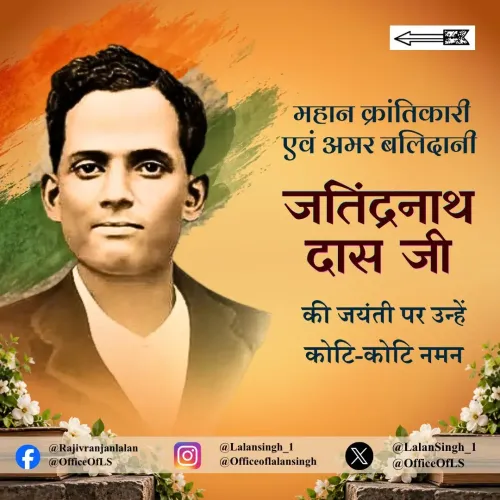
Rajasthan Chief Minister Bhajan Lal Sharma paid tribute to revolutionary martyr Jatindranath Das on his birth anniversary, honouring the freedom fighter who died after a historic 63-day hunger strike in Lahore Central Jail in 1929 demanding rights for political prisoners.
Key Takeaways
Rajasthan CM Bhajan Lal Sharma posted a tribute to Jatindranath Das on his birth anniversary on 27 October 2026 .
Jatindranath Das conducted a 63-day hunger strike in Lahore Central Jail , demanding humane treatment for political prisoners under British rule.
Das passed away on 13 September 1929 , becoming one of the most iconic martyrs of India's independence movement.
He was closely associated with Bhagat Singh and was arrested in connection with the Lahore Conspiracy Case .
CM Sharma described his sacrifice as an eternal inspiration for 'every Indian toward service to the nation.'
A young revolutionary who chose death over submission — Jatindranath Das spent 63 days on hunger strike inside Lahore Central Jail in 1929, shaking the foundations of British rule before taking his last breath on 13 September 1929. On his birth anniversary, Rajasthan Chief Minister Bhajan Lal Sharma offered heartfelt tributes to the freedom fighter, calling him an immortal martyr whose sacrifice continues to inspire every Indian toward national service.
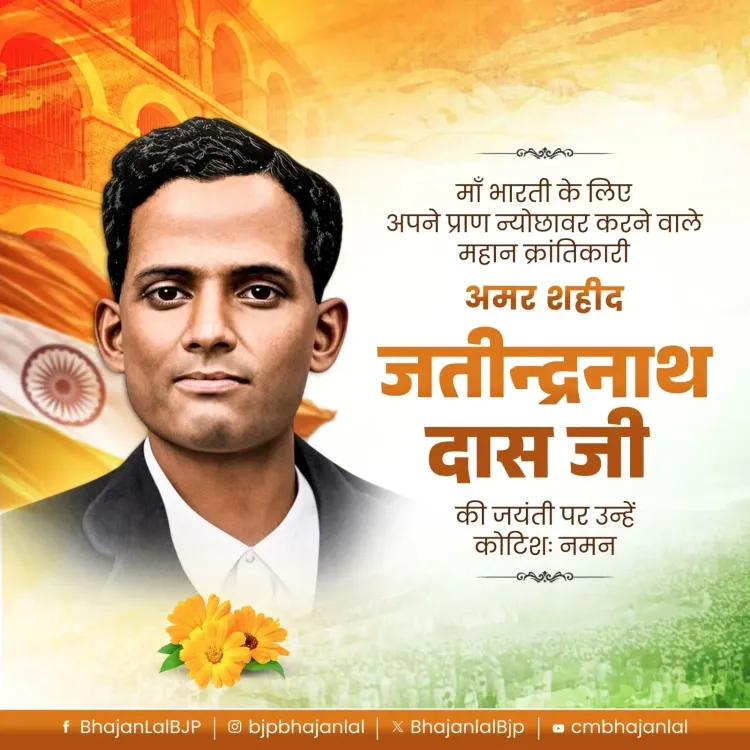
Posting on 27 October 2026, CM Sharma wrote in Hindi: '63 dinon ki aitihasik bhookh hadtal kar angrezi hukumat ki neenv hila dene wale amar balidani, Krantiveer Jatindranath Das ji ki jayanti par unhe koti-koti naman!' — ('A salute a million times over to immortal martyr and revolutionary hero Jatindranath Das, who shook the foundations of British rule with a historic 63-day hunger strike, on his birth anniversary!')
The Man Who Turned a Hunger Strike into a Political Earthquake
Jatindranath Das, also known as Jatin Das, was a close associate of Bhagat Singh and a dedicated member of the Hindustan Socialist Republican Association. Arrested in connection with the Lahore Conspiracy Case, he launched his hunger strike not for his own release but to demand humane treatment and basic rights for political prisoners held by the colonial administration. The British government refused to yield. Das did not either — and on Day 63, he was gone.
His death triggered enormous public grief across undivided India. His body was carried in a funeral procession through the streets of Lahore and later Calcutta (now Kolkata), drawing tens of thousands of mourners. It became one of the most powerful acts of passive resistance in the independence movement — a life surrendered not on a battlefield, but inside a prison cell, demanding dignity.
Why Rajasthan's CM is Invoking This Legacy Today
CM Sharma framed Das's sacrifice as an enduring call to national service, noting that his supreme sacrifice for the self-respect of the motherland and the human rights of jailed freedom fighters 'will always inspire every Indian toward service to the nation.' The tribute is part of a well-established pattern among Indian leaders across parties — particularly from the BJP — of formally marking the anniversaries of revolutionary figures from the 1920s and 1930s who pursued armed or radical resistance against colonial rule.
For Rajasthan, a state with deep roots in both princely-era nationalism and grassroots independence movements, such commemorations carry particular resonance. Annual observances on 27 October keep this chapter of history in public conversation — especially among students and younger citizens who encounter these names primarily in textbooks.
Point of View
Uncontested nationalist legacy while subtly foregrounding themes of sacrifice, resistance, and sovereignty that resonate with the BJP's ideological core. CM Sharma's framing — linking Das's hunger strike to 'self-respect of the motherland' and human rights — elevates a colonial-era prison protest into a timeless civic value. Across the political spectrum, commemorating the revolutionary generation of the 1920s–30s has become a reliable tool for statecraft-meets-history, particularly as governments revisit school curricula and public memorials. The real test is whether these annual tributes translate into sustained institutional memory — in classrooms, in archives, and in state-level commemorative infrastructure.
NationPress
27 Oct 2026
Frequently Asked Questions
Who was Jatindranath Das?
Jatindranath Das , also called Jatin Das, was an Indian revolutionary freedom fighter and associate of Bhagat Singh . He is best remembered for conducting a 63-day hunger strike in Lahore Central Jail in 1929 to demand better treatment for political prisoners, dying on 13 September 1929 .
Why did Jatindranath Das go on a hunger strike?
Jatindranath Das launched his hunger strike to demand humane treatment and basic human rights for political prisoners held by the British colonial administration in India. He refused to abandon the strike despite government pressure, and died after 63 days .
When is Jatindranath Das's birth anniversary?
Jatindranath Das's birth anniversary is observed on 27 October each year. Indian leaders and institutions mark the day with tributes and commemorative events.
What did Bhajan Lal Sharma say about Jatindranath Das?
Rajasthan Chief Minister Bhajan Lal Sharma described Jatindranath Das as an 'immortal martyr and revolutionary hero' whose supreme sacrifice for the self-respect of the motherland and the rights of jailed freedom fighters 'will always inspire every Indian toward service to the nation.'
What was the Lahore Conspiracy Case?
The Lahore Conspiracy Case was a trial initiated by the British colonial government against Bhagat Singh , Jatindranath Das , and other members of the Hindustan Socialist Republican Association in connection with the killing of British police officer John Saunders in 1928. Das was arrested as part of this case.