CM Bhajan Lal Sharma Visits Punjab, Slams Drug Menace
Synopsis
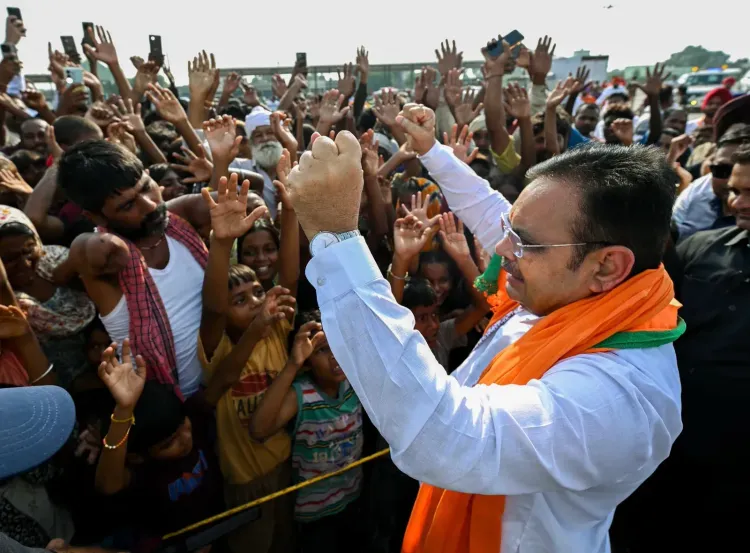
Rajasthan CM Bhajan Lal Sharma visited Firozpur's Dana Mandi in Punjab on 27 September 2026, meeting locals and condemning the state government's handling of the drug crisis, calling for a drug-free India under the Nasha Mukt Punjab Yatra banner.
Key Takeaways
Rajasthan CM Bhajan Lal Sharma visited Guru Har Sahay's Dana Mandi in Firozpur, Punjab on 27 September 2026 .
He met farmers, women, and youth and criticised the current Punjab government for failing to tackle drug abuse effectively.
Sharma argued that Punjab's holistic development is impossible without empowering and rehabilitating its drug-affected youth.
The visit was conducted under the campaigns #NashaMuktAbhiyan and #NashaMuktPunjabYatra , signalling a coordinated political outreach.
Drug abuse has been a persistent political flashpoint in Punjab for over a decade, with successive state governments facing public scrutiny on enforcement.
No official response from the Punjab government was available at the time of publishing.
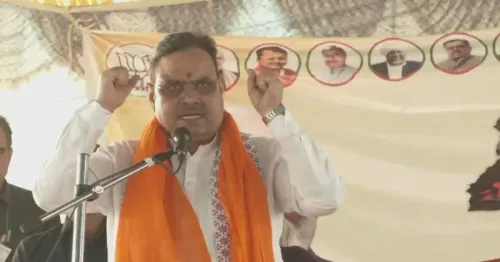
Rajasthan Chief Minister Bhajan Lal Sharma carried his anti-drug message into opposition territory on Sunday, 27 September 2026, walking into the Dana Mandi at Guru Har Sahay in Firozpur, Punjab to meet farmers, women, and youth — and to deliver a pointed indictment of the state's ruling government over what he called a spiralling drug crisis.
Speaking to the gathering, Sharma said Punjab's sacred land has long stood as a symbol of sacrifice and endeavour — 'त्याग, तपस्या और पुरुषार्थ की गौरवशाली परंपरा' ('the glorious tradition of sacrifice, penance and hard work') — but that the current state government's failures and the absence of effective action against narcotics have pushed Punjab's youth into 'serious crisis.' His visit was flagged under the hashtags #NashaMuktAbhiyan and #NashaMuktPunjabYatra, indicating an organised campaign rather than a one-off stop.
Why a Rajasthan CM Is Rallying Crowds in Firozpur
Cross-state political forays by BJP chief ministers into Congress- or AAP-governed states have become an established playbook, and Punjab — where the drug problem has shadowed every election cycle for over a decade — is a high-visibility canvas. Sharma is not the first BJP leader to make the drug crisis a rallying point in Punjab, but arriving at a grain market, surrounded by farmers and mothers, sharpens the message: this is welfare framing, not just electoral sparring.
Firozpur sits close to the Pakistan border, a corridor long associated with cross-border narcotics trafficking. Mentioning it by name grounds an otherwise broad political argument in a very specific geography of vulnerability.
The Core Demand: A Drug-Free Punjab Before Any Development Can Count
Sharma's argument was blunt: 'जब तक पंजाब का युवा सशक्त, स्वस्थ और नशामुक्त नहीं होगा, तब तक प्रदेश का समग्र विकास अधूरा रहेगा' — 'Until Punjab's youth are empowered, healthy and drug-free, the state's all-round development will remain incomplete.' The framing ties human capital to economic development, an argument that is difficult to refute regardless of party affiliation.
He closed with a call to collective responsibility: 'Let us all fulfil our duties together in building a healthy, capable and drug-free India.' The pivot from Punjab to Bharat — from a state-level criticism to a national vision — is deliberate. It widens the audience beyond Firozpur while keeping the local grievance visible.
What the Punjab Government Is Being Asked to Answer
No immediate response from the Punjab government was available at the time of publishing. The continuation of the Nasha Mukt Punjab Yatra — and whether it draws counter-messaging from Chandigarh — will be the measure of how seriously the ruling party at the state level treats the political pressure this campaign is designed to generate.
For the families who gathered at the Dana Mandi on Sunday, the politics may matter less than the question underneath it: who will actually get the drugs off their streets?
Point of View
Where the drug crisis carries genuine electoral and emotional weight. By framing the visit as a welfare initiative rather than pure political campaigning, Sharma attempts to occupy moral ground that is harder for critics to dismiss. The invocation of a 'Nasha Mukt Punjab Yatra' signals a sustained campaign rather than a single visit, suggesting the BJP sees the drug issue as a durable pressure point ahead of any future Punjab electoral cycle. Whether grassroots sentiment in Firozpur translates into durable political capital will depend on whether the campaign generates tangible relief promises or remains rhetorical.
NationPress
27 Sept 2026
Frequently Asked Questions
Why did Rajasthan CM Bhajan Lal Sharma visit Punjab?
Sharma visited Guru Har Sahay in Firozpur, Punjab to meet local residents and highlight what he described as the Punjab government's failure to address the state's drug abuse crisis among youth.
What is the Nasha Mukt Punjab Yatra?
The Nasha Mukt Punjab Yatra is an anti-drug campaign referenced in Sharma's post under the hashtags #NashaMuktAbhiyan and #NashaMuktPunjabYatra, appearing to be a structured political and social outreach initiative focused on drug-free Punjab.
What did Bhajan Lal Sharma say about Punjab's youth?
Sharma said that until Punjab's youth are empowered, healthy and drug-free, the state's all-round development will remain incomplete, calling on all citizens to collectively fulfil their duties toward a drug-free India.
Is drug abuse a big problem in Punjab?
Yes. Punjab has faced persistent challenges with substance abuse among its youth for over a decade, with successive state governments criticised for inadequate enforcement, and the issue frequently surfacing in state elections.
What is the significance of Firozpur for the drug issue?
Firozpur district is located near the India-Pakistan border, a corridor historically associated with cross-border narcotics trafficking, making it a particularly symbolic location for an anti-drug campaign.