CM Bhajan Lal warns: no lapse in animal treatment
Synopsis
Rajasthan's Chief Minister's Office on 15 July 2026 issued a sharp warning under CM Bhajan Lal Sharma's name, stating that negligence in treating animals will not be tolerated at any level — signalling tightened accountability across the state's veterinary services.
Key Takeaways
The Chief Minister's Office of Rajasthan posted a zero-tolerance warning on 15 July 2026 regarding negligence in animal treatment.
The directive was addressed to Chief Minister Bhajan Lal Sharma and shared under the campaign hashtag #आपणो_अग्रणी_राजस्थान .
The post stated no lapse in veterinary care will be accepted 'at any level', targeting officials across all tiers of the system.
Rajasthan's livestock sector supports crores of rural and agrarian households, making veterinary accountability a significant economic concern.
The directive fits a recurring pattern of the BJP-led Rajasthan government issuing top-down accountability signals on public service delivery.
Follow-up departmental inspections or formal orders from the Animal Husbandry Department are expected to operationalise the warning.
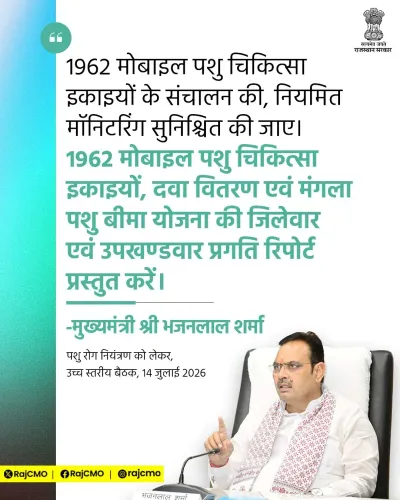
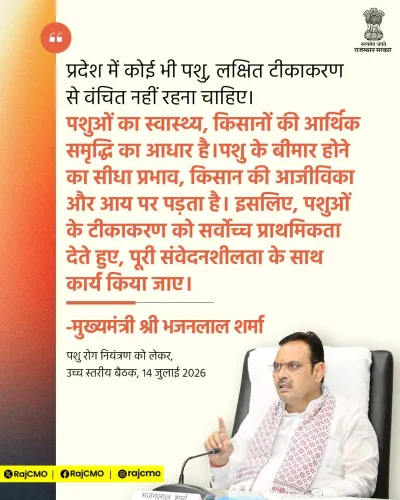
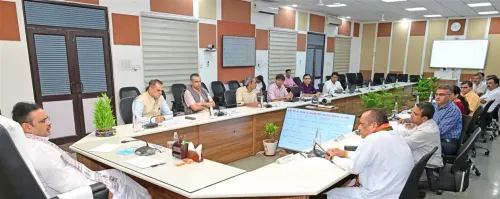
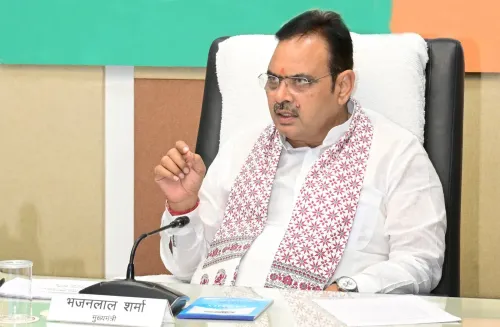
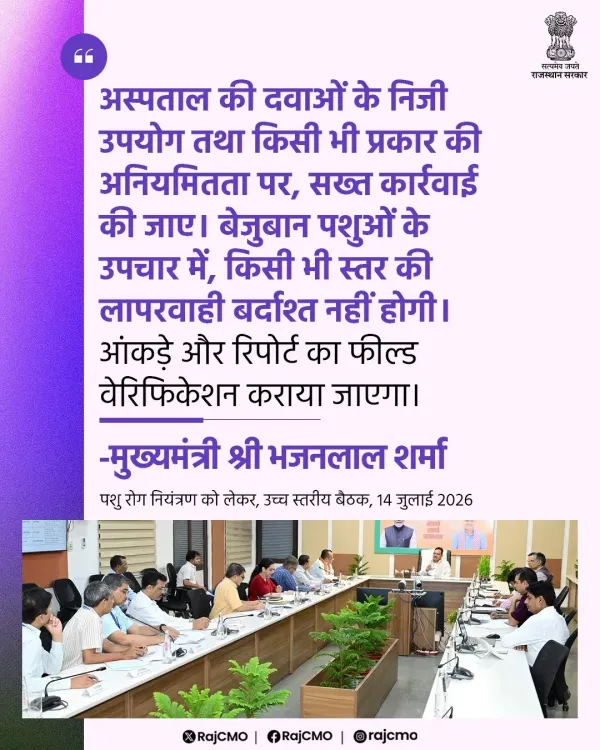
The Chief Minister's Office of Rajasthan issued a firm directive on Wednesday, 15 July 2026, warning that negligence in the treatment of voiceless animals will not be tolerated at any level, with the message addressed directly to Chief Minister Bhajan Lal Sharma.
The post, shared under the hashtag #आपणो_अग्रणी_राजस्थान ('Our Leading Rajasthan'), stated in Hindi: 'बेजुबान पशुओं के उपचार में, किसी भी स्तर की लापरवाही बर्दाश्त नहीं होगी' — 'In the treatment of voiceless animals, negligence at any level will not be tolerated.'
Context
The directive signals a zero-tolerance stance from the Rajasthan government on accountability within the state's veterinary and animal husbandry services. The message, attributed to the CMO and tagged to Chief Minister Bhajan Lal Sharma, places responsibility squarely on officials at every tier of the delivery chain.
Rajasthan's rural economy is deeply intertwined with livestock — cattle, camels, goats, and sheep sustain millions of agrarian households across the state. Any systemic lapse in veterinary care carries direct economic and humanitarian consequences for these communities.
Policy Backdrop
The BJP-led government in Rajasthan, which came to power after the 2023 state assembly elections, has consistently framed its governance messaging around service delivery accountability. The animal husbandry sector sits within a broader state push to modernise rural infrastructure and ensure last-mile access to essential services.
The CMO's communications have repeatedly struck a 'zero tolerance' tone on lapses in public services — from health to agriculture — making this directive consistent with an established pattern of top-down accountability signalling. The hashtag #आपणो_अग्रणी_राजस्थान ('Our Leading Rajasthan') is a recurring campaign identifier used by the government to frame its development agenda.
Stakeholders and Impact
The primary stakeholders are Rajasthan's livestock owners — numbering in the crores — who depend on functional veterinary infrastructure for the health and productivity of their animals. Delays or negligence in treatment can result in significant economic losses for small and marginal farmers.
Veterinary staff and officials across district and block levels are the direct targets of the accountability message. The directive implies that departmental oversight will be tightened, with officials at all levels expected to maintain standards in animal care facilities and field services.
What's Next
The directive is likely to prompt follow-up action from the state's Animal Husbandry Department, potentially including inspections of veterinary facilities, performance reviews of field staff, and updated protocols for reporting treatment lapses. Whether formal departmental orders follow will be a key indicator of how the government intends to operationalise this public warning.
For livestock-dependent communities across Rajasthan, the signal from the top is clear: the government is positioning animal welfare as a non-negotiable component of its rural governance agenda going forward.
Point of View
Making it harder for mid-level officials to dismiss it as routine. The animal husbandry sector is politically significant in Rajasthan, where livestock ownership cuts across caste and community lines in rural constituencies the BJP cannot afford to alienate. Whether this translates into structural reform of veterinary services or remains a reputational signal will define its long-term policy value.
NationPress
15 Jul 2026
Frequently Asked Questions
What did the Rajasthan CMO say about animal treatment on 15 July 2026?
The Rajasthan CMO posted that negligence in the treatment of voiceless animals will not be tolerated at any level, tagging Chief Minister Bhajan Lal Sharma in the message.
Who is Bhajan Lal Sharma?
Bhajan Lal Sharma is the Chief Minister of Rajasthan from the Bharatiya Janata Party, having been sworn in following the BJP's victory in the 2023 Rajasthan state assembly elections.
What is the hashtag Aapno Agrani Rajasthan?
'Aapno Agrani Rajasthan' — meaning 'Our Leading Rajasthan' — is a campaign identifier used by the Rajasthan government to brand its development and governance communications on social media.
Why is animal husbandry important in Rajasthan?
Rajasthan's rural economy is heavily dependent on livestock, with cattle, camels, goats, and sheep sustaining millions of farming households; lapses in veterinary care directly impact their livelihoods.
What action is expected after the Rajasthan CMO's animal welfare warning?
The directive is expected to prompt inspections of veterinary facilities and performance reviews of field staff by the state's Animal Husbandry Department, with possible formal orders to follow.