CM Bhajan Lal Welcomes Cabinet Nod to Extend FTSC Scheme 5 Years

Synopsis
The Union Cabinet under PM Modi has approved a five-year extension of the Fast Track Special Courts scheme for rape and POCSO cases. Rajasthan CM Bhajan Lal Sharma welcomed the decision, calling it a vital step toward speedier, victim-centred justice for women and children.
Key Takeaways
The Union Cabinet approved the extension of the Fast Track Special Courts (FTSC) scheme for the next five years .
The scheme deploys dedicated courts to hear rape, sexual assault, and POCSO Act cases across India.
The scheme was first launched in 2019 under the Nirbhaya Fund , establishing 1,023 fast-track courts .
It was previously extended once in 2021 for two years; the latest nod could keep it running until 2031 .
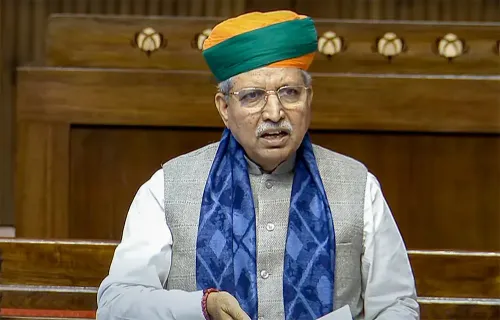
Rajasthan CM Bhajan Lal Sharma welcomed the decision, emphasising faster hearings, faster clearance of pending cases, and a safer environment for victims and witnesses.
Actual impact depends on state-level operationalisation — funding, judicial appointments, and infrastructure deployment.
Justice for rape survivors and child abuse victims just got a five-year guarantee. Rajasthan Chief Minister Bhajan Lal Sharma on Wednesday, November 4, 2026, welcomed the Union Cabinet's decision — taken under the leadership of Prime Minister Narendra Modi — to extend the Fast Track Special Courts (FTSCs) scheme for the next five years, calling it a decisive step toward swift, victim-centred justice.
What the Cabinet Cleared — and Why It Matters
The Union Cabinet approved the continuation of the FTSC scheme, which deploys dedicated courts to hear cases of rape, sexual assault, and offences against children under the Protection of Children from Sexual Offences (POCSO) Act. CM Sharma said the decision will accelerate hearings, clear the backlog of pending cases, and — critically — provide victims and vulnerable witnesses a 'safe and conducive environment' during proceedings.
That last point carries real weight. Witness intimidation and re-traumatisation during prolonged trials are recurring criticisms of India's ordinary criminal courts in sensitive cases. A dedicated fast-track mechanism strips away some of that institutional friction.
From Nirbhaya Fund to a Standing Infrastructure
The FTSC scheme was first launched in 2019, backed by the Nirbhaya Fund, with the Union government establishing 1,023 fast-track courts across states. It was extended once before, in 2021, for a further two years. The latest cabinet decision — if it runs the full term — would take the scheme into 2031, effectively transforming what began as an emergency measure into a permanent feature of India's judicial architecture for sensitive crimes.
The extension also complements a string of legislative reinforcements over the same period: amendments to the POCSO Act and successive revisions to the Code of Criminal Procedure (CrPC) all pointed toward faster, more protective proceedings for child and women victims. Courts alone cannot fix pendency, but courts built only for this purpose reduce the daily competition for docket space that slows ordinary sessions courts.
What to Watch as the Scheme Rolls Forward
The real test, as always, will be in the states. Central approval unlocks funding, but the actual operationalisation of FTSCs — sanction of posts, appointment of judges, allocation of infrastructure — varies sharply from state to state. Rajasthan, governed by CM Sharma's BJP administration, will be expected to move quickly on its own FTSC complement. How fast states absorb and deploy the renewed central support will determine whether the five-year extension translates into real reductions in trial pendency.
For survivors and advocacy groups who have long argued that delayed justice is itself a form of injustice, the cabinet's nod is a signal — but the signal becomes meaningful only when a victim walks into a functional courtroom and walks out with a verdict.
Point of View
The scheme is quietly becoming a structural pillar of India's lower judiciary. For the BJP, the decision offers a dual dividend: a governance deliverable on women's safety and a visible contrast with the pendency that dogs ordinary courts. The harder political question is whether state governments — across party lines — will fund and staff the courts fast enough to match the optics of the cabinet announcement.
NationPress
4 Nov 2026
Frequently Asked Questions
What are Fast Track Special Courts (FTSCs) in India?
Fast Track Special Courts are dedicated courts set up to hear cases of rape, sexual assault, and offences against children under the POCSO Act. They were launched in 2019 using the Nirbhaya Fund to cut down trial delays in sensitive criminal cases.
How long has the FTSC scheme been extended in 2026?
The Union Cabinet approved an extension of the FTSC scheme for five years , continuing its operation for the next five years from the date of approval.
How many Fast Track Special Courts were set up under the scheme?
The scheme initially established 1,023 Fast Track Special Courts across India when it was launched in 2019 .
Why did CM Bhajan Lal Sharma welcome the FTSC scheme extension?
CM Bhajan Lal Sharma welcomed the decision because it promises faster hearings in rape and POCSO cases, quicker clearance of pending cases, and a safer environment for victims and sensitive witnesses during trial.
What is the Nirbhaya Fund and how does it relate to FTSCs?
The Nirbhaya Fund is a dedicated central government corpus created after the 2012 Delhi gang-rape case to finance initiatives for women's safety and justice. It provided the initial funding for the FTSC scheme when it was launched in 2019 .