CM Bhajanlal eyes Khatiapura as Jaipur's next rail hub
Synopsis
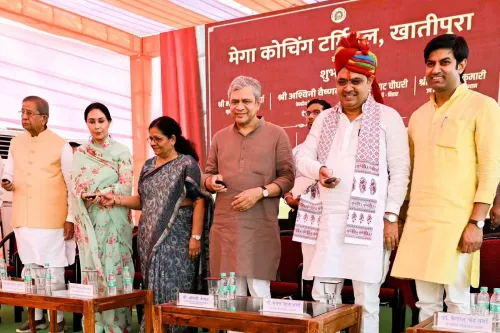
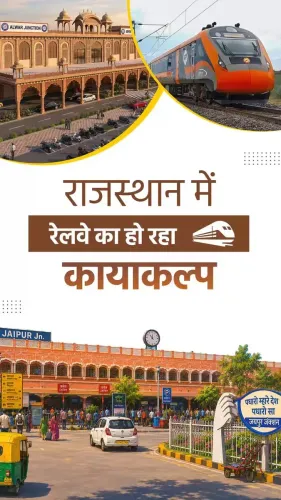
The Rajasthan CMO announced on 22 June 2026 that Khatiapura in Jaipur is being developed as a major railway centre, aligning with national schemes like Amrit Bharat Station and the Western Dedicated Freight Corridor under CM Bhajanlal Sharma's infrastructure push.
Key Takeaways
The Rajasthan CMO officially signalled on 22 June 2026 that Khatiapura in Jaipur is being developed as an important railway hub.
Chief Minister Bhajanlal Sharma was tagged in the post, indicating direct political ownership of the initiative.
The development aligns with the national Amrit Bharat Station Scheme (2023), which includes multiple Rajasthan stations.
The Western Dedicated Freight Corridor passing through Rajasthan has increased demand for secondary rail nodes in the capital region.
The initiative falls under the broader PM Gati Shakti multimodal infrastructure framework.
Concrete project scope, funding, and timelines for Khatiapura are yet to be confirmed through formal announcements.
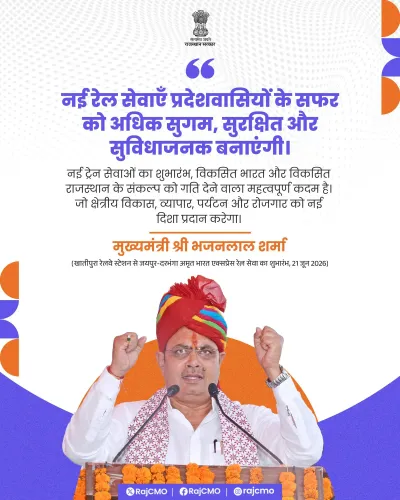
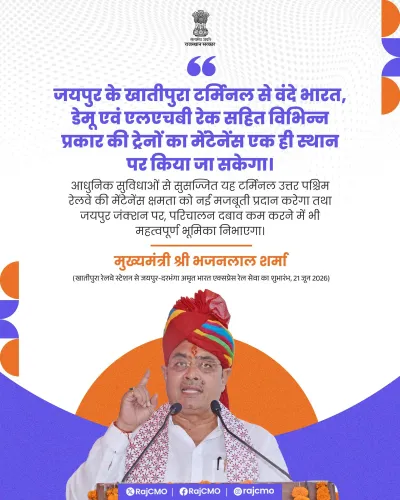
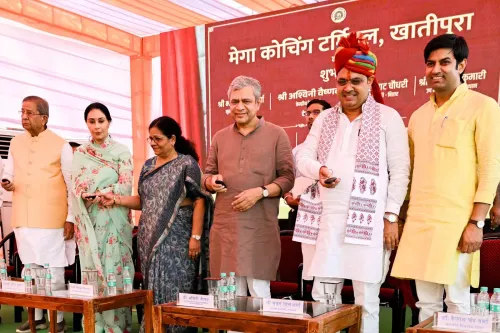
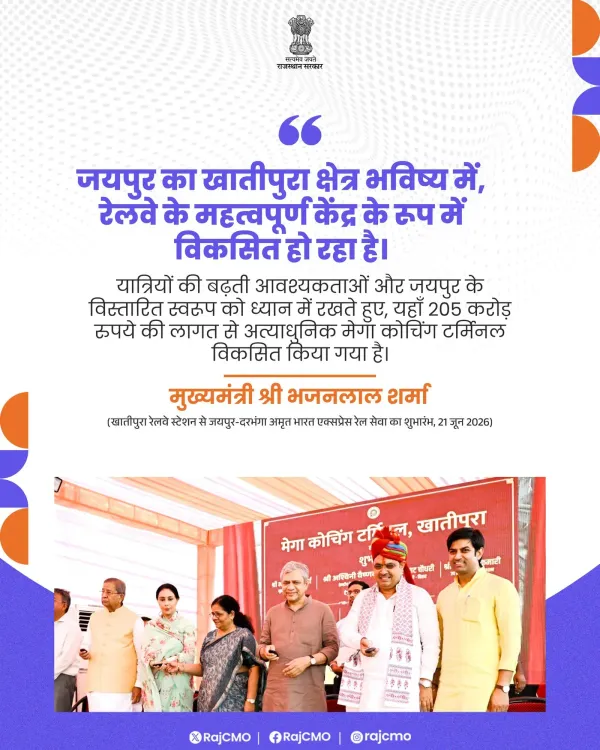
The Chief Minister's Office of Rajasthan on Monday, 22 June 2026, signalled that Khatiapura, a locality in the state capital Jaipur, is being developed into a significant railway centre, tagging Chief Minister Bhajanlal Sharma in the post under the hashtag #आपणो_अग्रणी_राजस्थान ('Our Pioneering Rajasthan').
The post stated in Hindi: 'जयपुर का खातीपुरा क्षेत्र भविष्य में, रेलवे के महत्वपूर्ण केंद्र के रूप में विकसित हो रहा है' — translated as 'The Khatiapura area of Jaipur is being developed as an important railway centre in the future.'
Context
Khatiapura is a locality within Jaipur, Rajasthan's capital and one of northern India's fastest-growing urban centres. The area has been identified for rail-related growth as the city expands its transport footprint. The CMO's post positions Khatiapura as a node that will gain strategic importance in the coming years.
Chief Minister Bhajanlal Sharma, who has led the BJP government in Rajasthan since December 2023, has made infrastructure development a stated priority of his administration. Tagging him directly in the post underscores the political ownership the state government is claiming over this initiative.
Policy Backdrop
The announcement aligns with several overlapping national frameworks. The Amrit Bharat Station Scheme, launched in 2023, targets the redevelopment of railway stations across India, with multiple Rajasthan stations included in its scope. Upgrades under this scheme aim to improve passenger amenities, capacity, and urban integration.
Separately, the Western Dedicated Freight Corridor passes through Rajasthan, with commissioning phases progressing from 2020 onward. This corridor has reshaped logistics flows in the state and created demand for secondary freight and passenger nodes beyond the main Jaipur Junction. Khatiapura's positioning as a future hub fits within this broader pattern of distributing rail load across multiple city-level centres.
Both initiatives sit under the wider PM Gati Shakti framework, which seeks to integrate multimodal infrastructure — road, rail, and logistics — into a unified national grid. State governments, including Rajasthan, have aligned their urban planning priorities with this central architecture.
Stakeholders and Impact
Jaipur residents, daily rail commuters, and local businesses in and around Khatiapura stand to be the most immediate beneficiaries if the area's rail infrastructure is expanded. Improved connectivity at a secondary hub can ease congestion at the main city terminus and open up surrounding localities for commercial and residential development.
For the broader Rajasthan economy, a strengthened rail node in the capital supports the state's logistics competitiveness — particularly relevant as industrial and warehousing activity grows along the freight corridor belt. Local businesses and traders could gain faster access to national supply chains.
What's Next
The immediate signals to watch are Railway Budget allocations or tender announcements specifically earmarking funds for Khatiapura facilities. Any related discussion in the Rajasthan State Assembly or formal project approvals from Indian Railways would confirm the timeline and scope of the development.
As Rajasthan continues to position itself as a logistics and connectivity corridor state, Khatiapura's evolution into a rail hub — if backed by concrete investment — could serve as a template for similar secondary nodes across other Tier-1 cities in the state.
Point of View
The BJP government in Rajasthan is tying his personal brand to the state's rail modernisation story ahead of what will likely be a period of heightened project announcements. The framing fits a wider pattern among state governments of positioning themselves as active facilitators of central railway investment rather than passive recipients. Whether Khatiapura translates into a fully realised rail hub will depend on the speed of formal approvals and budget commitments from Indian Railways — the real test of the political promise embedded in this post.
NationPress
22 Jun 2026
Frequently Asked Questions
What is Khatiapura and why is it in the news?
Khatiapura is a locality in Jaipur, Rajasthan, that the state government has identified for development as a significant railway hub. It came into focus after the Rajasthan CMO posted on 22 June 2026 about its future rail importance.
What railway projects are planned for Khatiapura Jaipur?
The exact project scope and timelines have not been officially confirmed, but the development is expected to align with national schemes such as the Amrit Bharat Station Scheme and the PM Gati Shakti framework for multimodal connectivity.
What is the Amrit Bharat Station Scheme and does it cover Rajasthan?
The Amrit Bharat Station Scheme, launched in 2023, is a national programme to redevelop railway stations with improved amenities and capacity. Multiple stations in Rajasthan are included under this scheme.
Who is CM Bhajanlal Sharma and what is his role in Rajasthan's infrastructure push?
Bhajanlal Sharma is the Chief Minister of Rajasthan, leading the BJP government since December 2023. Infrastructure development, including rail connectivity, has been a stated priority of his administration.
How does the Western Dedicated Freight Corridor affect Jaipur?
The Western Dedicated Freight Corridor passes through Rajasthan and has been progressively commissioned since 2020. It has increased demand for secondary rail and freight nodes in the Jaipur region, making areas like Khatiapura strategically relevant.