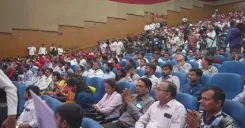
CM Bhajanlal Sharma Holds Jan Sunwai in Bharatpur
Synopsis
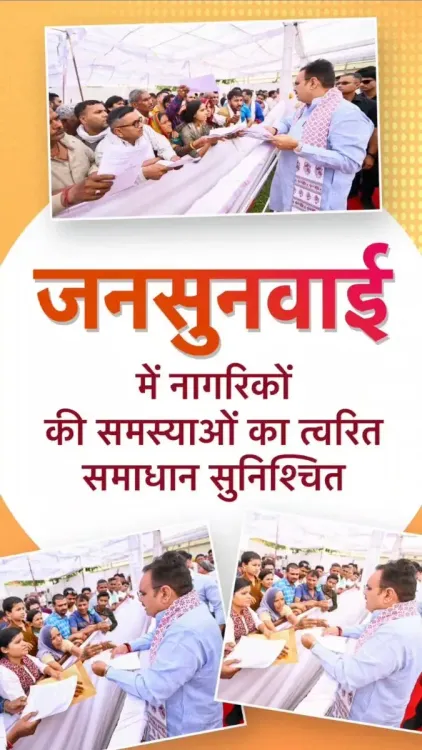
Chief Minister Bhajanlal Sharma held a jan sunwai at Bharatpur Circuit House on 25 May 2026, personally hearing citizen grievances and directing district officials to ensure swift, transparent, and quality resolution of public complaints.
Key Takeaways
CM Bhajanlal Sharma conducted a jan sunwai at Bharatpur Circuit House on 25 May 2026 .
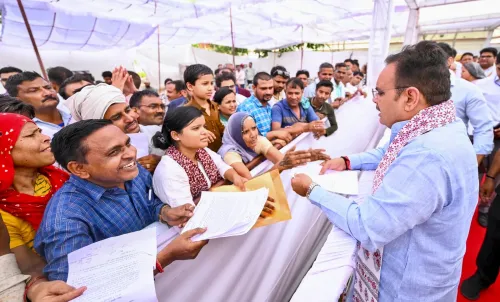
He personally met citizens and heard their petitions, complaints, and problems with direct attention.
Sharma directed officials present to resolve grievances swiftly, transparently, and with quality .
The jan sunwai is a long-standing district-level grievance mechanism used by Rajasthan administrations since at least the early 2000s .
Sharma has held the office of Chief Minister since December 2023 , with public outreach identified as a governance priority.
Resolution rates from the Bharatpur hearing will serve as a practical indicator of the mechanism's effectiveness.
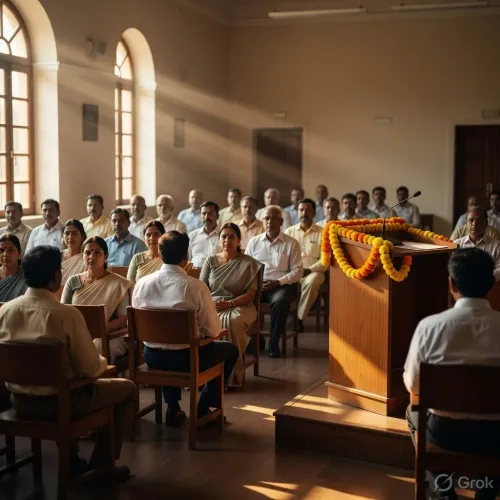
Chief Minister Bhajanlal Sharma conducted a jan sunwai (public grievance hearing) at the Bharatpur Circuit House on Monday, 25 May 2026, meeting citizens directly to hear their complaints, petitions, and problems.
What Happened
The Chief Minister's Office of Rajasthan announced that Sharma met with ordinary citizens at the Bharatpur Circuit House, listening to their grievances with personal attention. The post states he heard 'parivednaayen, shikaayatein evam samasyaayen' — petitions, complaints, and problems — from those present.
Sharma directed officials in attendance to ensure that public grievances are resolved 'swiftly, transparently, and with quality.' The hearing reflects the Chief Minister's approach of taking administrative accountability directly to district-level citizens rather than confining it to the state capital.
Context
The jan sunwai is a long-standing governance mechanism in Rajasthan, used by successive state administrations since at least the early 2000s as a structured forum for citizens to raise issues directly with senior leadership. These hearings are typically held across districts on a rotating basis.
Bharatpur, located in eastern Rajasthan, is a significant administrative and cultural district. Holding the hearing at the local Circuit House — the traditional government rest-and-administration facility — follows established protocol for such district-level engagements.
Policy Backdrop
Bhajanlal Sharma assumed office as Chief Minister of Rajasthan in December 2023, with administrative accountability and direct public outreach identified as priorities of his government. The jan sunwai format aligns with that stated agenda by placing the Chief Minister in direct contact with citizens outside Jaipur.
District-level grievance hearings are also seen as a check on bureaucratic delays, giving citizens a channel that bypasses lower administrative tiers where complaints can stall. Sharma's instruction to officials — emphasising speed, transparency, and quality of resolution — echoes directives issued at similar hearings across Indian states.
Stakeholders and Impact
The primary beneficiaries are common citizens of Bharatpur district who brought forward unresolved complaints to the Chief Minister's hearing. District officials present were directly tasked with follow-through, raising the administrative stakes for timely resolution.
For the broader population of Rajasthan, the hearing signals that the CM-led jan sunwai circuit continues to function at the district level. Citizens in other districts may anticipate similar hearings as part of a wider outreach schedule.
What's Next
The measurable test of Monday's hearing will be the resolution rate of complaints logged at Bharatpur. Observers and local representatives are likely to track whether the Chief Minister's directive to officials translates into documented follow-up action.
Any expansion of the jan sunwai schedule to additional districts — and the pace at which grievances from this hearing are formally closed — will indicate how effectively the mechanism functions beyond the symbolic value of the CM's presence.
Point of View
Transparent, and quality' resolution is notable for its three-pronged framing, suggesting the government is aware of past criticism that such hearings produce promises without follow-through. For a Chief Minister who entered office in December 2023 on an administrative reform platform, the frequency and geographic spread of these hearings will be watched as a measure of intent versus execution. The real political dividend — or deficit — will come from whether grievance closure data from hearings like Bharatpur is made publicly available.
NationPress
24 Sept 2026
Frequently Asked Questions
What is a jan sunwai and why does the CM hold one?
A jan sunwai is a structured public grievance hearing where senior government officials, including the Chief Minister, meet citizens directly to hear and act on their complaints. Rajasthan has used this format since at least the early 2000s as a way to bypass bureaucratic delays and give citizens direct access to leadership.
Where did CM Bhajanlal Sharma hold the jan sunwai on 25 May 2026?
The jan sunwai was held at the Bharatpur Circuit House in eastern Rajasthan on 25 May 2026 .
What did CM Bhajanlal Sharma instruct officials at the Bharatpur hearing?
Sharma directed officials present to ensure that public grievances are resolved swiftly, transparently, and with quality — a three-part standard he set for follow-up action.
Who is Bhajanlal Sharma?
Bhajanlal Sharma is the Chief Minister of Rajasthan, having assumed office in December 2023 . His administration has emphasised direct public outreach and administrative accountability as governance priorities.
How often does the Rajasthan CM hold district-level jan sunwais?
Jan sunwais are held on a periodic, rotating basis across Rajasthan's districts. The exact schedule for 2026 has not been publicly confirmed, but the Bharatpur hearing on 25 May 2026 is part of this ongoing district-level circuit.