CM Bhajanlal Urges Rajasthan Residents to Guard Against Heatwave
Synopsis
Chief Minister Bhajanlal Sharma has appealed to Rajasthan residents to drink adequate water, care for children and the elderly, and follow state health department guidelines as severe heat and the Nautapa period grip the state.
Key Takeaways
CM Bhajanlal Sharma issued a public health appeal on 28 May 2026 amid severe heatwave conditions and the Nautapa period in Rajasthan.
Residents were urged to drink adequate water and incorporate heat-protection measures into their daily routines.
Special care was called for regarding children, the elderly, and people who are unwell .
The CM directed people to follow guidelines issued by the state administration and Health Department of Rajasthan .
The advisory aligns with NDMA's national heat-wave mitigation framework and Rajasthan's annual heat-action plan practice.
District-level follow-up measures, including possible cooling centres and hospital preparedness orders , are expected in coming days.
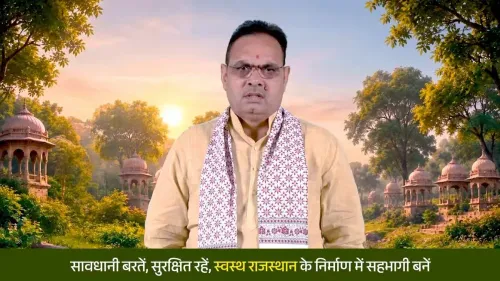
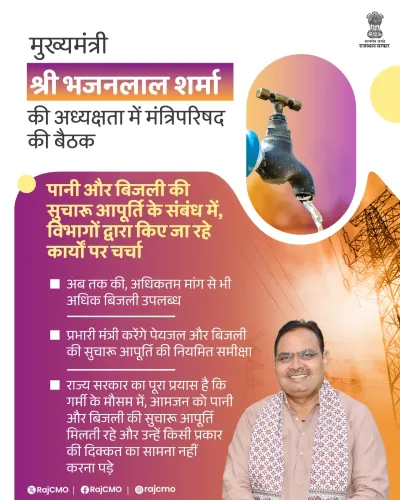
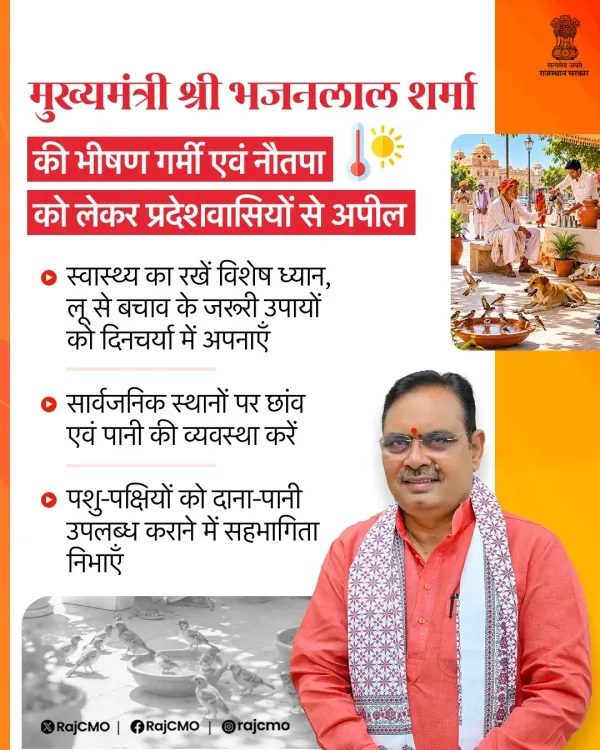
The Chief Minister's Office of Rajasthan announced on Thursday, 28 May 2026 that Chief Minister Bhajanlal Sharma has appealed to residents across the state to take special care of their health amid severe summer heat and the ongoing Nautapa period, urging them to incorporate protective measures into their daily routines.
In his appeal, CM Bhajanlal Sharma called on people to drink adequate quantities of water, take care of children, the elderly, and those who are unwell, and to strictly follow guidelines issued by the state administration and the Health Department of Rajasthan. He also conveyed his wishes for the good health of all residents of the state.
Context
Nautapa — nau meaning nine and tapa meaning heat — refers to a traditional nine-day period of intense heat in northern and western India that typically falls in late May or early June according to the traditional Hindu calendar. Rajasthan, India's largest state by area, is characterised by arid and semi-arid terrain, making it one of the most heat-vulnerable regions in the country. Summer temperatures in the state's desert districts regularly exceed 45 degrees Celsius, placing significant stress on public health infrastructure.
The Chief Minister's public appeal comes at a time when northwest India has been experiencing prolonged and intensifying heat-wave conditions. The advisory specifically highlights vulnerable groups — children, the elderly, and the infirm — as requiring heightened attention from families and communities.
Policy Backdrop
Rajasthan has a standing practice of releasing annual heat-action plans and public advisories ahead of and during the summer season, a practice maintained across successive state administrations. These plans are aligned with the framework established by the National Disaster Management Authority (NDMA), which issued national guidelines for heat-wave preparation and mitigation in 2016 and has updated them in subsequent years.
The state's Health Department and district administrations are designated as the primary bodies for issuing operational directives, coordinating hospital preparedness, and managing emergency responses during heat events. The CM's appeal reinforces the institutional chain by directing residents to follow those official guidelines.
Stakeholders and Impact
The advisory is directed at all residents of Rajasthan, with particular emphasis on households that include children, senior citizens, or people with pre-existing health conditions — groups identified as most susceptible to heat-related illness such as heat exhaustion and heat stroke. Community caregivers, ASHA workers, and local health volunteers are implicitly called upon to extend outreach to vulnerable individuals who may not have access to regular health information.
The broader public is urged to make behavioural adjustments — principally increased hydration and avoidance of outdoor exposure during peak heat hours — as first-line defences. These measures carry no cost and can be adopted immediately, making them the most scalable public health intervention available at the household level.
What's Next
Attention will now turn to whether district-level administrations in Rajasthan follow up the CM's appeal with concrete operational orders, such as opening cooling centres, extending hospital emergency capacity, or suspending outdoor labour during peak afternoon hours. Forecasts from the India Meteorological Department for northwest India in the coming days will determine the duration and severity of the current heat spell. Should temperatures remain extreme beyond the Nautapa window, further advisories or emergency measures from the state government are likely.
Point of View
The CM is reinforcing institutional accountability rather than leaving it to bureaucratic channels alone. The emphasis on vulnerable groups mirrors a wider national shift in disaster communication toward targeted, equity-aware messaging. Whether the appeal translates into measurable on-ground action — cooling centres, hospital surge capacity, labour protections — will be the real test of Rajasthan's heat-resilience governance.
NationPress
21 Oct 2026
Frequently Asked Questions
What did CM Bhajanlal Sharma say about the Rajasthan heatwave?
CM Bhajanlal Sharma appealed to all Rajasthan residents to drink sufficient water, take special care of children, the elderly, and the sick, and follow guidelines issued by the state administration and Health Department to protect themselves from the severe heat and Nautapa period.
What is Nautapa and why is it significant in Rajasthan?
Nautapa is a traditional nine-day period of intense heat in northern and western India, typically occurring in late May or early June. In Rajasthan, which has large arid and semi-arid zones, Nautapa can push temperatures well above 45 degrees Celsius, making it one of the most health-critical periods of the year.
What precautions should Rajasthan residents take during the heatwave?
According to the CM's appeal, residents should drink adequate water regularly, avoid unnecessary outdoor exposure during peak heat hours, and take extra care of children, senior citizens, and unwell individuals. They should also follow all directives issued by the Rajasthan Health Department and district administration.
What is Rajasthan's heat-action plan?
Rajasthan releases annual heat-action plans aligned with NDMA national guidelines, covering public advisories, hospital preparedness, and district-level emergency responses. The Health Department and district administrations are the primary bodies responsible for implementing these plans.
Which groups are most at risk during a heatwave in Rajasthan?
Children, the elderly, and people with pre-existing illnesses are considered the most vulnerable during heatwaves. CM Bhajanlal Sharma specifically highlighted these groups in his appeal, urging families and communities to ensure their care and protection.