CM Bhajan Lal urges Rajasthan residents to stay safe during Nautapa heat
Synopsis
Rajasthan Chief Minister Bhajan Lal Sharma issued a Nautapa heat advisory on 29 May 2026, urging residents to stay hydrated, avoid peak-hour sun, protect vulnerable groups, set up roadside water kiosks, and provide water and grain for birds and animals.
Key Takeaways
Rajasthan CM Bhajan Lal Sharma issued a public heat advisory on 29 May 2026 amid rising Nautapa temperatures.
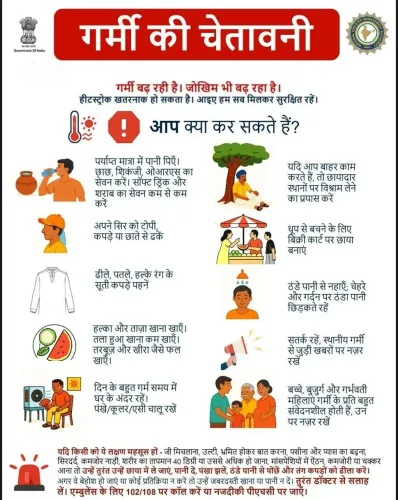
Residents were urged to drink plenty of water and fluids and avoid stepping out in strong sunlight.
Special care was called for children, the elderly, and the sick.
Citizens were encouraged to set up pyaau (roadside cold-water kiosks) for passers-by as a community-service measure.
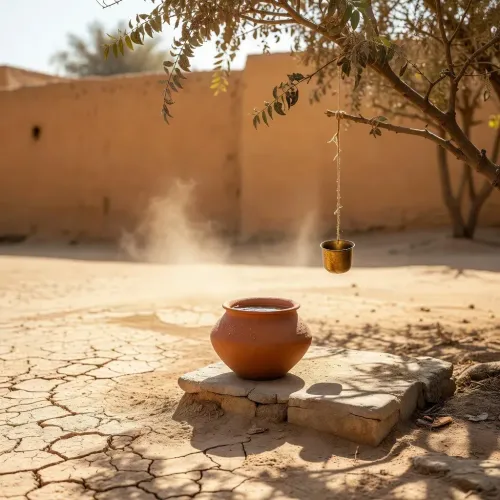
The advisory also asked households to place grain and water for birds and animals on rooftops and in courtyards.
The appeal aligns with NDMA heatwave guidelines and Rajasthan's annual summer heat action plan framework.
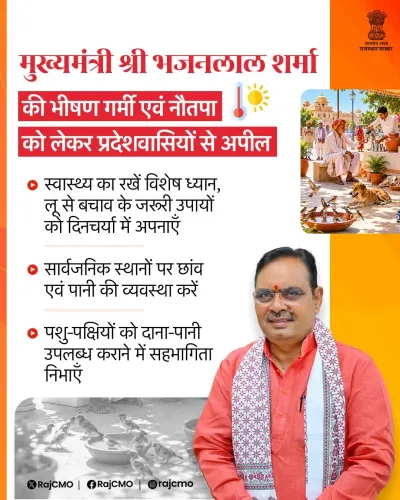
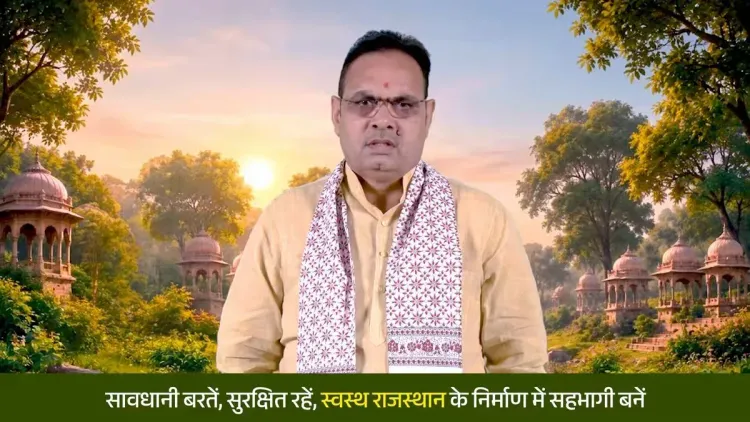
Rajasthan Chief Minister Bhajan Lal Sharma on Friday, 29 May 2026, issued a public appeal urging residents across the state to take precautions as temperatures continue to rise during Nautapa, the traditional nine-day period of peak summer heat. In a post on X, the Chief Minister called on citizens to stay hydrated, avoid stepping out in direct sunlight, and pay special attention to children, the elderly, and the sick.
Writing in Hindi, Sharma addressed his message to 'mere pyare pradeshwasiyo' ['my dear fellow residents of the state'], warning that temperatures in Rajasthan are climbing sharply on account of Nautapa. 'Your alertness is your greatest protection in this heat,' he said, urging people to drink plenty of water and fluids and to limit outdoor exposure during peak afternoon hours.
Context
Nautapa refers to a roughly nine-day window, typically falling in late May and early June, when the sun is positioned over the Rohini lunar constellation and temperatures in north and west India reach their annual peak. In Rajasthan, an arid and semi-arid state, this period regularly sees mercury climbing well past 45°C in several districts, placing vulnerable populations at acute risk of heat stroke and dehydration.
The Chief Minister's appeal comes as the state enters one of the most demanding stretches of the summer calendar. The advisory is consistent with annual heat-action communications the Rajasthan government has issued each May-June season in coordination with meteorological warnings.
Policy Backdrop
Rajasthan has maintained a framework of summer heat advisories and heat action plans since at least 2019, aligned with guidelines issued by the National Disaster Management Authority (NDMA). Those guidelines emphasise hydration, access to shade, and the establishment of community water points — all elements that Sharma's post explicitly echoes.
The Chief Minister went beyond a standard safety advisory by calling on citizens to set up 'pyaau' [roadside water kiosks] offering cold drinking water to passers-by, and to place grain and water on rooftops and courtyards for birds and animals. This community-service dimension reflects the NDMA model of distributed, citizen-led heat response rather than purely government-driven relief.
Stakeholders and Impact
The advisory directly concerns Rajasthan's population of roughly 8 crore residents, with particular urgency for children, senior citizens, outdoor labourers, and livestock. Birds and stray animals, which lack access to natural water sources as ponds dry up, are explicitly named as a concern — an unusual inclusion that broadens the appeal into an environmental welfare message.
Community organisations, resident welfare associations, and individual households are the primary actors the Chief Minister is calling upon. By framing water distribution as an expression of 'seva aur samvedanshilta ki sanskriti' ['a culture of service and sensitivity'], the appeal carries a social-mobilisation tone alongside its public-health purpose.
What's Next
Attention will now turn to whether the state activates additional administrative measures — such as opening cooling shelters, extending water-tanker operations in drought-prone districts, or issuing formal heat-emergency orders — should temperatures remain extreme through June 2026. Meteorological bulletins for the coming weeks will be closely watched as an indicator of whether the current Nautapa cycle intensifies or eases. The Chief Minister's public communication signals that the administration is in active monitoring mode ahead of any such escalation.
Point of View
But the explicit call to care for birds and animals adds a pastoral, culturally resonant layer that standard government advisories rarely include. By framing citizen action as an expression of 'service and sensitivity,' the message doubles as soft political communication — projecting a compassionate, accessible leadership image ahead of the harshest weeks of summer. The appeal also implicitly signals that the state has not yet moved to formal emergency measures, suggesting temperatures, while serious, have not yet triggered the administrative threshold for declared heat emergencies. How quickly the government follows up with on-ground relief infrastructure will determine whether this remains a symbolic gesture or the opening move of a structured seasonal response.
NationPress
20 Sept 2026
Frequently Asked Questions
What is Nautapa and why is it dangerous in Rajasthan?
Nautapa is a traditional nine-day period of peak summer heat, typically in late May to early June, when temperatures in Rajasthan regularly exceed 45°C, posing serious risks of heat stroke and dehydration.
What precautions did CM Bhajan Lal Sharma recommend during Nautapa?
CM Sharma urged residents to drink plenty of water and fluids, avoid going out in strong sunlight, take special care of children, the elderly, and the sick, and set up roadside water kiosks for passers-by.
What is a pyaau and why did the CM ask people to set one up?
A pyaau is a roadside kiosk that provides free cold drinking water to passers-by. CM Sharma called on citizens to set up pyaaus as a community-service gesture during the extreme summer heat.
Does Rajasthan have an official heatwave action plan?
Yes, Rajasthan has maintained annual summer heat advisories and heat action plans since at least 2019, coordinated with meteorological warnings and aligned with NDMA heatwave guidelines.
Who is most at risk during the Rajasthan heatwave?
Children, senior citizens, people who are ill, outdoor workers, and animals and birds are considered most vulnerable during Rajasthan's peak summer heat period.