CM Bhajanlal addresses Commonwealth mediation meet in Jaipur
Synopsis
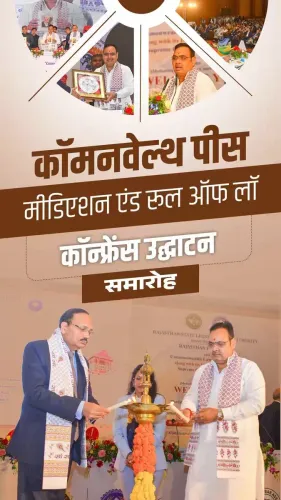
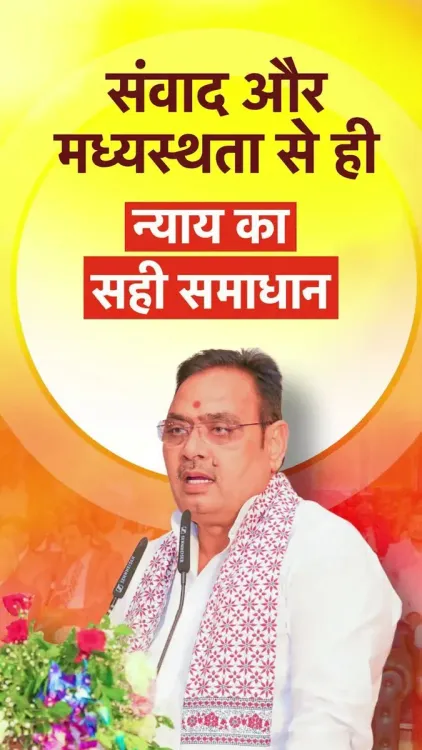
Rajasthan CM Bhajanlal Sharma addressed the Commonwealth Peace Mediation Conference in Jaipur on 1 August 2026, presided over by Supreme Court Judge Justice Suryakant. Sharma called mediation a paradigm shift — from courtroom victory-or-defeat to collaborative resolution — framing the event as a new global direction for justice systems.
Key Takeaways
Rajasthan CM Bhajanlal Sharma addressed the Commonwealth Peace Mediation Conference in Jaipur on 1 August 2026 .
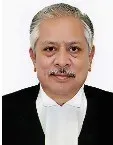
The conference was presided over by Supreme Court Judge Justice Suryakant .
Sharma described mediation as moving 'beyond winning and losing' toward collaborative resolution.
He framed the event as 'the beginning of a new thought, a new direction, and a new global perspective in the justice system.' India's Mediation Act, 2023 provides the statutory foundation for institutionalised alternative dispute resolution in the country.
Rajasthan's hosting fits a pattern of Indian states engaging with Commonwealth-linked judicial initiatives to advance court-backlog reduction.
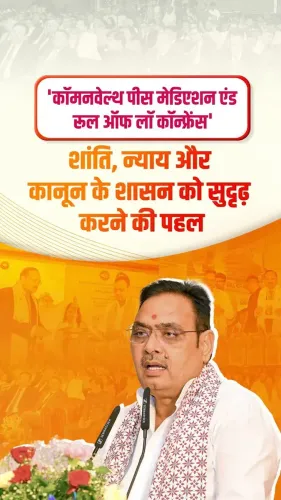
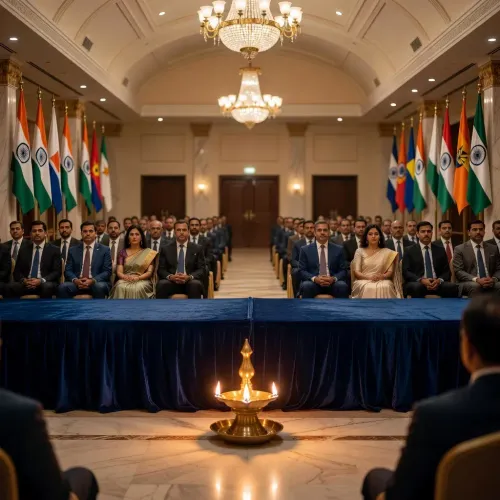
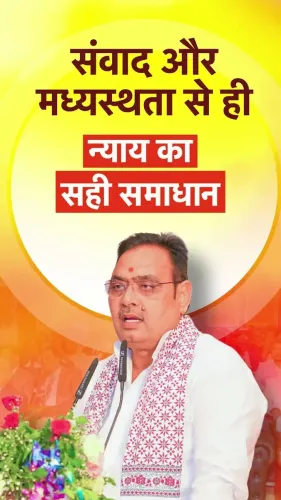
Justice over victory — that was the message Rajasthan Chief Minister Bhajanlal Sharma carried to an international audience in Jaipur on Saturday, 1 August 2026, when he addressed the Commonwealth Peace Mediation Conference presided over by Supreme Court Judge Justice Suryakant. Sharma argued that mediation does not ask who wins or loses — it asks how both sides can walk away with a solution.
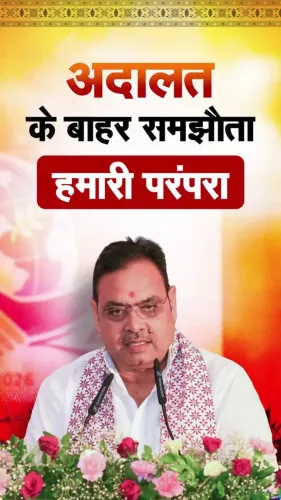
Speaking at the conference, Sharma framed the gathering as more than a legal symposium. 'This international conference,' he said, 'is the beginning of a new thought, a new direction, and a new global perspective in the justice system.' He pushed back against the courtroom-as-battlefield model: 'We often think that justice means the victory of one side or the defeat of the other — but the most beautiful thing about mediation is that it moves beyond winning and losing, and speaks of resolution.'Why mediation, why now
India's Mediation Act, 2023 gave formal statutory backbone to alternative dispute resolution across the country, institutionalising what had largely been a voluntary, case-by-case practice. The law created a framework for pre-litigation mediation and recognised mediated settlement agreements as enforceable — a significant shift from treating mediation as a soft option on the fringes of the court system. Rajasthan's hosting of a Commonwealth-linked mediation forum fits a broader pattern: Indian states have increasingly positioned themselves as venues for international legal dialogue, partly to spotlight their judicial reform credentials and partly to build pressure for reducing court backlogs — a chronic problem across India's district and high courts.Jaipur as a stage for judicial diplomacy
The choice of Jaipur is deliberate. The Rajasthan capital has a track record of hosting national and international conferences, and the presence of a sitting Supreme Court judge in the chair lends the event institutional weight that goes beyond a state government initiative. It signals that the apex judiciary and sub-national governments are aligned on pushing mediation into the mainstream. For Sharma, the address is also a moment of political positioning — aligning his administration with a reform agenda that resonates both domestically and within Commonwealth judicial circles. The hashtag #आपणो_अग्रणी_राजस्थान ('Our Forward Rajasthan') underscores the branding: Rajasthan as a state that leads, not follows.Whether the conference produces concrete follow-through — new state-level mediation centres, legislative amendments in the Rajasthan assembly, or bilateral judicial exchange programmes — will be the real test of Saturday's rhetoric.
Point of View
Institution-backed legal reform rather than partisan policy. It positions the state as a proactive player in India's post-Mediation Act ecosystem, where states that build infrastructure and visibility around ADR stand to attract both investment and judicial goodwill. The 'win-win over win-lose' framing is also politically safe: it signals modernity and global alignment without antagonising any constituency. Watch whether this translates into budgeted mediation centres or remains a conference moment.
NationPress
15 Sept 2026
Frequently Asked Questions
What is the Commonwealth Peace Mediation Conference?
It is an international conference focused on mediation as an alternative to adversarial court proceedings, held in Jaipur on 1 August 2026 and presided over by Supreme Court Judge Justice Suryakant.
What did Rajasthan CM Bhajanlal Sharma say at the mediation conference?
Sharma said the conference marks a new global direction for justice systems and argued that mediation's greatest strength is moving beyond courtroom victory-or-defeat to focus on resolution for all parties.
What is India's Mediation Act 2023?
The Mediation Act, 2023 institutionalised mediation as a formal alternative dispute resolution process in India, making mediated settlement agreements legally enforceable and encouraging pre-litigation mediation.
Who is Justice Suryakant?
Justice Suryakant is a judge of the Supreme Court of India with experience in constitutional and civil matters, who presided over the Commonwealth Peace Mediation Conference in Jaipur.
Why is Rajasthan hosting international legal conferences?
Indian states, including Rajasthan, have increasingly hosted international legal forums to highlight alternative dispute resolution as a tool for reducing court backlogs and to engage with Commonwealth judicial networks.