Rajasthan ranks 2nd in India in mediation case resolution, HC judge says
Synopsis
Rajasthan has climbed to second place nationally in resolving court cases through mediation — a fact spotlighted at a 52-nation Commonwealth legal summit in Jaipur. With India's judicial backlog in the tens of millions, the CPMC-2026 conference and its forthcoming Jaipur Peace Mediation Declaration could set a new global template for faster, people-centric justice.
Key Takeaways
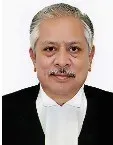
Rajasthan ranks second in India in resolving cases through mediation, according to Acting Chief Justice Justice Sanjeev Prakash Sharma .
The Commonwealth Peace Mediation and Rule of Law Conference (CPMC-2026) opened on 31 July 2026 in Jaipur , drawing delegates from 52 Commonwealth nations .
The three-day conference runs until 2 August 2026 and will conclude with the Jaipur Peace Mediation Declaration .
Solicitor General Tushar Mehta cited India's cultural tradition of dialogue, invoking the Ramayana and Mahabharata as precedents for mediation before conflict.
RSLSA Member Secretary Hari Om Attri said cases resolved through mediation take months rather than the years they might spend in courts.
Participants include judges from Zambia , Sri Lanka , the Bahamas , the UK , Singapore , Kenya , and several other Commonwealth jurisdictions.
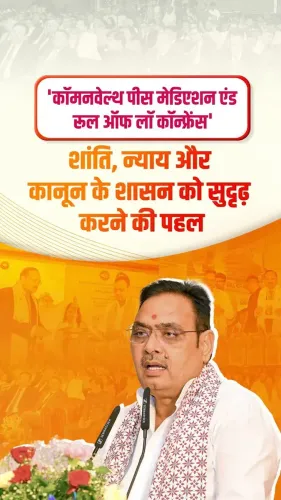
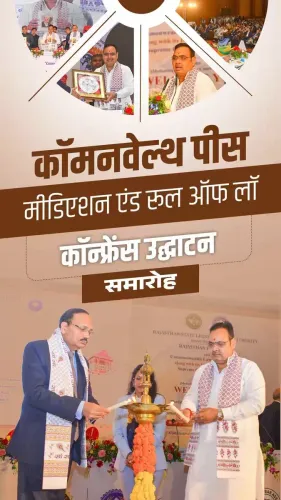
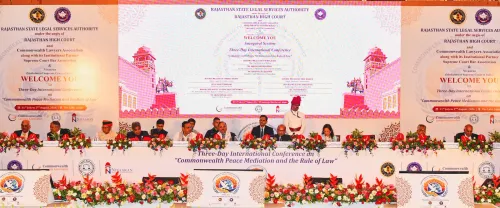
Rajasthan has secured the second position in India for resolving disputes through mediation, Acting Chief Justice of the Rajasthan High Court Justice Sanjeev Prakash Sharma announced on Friday, 31 July 2026, at the inauguration of the Commonwealth Peace Mediation and Rule of Law Conference (CPMC-2026) in Jaipur. The three-day international gathering, held at The Lalit Hotel, brought together legal luminaries from 52 Commonwealth nations to advance mediation as a cornerstone of accessible justice.
Rajasthan's Mediation Milestone
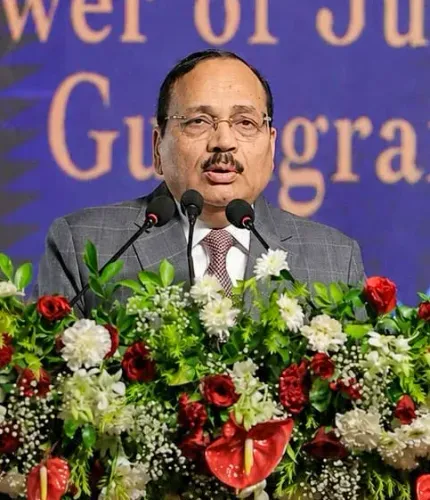
Justice Sharma highlighted that Rajasthan's achievement reflects the broader vision of Chief Justice of India Justice Surya Kant — to transform mediation into an instrument for strengthening social harmony and institutional trust. 'A modern legal system should not merely deliver justice but also ensure that the most marginalised sections of society are able to participate in the justice delivery process,' Justice Sharma said.
Organisers noted that the state has resolved thousands of disputes through mediation, positioning Rajasthan as a national model for alternative dispute resolution (ADR).
Key Voices at the Inaugural Session
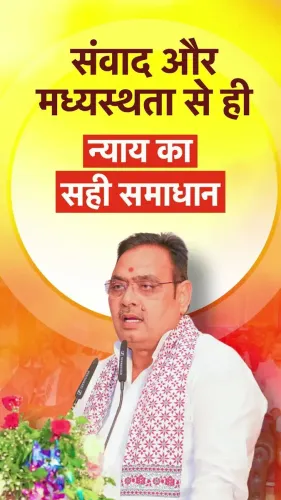
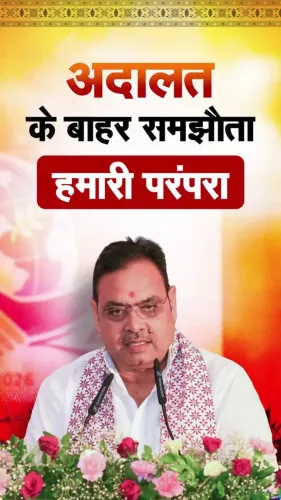
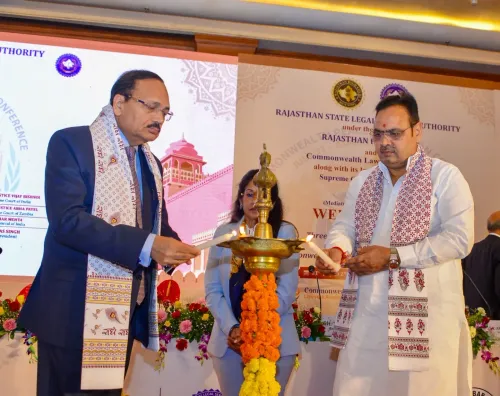
The conference was inaugurated by Supreme Court Judge Justice Surya Kant in the presence of Union Law and Justice Minister Arjun Ram Meghwal, Rajasthan Chief Minister Bhajan Lal Sharma, Attorney General for India R. Venkataramani, Commonwealth Lawyers Association President Steven Thiru, and Supreme Court Bar Association President Vikas Singh, among others.
Solicitor General Tushar Mehta drew on India's cultural heritage to make the case for dialogue, citing the examples of Lord Rama sending Angad as a peace envoy before the battle in the Ramayana and Lord Krishna seeking reconciliation with the Kauravas before the Mahabharata war. 'We have always attempted settlement before conflict,' he said. 'These examples also teach us that mediation succeeds only when both sides are willing to listen. If one party refuses dialogue, even the greatest efforts cannot prevent conflict,' Mehta added.
Tackling India's Judicial Backlog
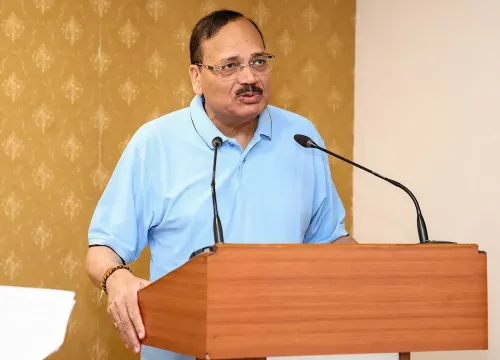
Hari Om Attri, Member Secretary of the Rajasthan State Legal Services Authority (RSLSA), underlined mediation's practical value in addressing India's mounting court pendency. 'Cases that may take years to conclude in courts can often be resolved within a few months through mediation,' he said, adding that the mechanism also preserves relationships between disputing parties — an advantage courts rarely offer.
This comes amid a well-documented crisis in India's judicial system, where tens of millions of cases remain pending across district and high courts. Mediation, proponents argue, offers a structurally faster and less adversarial path.
Who Is Attending and What They Represent
The conference was jointly organised by the RSLSA, the Supreme Court Bar Association (SCBA), the Commonwealth Lawyers Association (CLA), and Nivaaran. Delegates include judges, attorneys general, senior advocates, mediators, academicians, and policymakers. International participants include Justice Abha Nair Patel of the Supreme Court of Zambia, Justice A.H.M. Nawaz of the Supreme Court of Sri Lanka, and Justice Vasishth V. Kokaram of the Bahamas Court of Appeal. Legal experts from Singapore, the United Kingdom, Malaysia, Bangladesh, Zimbabwe, Hong Kong, Kenya, Eswatini, and the Maldives are also participating.
During the session, a book titled 'Death of My Mistress — The Law; Birth of My Love — Justice', authored by Supreme Court Senior Advocate and Resolution Institute Vice-President Aruneshwar Gupta, was released.
Jaipur Peace Mediation Declaration: What's Next
The conference, running until 2 August 2026, is set to conclude with the adoption of the Jaipur Peace Mediation Declaration — a document expected to establish common principles on mediation, conflict resolution, and the rule of law for Commonwealth member states. Observers view the declaration as a potentially landmark framework that could guide judicial cooperation and mediation policy across the Commonwealth in the years ahead.
Point of View
But the metric itself — number of cases resolved through mediation — deserves scrutiny. Volume of settlements does not automatically equal quality of outcomes, and without data on whether agreements hold or whether marginalised parties had meaningful legal representation during mediation, the ranking risks becoming a statistic in search of a story. The Jaipur Peace Mediation Declaration, if adopted with enforceable principles rather than aspirational language, could be more consequential than the conference itself — but Commonwealth declarations have a mixed track record of translation into domestic policy. India's real test is whether mediation becomes a genuine first option or merely a pressure valve for an overburdened judiciary.
NationPress
15 Sept 2026
Frequently Asked Questions
What is the Commonwealth Peace Mediation and Rule of Law Conference (CPMC-2026)?
CPMC-2026 is a three-day international legal conference held at The Lalit Hotel in Jaipur from 31 July to 2 August 2026, bringing together judges, attorneys general, senior advocates, and policymakers from 52 Commonwealth nations to advance mediation as a tool for faster, people-centric justice. It is jointly organised by the Rajasthan State Legal Services Authority, the Supreme Court Bar Association, the Commonwealth Lawyers Association, and Nivaaran.
Why does Rajasthan rank second in India for mediation?
Rajasthan has resolved thousands of disputes through mediation under the framework of the Rajasthan State Legal Services Authority, earning it the second position nationally in case resolution via this mechanism, according to Acting Chief Justice Justice Sanjeev Prakash Sharma. The state is being presented as a model for alternative dispute resolution within India.
What is the Jaipur Peace Mediation Declaration?
The Jaipur Peace Mediation Declaration is a landmark document expected to be adopted at the close of CPMC-2026 on 2 August 2026, laying down common principles on mediation, conflict resolution, and the rule of law for Commonwealth member states. Observers view it as a potential guide for judicial cooperation and mediation policy across the Commonwealth.
Who attended the CPMC-2026 inaugural session?
The inaugural session was presided over by Supreme Court Judge Justice Surya Kant and attended by Union Law and Justice Minister Arjun Ram Meghwal, Rajasthan Chief Minister Bhajan Lal Sharma, Attorney General for India R. Venkataramani, Solicitor General Tushar Mehta, and international judges from Zambia, Sri Lanka, the Bahamas, and several other Commonwealth nations.
How does mediation help reduce India's judicial backlog?
Mediation can resolve disputes in months rather than the years cases typically spend in courts, according to RSLSA Member Secretary Hari Om Attri. Beyond speed, it reduces adversarial litigation and helps preserve relationships between disputing parties — an outcome the formal court system rarely delivers.