CJI Surya Kant at Commonwealth Conference: Peace is law's finest achievement
Synopsis
India's Chief Justice used the Commonwealth Peace Mediation Conference in Jaipur to reframe mediation not as an alternative to courts but as an equal pillar of the rule of law — and cautioned that AI cannot replace human empathy in dispute resolution. The proposed Jaipur Declaration could set the tone for mediation policy across the Commonwealth.
Key Takeaways
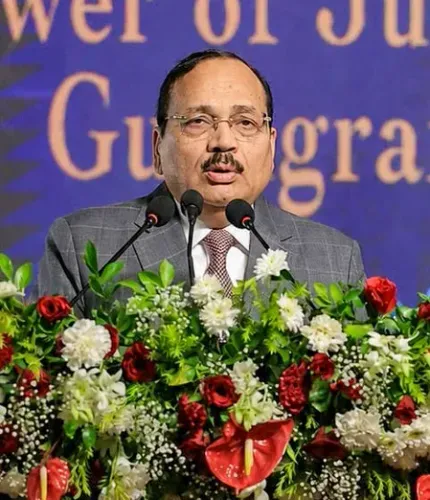
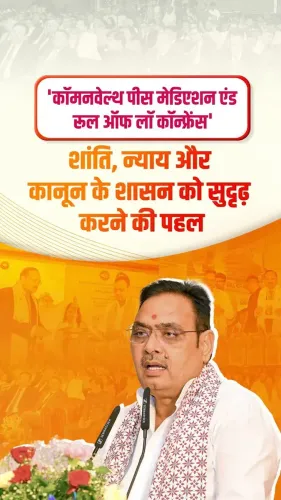
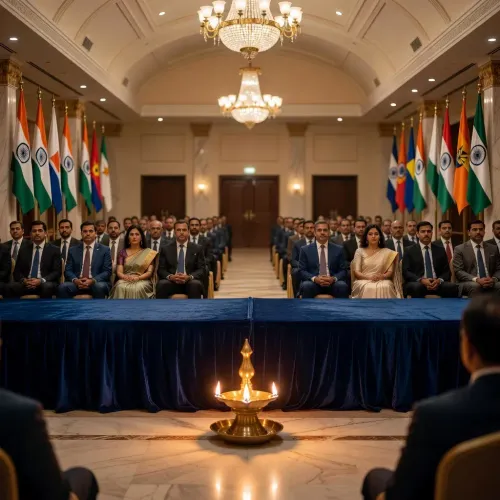
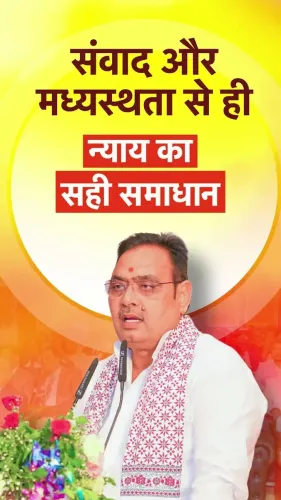
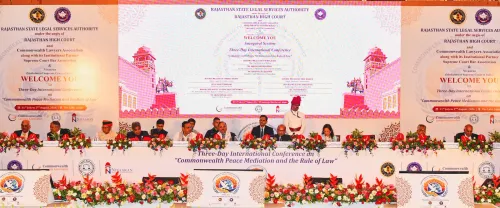
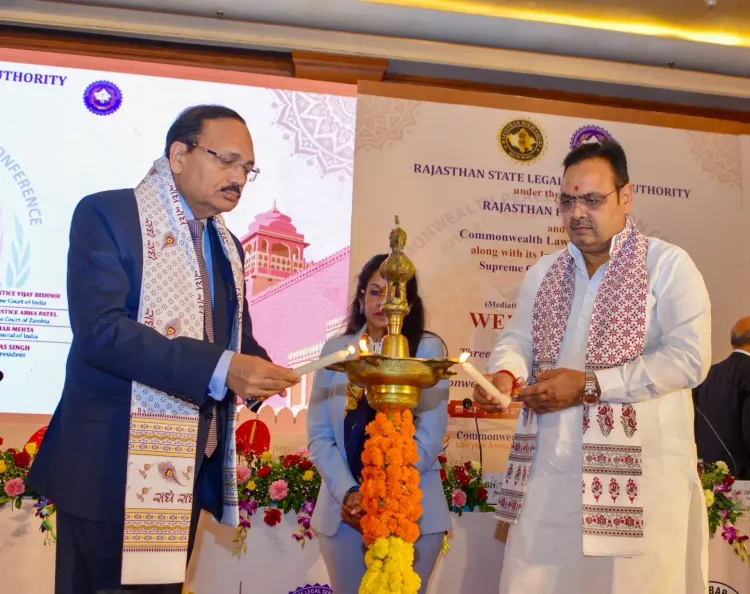
Chief Justice Justice Surya Kant inaugurated the Commonwealth Peace Mediation Conference 2026 in Jaipur on 31 July 2026 .
He declared that 'peace is one of law's finest achievements,' urging mediation to be treated as a complementary pillar of the rule of law — not a lesser alternative to litigation.
The CJI drew on India's traditional Panchayat system as an early model of mediation, rooted in his childhood in rural Haryana .
He cautioned against excessive reliance on artificial intelligence in Online Dispute Resolution (ODR) , arguing AI cannot replicate human empathy.
The proposed Jaipur Declaration on Peace Mediation is expected to serve as a practical guide for legal professionals across Commonwealth member states.
The three-day conference has convened judges, mediators, policymakers, and legal experts from across the Commonwealth.
Chief Justice of India Justice Surya Kant on Friday, 31 July 2026, made a forceful case for embedding mediation at the heart of India's justice delivery system, declaring that 'peace is not the absence of law; peace is one of law's finest achievements.' Speaking at the inauguration of the Commonwealth Peace Mediation Conference 2026 in Jaipur, the Chief Justice called on legal professionals across the Commonwealth to treat mediation not as a fallback option but as a foundational pillar of the rule of law.
Key Remarks from the Chief Justice
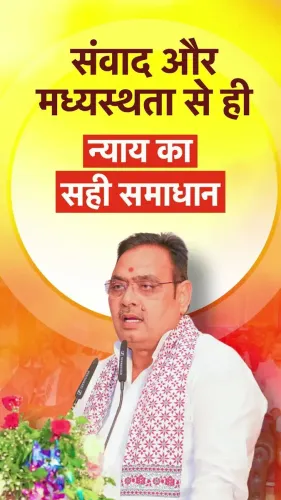
Justice Surya Kant challenged what he described as a centuries-old assumption — that courts alone embody the rule of law, while peace belongs to informal compromise. 'This conference seeks to correct that old assumption,' he said. 'Courts provide certainty and precedent, while mediation gives people the opportunity to write their own ending before the final word ever becomes necessary.'
Drawing on Jaipur's historic urban planning, the Chief Justice noted that the Pink City was designed on principles of harmony and proportion, making it, in his view, a fitting host for a conference on mediation. 'Mediation too teaches us that no single voice, however powerful, should be allowed to overwhelm another,' he remarked.
Roots in India's Village Tradition
Sharing a personal recollection from his childhood in rural Haryana, Justice Surya Kant drew a direct line between modern mediation practice and the traditional Panchayat system. He recalled that when two families quarrelled over a boundary wall, a water channel, or a pathway, they would sit with village elders under a tree until the matter was resolved. 'Nobody called it Alternative Dispute Resolution then. We simply called it Panchayat. It was mediation before the word became fashionable,' he said.
He argued that the durability of those settlements came from a social reality: the parties had to continue living as neighbours. 'The true test of peace is not whether an agreement has been signed on paper. It is whether neighbours can still share a cup of tea the next morning.'
A Word of Caution on AI and Online Mediation
Acknowledging the expanding role of technology in dispute resolution, the Chief Justice welcomed Online Dispute Resolution (ODR) but sounded a note of caution on over-reliance on artificial intelligence. 'AI may carry a human voice, but it cannot display human empathy or genuine apology,' he said, adding that online mediation should continue to be conducted predominantly by trained human mediators.
The Jaipur Declaration on Peace Mediation
Justice Surya Kant expressed hope that the conference's proposed Jaipur Declaration on Peace Mediation would serve as a practical working document rather than a ceremonial one. 'Let it be a working promise that a young lawyer in Lagos, a mediator in Colombo or a judge in Toronto can rely upon when people are searching for a peaceful way forward,' he said.
The three-day conference has brought together judges, legal experts, mediators, policymakers, and representatives from Commonwealth nations to deliberate on strengthening mediation frameworks, promoting the rule of law, and improving access to justice. The outcome of the Jaipur Declaration is expected to shape mediation policy across member states in the months ahead.
Point of View
Not just a rhetorical one. Yet the gap between conference declarations and ground-level implementation in India's district courts remains vast. The Jaipur Declaration will matter only if it is followed by mandatory mediation referrals, trained mediator rosters, and enforceable ODR standards — none of which a three-day conference alone can deliver. The caution on AI is well-placed, but the judiciary will need a clearer policy framework before ODR scales meaningfully.
NationPress
15 Sept 2026
Frequently Asked Questions
What is the Commonwealth Peace Mediation Conference 2026?
It is a three-day international conference held in Jaipur bringing together judges, legal experts, mediators, policymakers, and Commonwealth country representatives to strengthen mediation frameworks and improve access to justice. Chief Justice of India Justice Surya Kant inaugurated the event on 31 July 2026.
What did CJI Surya Kant say about mediation at the conference?
CJI Justice Surya Kant said mediation must no longer be treated as a lesser alternative to litigation but as a complementary pillar of the rule of law. He declared that 'peace is not the absence of law; peace is one of law's finest achievements.'
What is the Jaipur Declaration on Peace Mediation?
The Jaipur Declaration on Peace Mediation is a proposed outcome document of the Commonwealth Peace Mediation Conference 2026. The Chief Justice expressed hope it would serve as a practical guide for lawyers, mediators, and judges across Commonwealth nations rather than a ceremonial document.
Why did CJI Surya Kant caution against AI in dispute resolution?
He argued that while AI can carry a human voice, it cannot display human empathy or offer a genuine apology — qualities he considers essential to effective mediation. He called for online mediation to be conducted predominantly by trained human mediators.
How did the CJI connect the Panchayat system to modern mediation?
Drawing from his childhood in rural Haryana, Justice Surya Kant recalled that village communities resolved disputes through elders sitting together under a tree — a practice he described as mediation before the term became formalised. He argued this tradition underpins the case for community-centred dispute resolution today.