CJI Surya Kant: Mediation rooted in Vedas, Kautilya and Gandhi
Synopsis
India's Chief Justice used a parable about two sisters and an orange to make a pointed argument at the Commonwealth Mediation Conference: that mediation is not a Western import but a civilisational inheritance, traceable from the Vedas and Kautilya's Arthashastra to Gandhi's courtroom — and now, finally, to statute law in 2023.
Key Takeaways
CJI Justice Surya Kant addressed the Commonwealth Mediation Conference in Jaipur on 1 August , linking mediation to India's civilisational roots.
He cited the Vedas , the Ramayana , the Mahabharata , and Kautilya's Arthashastra as foundational texts reflecting mediation principles.
Kautilya's four governance methods — Saam, Daam, Dand, Bhed — place conciliation first, which the CJI called the bedrock of modern mediation philosophy.
Mahatma Gandhi considered facilitating an amicable settlement the most satisfying experience of his legal career, the CJI recalled.
The Mediation Act, 2023 was described as a formal codification of a practice India has observed for millennia, not a new introduction.
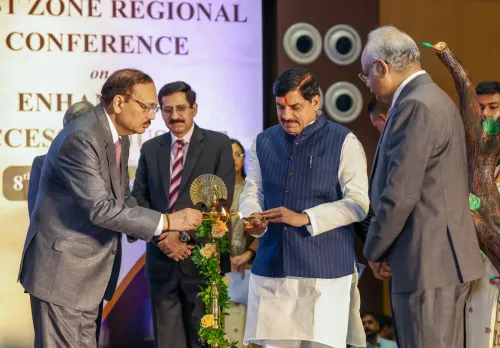
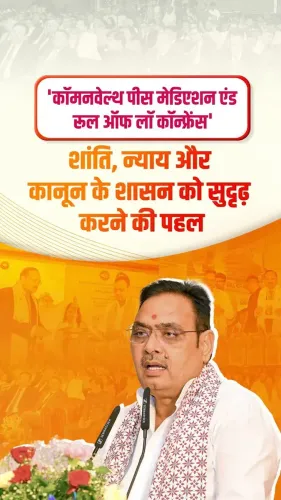
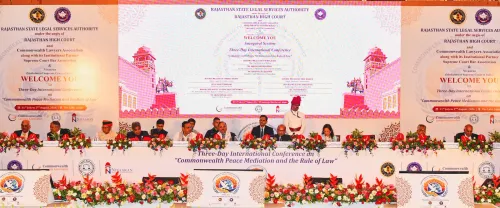
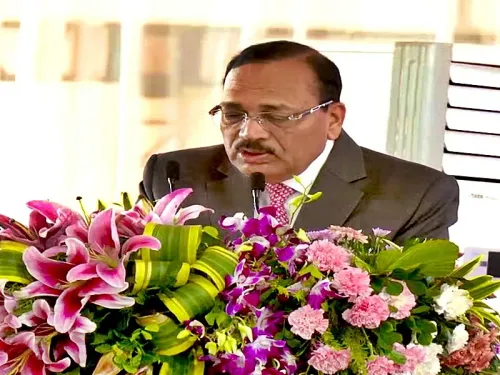
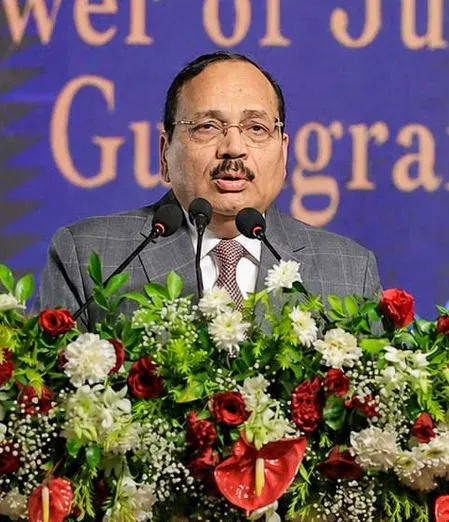
Chief Justice of India Justice Surya Kant on Saturday, 1 August declared that dispute resolution through dialogue and mediation is inseparable from India's civilisational identity, tracing its lineage to the Vedas, the philosophies of Kautilya, and the legal practice of Mahatma Gandhi. Speaking at the Commonwealth Mediation Conference in Jaipur, he argued that mediation was woven into Indian culture centuries before it was formally codified in the Mediation Act, 2023.
The Orange Story: A Lesson in Listening
To illustrate the core principle of mediation, CJI Surya Kant narrated a parable of two sisters quarrelling over a single orange. 'Both insisted they deserved it, the elder on the basis of seniority and the younger because she was younger. After a prolonged argument, they agreed to split the orange equally. One sister discarded the peel and ate the fruit, while the other threw away the fruit and used the peel to bake a cake,' he recounted.
The CJI observed that had the sisters communicated their actual needs rather than defending fixed positions, one could have received the entire fruit and the other the entire peel. 'In real life too, without mediation, conversations often remain incomplete,' he said.
Ancient Roots: Vedas, Epics and Kautilya's Arthashastra
Addressing delegates on the second day of the conference, the CJI noted that the inaugural session had already traced mediation's presence in the Vedas and India's historical traditions. He further drew on the Ramayana, the Mahabharata, and other ancient texts, describing each as offering distinct insights into the dimensions of mediation.
Turning to Kautilya's Arthashastra, CJI Surya Kant highlighted the ancient philosopher's four methods of governance — 'Saam' (conciliation), 'Daam' (inducement), 'Dand' (punishment), and 'Bhed' (division). Calling Kautilya one of the greatest philosophers he had studied, the CJI underscored that 'Saam' — persuasion and conciliation — was deliberately placed first, forming the bedrock of what he described as the modern philosophy of mediation.
India's Traditional Dispute-Resolution Hierarchy
The CJI also outlined an ancient tiered system of dispute resolution in which disagreements were first brought to the 'Kula' (family), then the 'Shreni' (guild), followed by the 'Puga' (assembly), and only thereafter to the King. The foundational principle of this system, he said, was always to sit together and resolve disputes through dialogue before seeking formal adjudication — a practice that mirrors contemporary mediation frameworks.
Gandhi's Legal Career and the Spirit of Settlement
Recalling Mahatma Gandhi's years as a lawyer, CJI Surya Kant noted that Gandhi had described facilitating an amicable settlement between two disputing parties as the most satisfying experience of his legal practice. 'This shows that mediation has flowed through our veins in India long before it was codified in law in 2023. It is an integral part of our culture, and today both the Legislature and the Judiciary are playing an important role in strengthening it,' the CJI said.
Role of Legislature and Judiciary
The CJI emphasised that both branches have actively worked to institutionalise mediation in recent years, with the Mediation Act, 2023 marking a legislative milestone. He positioned the statute not as an introduction of a foreign concept, but as a formal recognition of a practice that India has carried through millennia. The Commonwealth Mediation Conference in Jaipur serves as a platform for member nations to exchange frameworks and best practices, and the CJI's address signalled India's intent to position itself as a thought leader in the global mediation movement.
Point of View
2023 a cultural legitimacy that purely procedural arguments cannot. Yet the gap between civilisational heritage and courtroom reality is wide — India's docket crisis persists, and mediation referrals under the new Act remain modest. The real test of this philosophy is not in conference halls but in district courts, where litigants still default to adversarial proceedings. Invoking Kautilya and Gandhi is powerful; building the infrastructure to make mediation the first instinct of the average Indian disputant is the harder, unfinished task.
NationPress
16 Sept 2026
Frequently Asked Questions
What did CJI Surya Kant say at the Commonwealth Mediation Conference in Jaipur?
CJI Justice Surya Kant said that mediation is deeply rooted in India's civilisational ethos, tracing its origins to the Vedas, Kautilya's Arthashastra, and Mahatma Gandhi's legal practice. He argued that the Mediation Act, 2023 formalised a tradition India had observed for thousands of years.
What is the significance of Kautilya's Arthashastra in the context of mediation?
Kautilya's Arthashastra outlines four methods of governance — Saam (conciliation), Daam (inducement), Dand (punishment), and Bhed (division). CJI Surya Kant highlighted that conciliation was placed first, calling it the philosophical foundation of modern mediation practice.
What is the Mediation Act, 2023?
The Mediation Act, 2023 is India's first standalone legislation formally codifying mediation as a dispute resolution mechanism. CJI Surya Kant described it as a legal recognition of a practice embedded in Indian culture long before it was written into statute.
What parable did CJI Surya Kant use to explain mediation?
The CJI narrated the story of two sisters disputing ownership of an orange who split it equally without discussing their actual needs — one wanted the fruit, the other the peel. He used this to illustrate that mediation, by surfacing underlying interests rather than rigid positions, can deliver better outcomes for all parties.
What is the Commonwealth Mediation Conference?
The Commonwealth Mediation Conference is a gathering of member nations to share frameworks and best practices in mediation. The 2025 edition was held in Jaipur, with CJI Justice Surya Kant addressing delegates on its second day, 1 August.