CJI Surya Kant opens Commonwealth Mediation Conference in Jaipur, champions dialogue over litigation
Synopsis
With delegates from all 52 Commonwealth nations gathered in Jaipur, Chief Justice of India Surya Kant has framed mediation not as a legal alternative but as civilisation's oldest peace tool — and challenged the global legal community to enshrine that principle in a binding declaration by 2 August. The Jaipur Peace Mediation Declaration 2026 could redefine how the Commonwealth approaches conflict resolution.
Key Takeaways
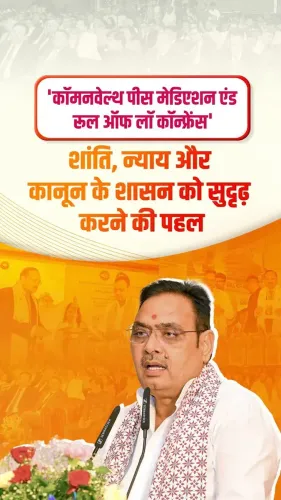
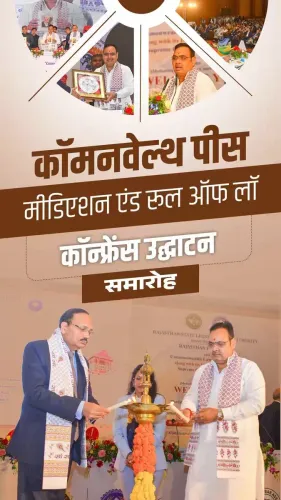
CJI Surya Kant inaugurated the Commonwealth Peace Mediation and Rule of Law Conference (CPMC-2026) in Jaipur on 1 August 2026 .
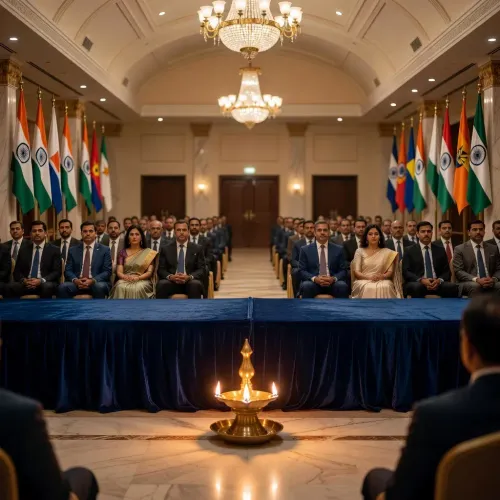
Delegates from all 52 Commonwealth nations — judges, mediators, attorneys general, and policymakers — are attending the three-day event.
Rajasthan ranks second in India in resolving cases through mediation, according to Acting Chief Justice Sanjeev Prakash Sharma .
Legal aid has been extended to 5.85 lakh people in Rajasthan, Chief Minister Bhajan Lal Sharma said.
The conference is set to conclude on 2 August 2026 with the adoption of the Jaipur Peace Mediation Declaration 2026 .
A book by Senior Advocate Aruneshwar Gupta titled 'Death of My Mistress — The Law; Birth of My Love — Justice' was released at the inaugural session.
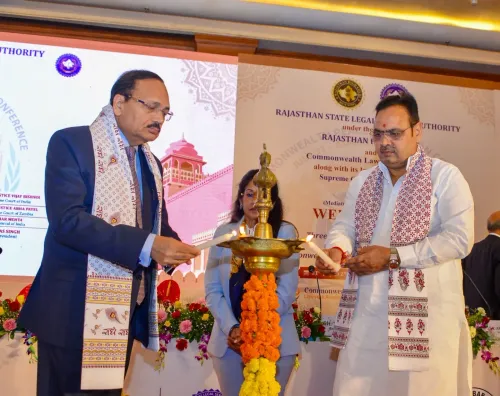
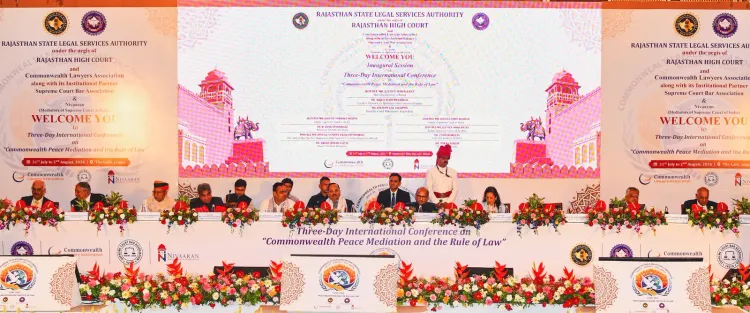
Chief Justice of India Surya Kant on Friday, 1 August 2026, inaugurated the Commonwealth Peace Mediation and Rule of Law Conference (CPMC-2026) in Jaipur, declaring mediation the cornerstone of social harmony and urging nations to treat dialogue as a superior alternative to prolonged court battles. The three-day conference at The Lalit Hotel has drawn judges, mediators, legal experts, attorneys general, academicians, and policymakers from all 52 Commonwealth nations.
Key Developments at the Inaugural Session
Justice Surya Kant drew a striking parallel between Jaipur's urban design and the philosophy of mediation. 'The city was designed on the principles of harmony, balance, and proportion. Its planners ensured that no single part of the city would overwhelm another,' he said, adding that mediation similarly ensures no voice, however powerful, silences another. He described peace not as the absence of conflict but as 'the law's finest achievement.'
The conference is jointly organised by the Rajasthan State Legal Services Authority (RSLSA), the Supreme Court Bar Association (SCBA), the Commonwealth Lawyers Association (CLA), and dispute-resolution body Nivaaran. It is expected to conclude on 2 August 2026 with the adoption of the Jaipur Peace Mediation Declaration 2026 — a framework of shared principles on mediation and the rule of law for Commonwealth nations.
What the Government Said
Union Minister for Law and Justice Arjun Ram Meghwal invoked India's traditional 'Panch Parmeshwar' system as one of the earliest forms of structured mediation. He flagged that rapid technological shifts — including artificial intelligence, blockchain, and Industry 4.0 — are generating new categories of cross-border legal disputes, demanding faster mediation mechanisms. 'Justice achieved through dialogue creates a more peaceful society,' he said.
Solicitor General Tushar Mehta cited mythological precedent, referencing Lord Rama's dispatch of Angad as a peace envoy before battle in the Ramayana, and Lord Krishna's bid for reconciliation before the Mahabharata war. 'Mediation succeeds only when there is willingness to listen,' he said, cautioning that even the greatest efforts cannot prevent conflict if one side refuses dialogue.
Rajasthan's Record and the State's Role
Acting Chief Justice of the Rajasthan High Court Justice Sanjeev Prakash Sharma said Rajasthan now ranks second in India in resolving cases through mediation, positioning the state as a national leader in alternative dispute resolution. Rajasthan Chief Minister Bhajan Lal Sharma noted that court disputes often drain litigants of time, money, and energy for years without resolving the underlying bitterness between parties. He added that legal aid has been extended to 5.85 lakh people in the state, and credited the Centre under Prime Minister Narendra Modi with strengthening institutional mediation nationally.
Hari Om Attri, Member Secretary of the RSLSA, underscored the practical case: while litigation can drag on for years, mediation typically resolves disputes within a few months, preserving both relationships and resources.
India's Historical Tradition of Mediation
Justice Surya Kant recalled that long before formal courts existed, village disputes in India were settled through Gram Panchayats, whose mediators were simultaneously community leaders and custodians of social harmony. This civilisational thread, he argued, makes India a natural champion of mediation on the global stage. The inaugural session also saw the release of a book titled 'Death of My Mistress — The Law; Birth of My Love — Justice', authored by Supreme Court Senior Advocate Aruneshwar Gupta, Vice-President of the Resolution Institute.
What Comes Next
Delegates from all 52 Commonwealth nations are expected to deliberate over three days before adopting the Jaipur Peace Mediation Declaration 2026 on 2 August. The declaration is designed to establish binding shared principles on conflict resolution and the rule of law across the Commonwealth. Its adoption would mark one of the most significant multilateral commitments to institutionalised mediation in the bloc's recent history.
Point of View
But national case-pendency figures remain stubbornly high. Invoking Gram Panchayats and mythological envoys makes for compelling rhetoric; what the Declaration needs is a monitoring mechanism with teeth.
NationPress
15 Sept 2026
Frequently Asked Questions
What is the Commonwealth Peace Mediation and Rule of Law Conference (CPMC-2026)?
CPMC-2026 is a three-day international conference held in Jaipur from 1 to 2 August 2026, bringing together judges, mediators, legal experts, and policymakers from all 52 Commonwealth nations to strengthen mediation and the rule of law. It is jointly organised by the RSLSA, SCBA, CLA, and Nivaaran.
What is the Jaipur Peace Mediation Declaration 2026?
It is a multilateral document expected to be adopted on 2 August 2026 at the close of CPMC-2026, establishing shared principles on mediation, conflict resolution, and the rule of law for Commonwealth nations. It is intended to serve as a framework for institutionalising mediation across the 52-member bloc.
Why did CJI Surya Kant choose Jaipur as a symbol for mediation?
Justice Surya Kant noted that Jaipur was historically designed on principles of harmony, balance, and proportion, with no single part of the city overwhelming another — a philosophy he directly likened to mediation's core tenet that every voice deserves equal dignity and consideration.
How does Rajasthan rank in mediation in India?
Rajasthan ranks second in India in resolving cases through mediation, according to Acting Chief Justice of the Rajasthan High Court Justice Sanjeev Prakash Sharma, who spoke at the inaugural session of CPMC-2026.
Who else spoke at the inaugural session of CPMC-2026?
The inaugural session featured addresses by Union Minister for Law and Justice Arjun Ram Meghwal, Solicitor General Tushar Mehta, Rajasthan Chief Minister Bhajan Lal Sharma, Acting Chief Justice Sanjeev Prakash Sharma, and RSLSA Member Secretary Hari Om Attri, among others.