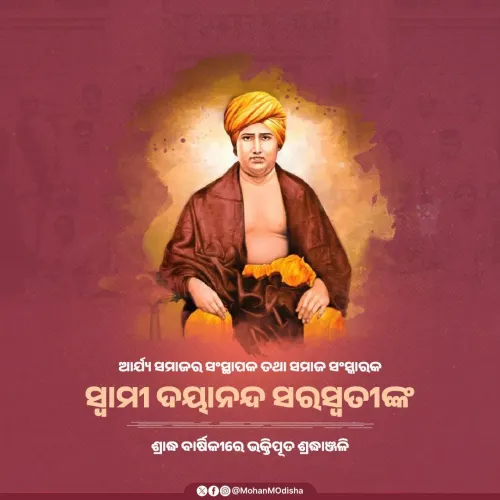
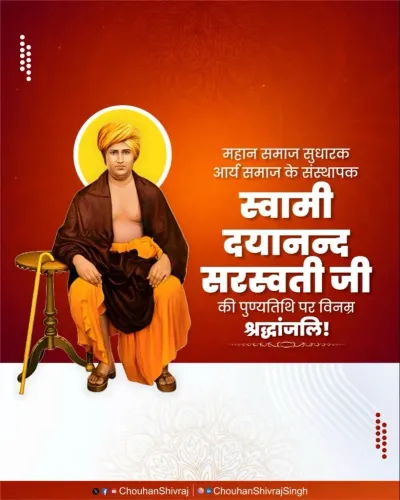
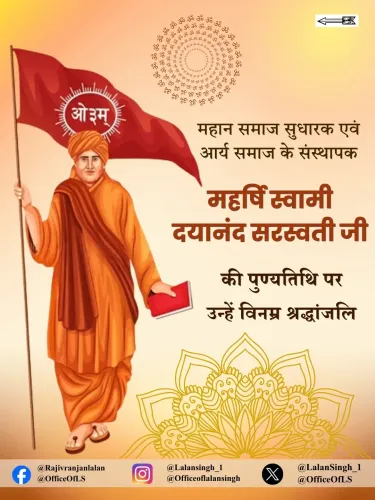
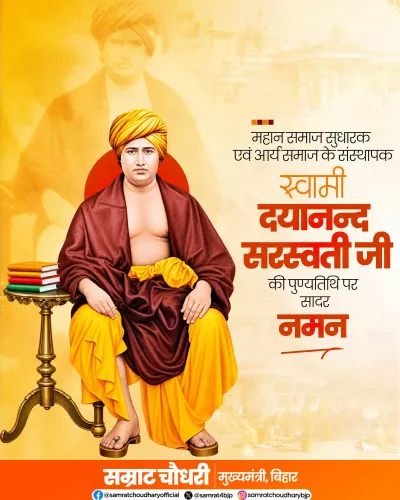
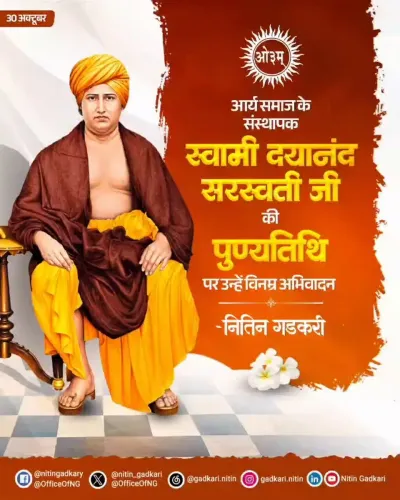
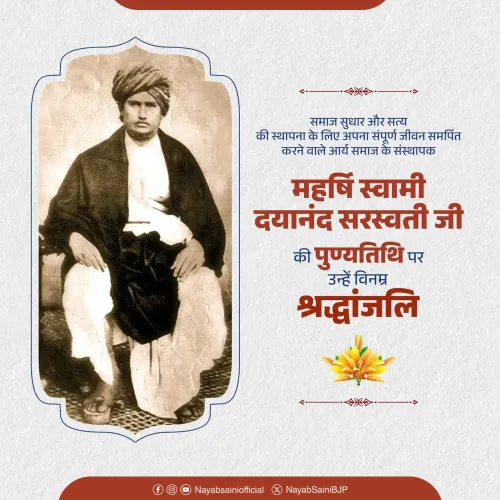
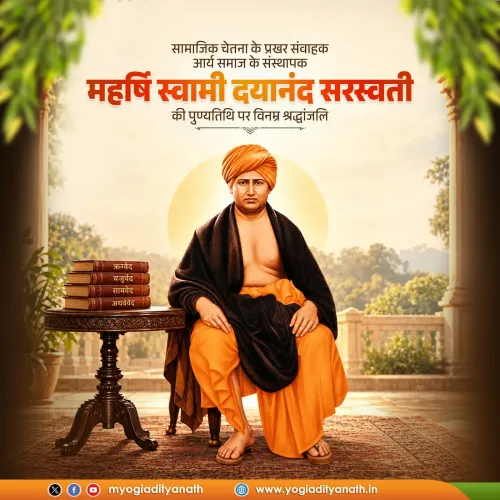
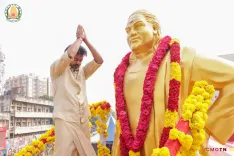
CM Dhami pays tribute to Swami Dayanand Saraswati on death anniversary
Synopsis
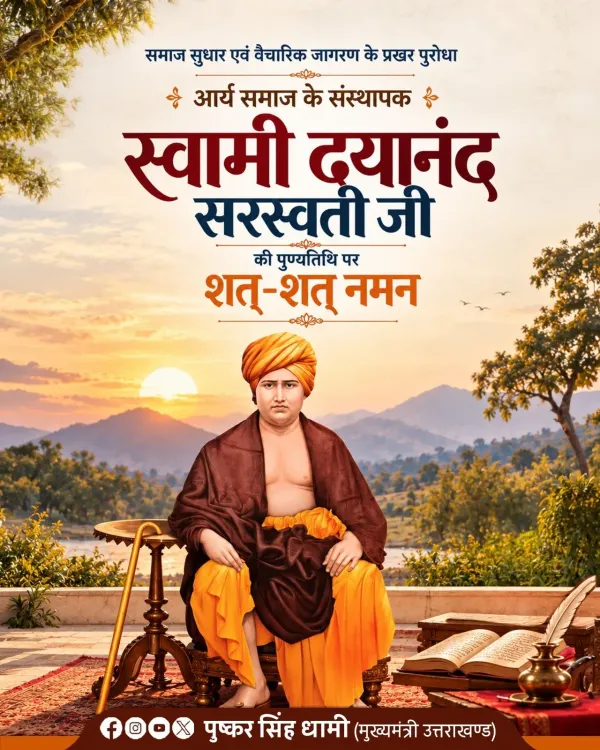
Uttarakhand CM Pushkar Singh Dhami marked the death anniversary of Arya Samaj founder Swami Dayanand Saraswati on 30 October 2026, honouring his legacy of Vedic thought, social equality, and national service.
Key Takeaways
Uttarakhand CM Pushkar Singh Dhami paid tribute to Swami Dayanand Saraswati on his death anniversary on 30 October 2026 .
Dhami hailed Saraswati as a 'great social reformer, Vedic thinker and founder of Arya Samaj.' Saraswati founded the Arya Samaj in 1875 , championing monotheism, education and opposition to caste discrimination.
Dhami stated that Saraswati's teachings 'will always inspire us towards the service of the nation.' Commemorating 19th-century Hindu reformers is a consistent pattern in BJP public messaging, linking Vedic heritage to national service.
Uttarakhand has a historically strong Arya Samaj presence through its Vedic and Sanskrit educational institutions.
On the death anniversary of one of modern India's most consequential reformers, Uttarakhand Chief Minister Pushkar Singh Dhami on Friday, 30 October 2026 paid homage to Swami Dayanand Saraswati, the 19th-century Vedic scholar who shook the foundations of caste orthodoxy and lit the torch of social equality across the subcontinent.
In a post on X, CM Dhami wrote: 'महान समाज सुधारक, वैदिक चिंतक और आर्य समाज के संस्थापक स्वामी दयानंद सरस्वती जी की पुण्यतिथि पर कोटिशः नमन।' ['Countless salutations on the death anniversary of the great social reformer, Vedic thinker and founder of Arya Samaj, Swami Dayanand Saraswati.'] He added that Saraswati's life stands as an example of dedication to truth, knowledge, social equality and reform, and that his teachings 'will always inspire us towards the service of the nation.'
The reformer who rewrote 19th-century Hinduism
Swami Dayanand Saraswati was born in 1824 in present-day Gujarat and spent decades travelling across India, debating theologians, challenging priests, and demanding that society be measured against the yardstick of Vedic reason rather than inherited ritual. His most enduring institutional act was the founding of the Arya Samaj in 1875 — a reform movement that championed monotheism, attacked caste discrimination and idol worship, and pushed for the education of women at a time when such positions were genuinely radical.
Saraswati's battle cry, 'Back to the Vedas', was not a call for regression but a demand for accountability: strip away the accretions of superstition, he argued, and you find a tradition rooted in equality and inquiry. The Arya Samaj he built went on to run schools, lead cow-protection movements, and contribute significantly to the intellectual groundwork of Indian nationalism. His death anniversary, observed each year around 30 October, is marked widely by Arya Samaj institutions across the country.
A pattern of commemorative messaging in BJP politics
BJP leaders across the country regularly use the death and birth anniversaries of 19th-century Hindu reformers to underscore twin themes of social reform and Vedic heritage. Chief Minister Dhami himself has consistently issued public tributes to historical figures, weaving them into a broader narrative of national service and cultural continuity. Today's message fits squarely into that tradition — placing a Vedic reformer's legacy alongside the language of rashtra seva ['service to the nation'].
The gesture carries particular resonance in Uttarakhand, a state with deep Sanskrit and Vedic learning institutions, where Arya Samaj's influence on education and social organisation has historically been strong.
Swami Dayanand Saraswati died fighting orthodoxy; a century and a half later, politicians still reach for his name when they want to signal reform, equality, and the power of ideas over inertia. That says everything about the staying power of what he built.
Point of View
Knowledge, social equality and national service,' the messaging connects classical reform ideals to contemporary governance themes. For Uttarakhand specifically, where Arya Samaj institutions have long shaped education and civil society, such tributes also carry local political resonance. The pattern signals how India's ruling party seeks to own the reform narrative within a Hindu cultural framework.
NationPress
30 Oct 2026
Frequently Asked Questions
When did Swami Dayanand Saraswati die?
Swami Dayanand Saraswati died on 30 October 1883 , and his death anniversary — known as punyatithi — is observed annually on this date by Arya Samaj institutions and public figures across India.
Who founded the Arya Samaj and when?
Swami Dayanand Saraswati founded the Arya Samaj in 1875 to promote a return to Vedic principles, monotheism, social equality, and the rejection of caste discrimination and superstitious rituals.
Why do BJP leaders pay tribute to Swami Dayanand Saraswati?
BJP leaders regularly commemorate 19th-century Hindu reformers like Dayanand Saraswati to highlight themes of social reform and Vedic cultural heritage, weaving them into a broader narrative of national service and civilisational continuity.
What is the Arya Samaj known for?
The Arya Samaj is a Hindu reform movement founded in 1875 that championed education for women, opposed caste discrimination and idol worship, promoted monotheism, and contributed significantly to the intellectual foundations of Indian nationalism.
What did Uttarakhand CM Dhami say about Swami Dayanand Saraswati?
CM Pushkar Singh Dhami said Saraswati's life is 'an example of dedication to truth, knowledge, social equality and reform,' and that his teachings will 'always inspire us towards the service of the nation.'