Rajasthan CM Office: 27 Districts Now Get Daytime Farm Power
Synopsis
The Rajasthan CMO announced on 30 October 2026 that 27 districts now receive daytime electricity for farmers, with CM Bhajanlal Sharma pledging full statewide coverage by 2027 through solar expansion and feeder separation.
Key Takeaways
27 of Rajasthan's districts are currently receiving daytime electricity supply for agricultural use as of October 2026.
The state government has pledged to extend daytime power to all districts by 2027 .
CM Bhajanlal Sharma has been at the helm since December 2023 , making this a marquee infrastructure commitment of his tenure.
The initiative is enabled by agricultural feeder separation and the state's expanding solar generation capacity .
Daytime supply replaces a decades-old system of nighttime farm irrigation power, improving safety and efficiency for farmers.
Rajasthan's approach mirrors successful models in Gujarat and Madhya Pradesh , aligning with national renewable energy targets.
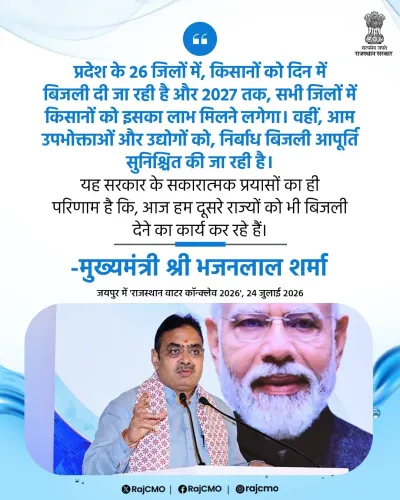
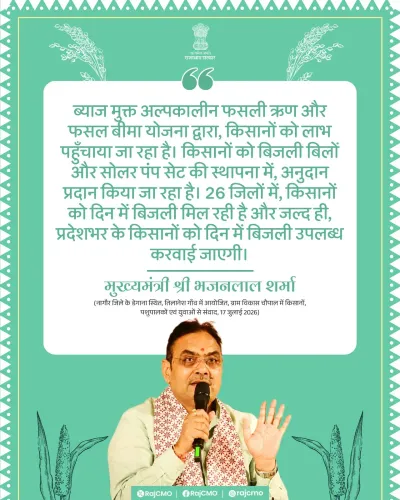
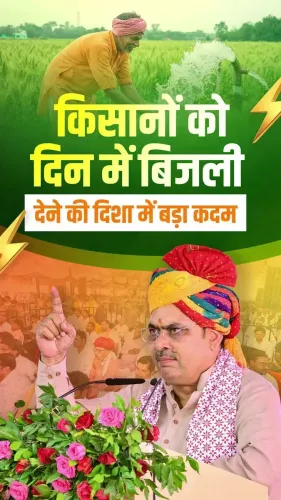
Rajasthan is rewriting the rules of agricultural power — and the numbers are hard to ignore. The Chief Minister's Office of Rajasthan announced on Friday, 30 October 2026, that the state has achieved energy self-reliance and is now supplying daytime electricity to farmers across 27 districts, with a firm commitment to extend that coverage to every district by 2027.
The post, attributed to Chief Minister Bhajanlal Sharma's office, declared: 'राजस्थान बिजली में, आत्मनिर्भर प्रदेश बना है' — 'Rajasthan has become a self-reliant state in electricity.' The announcement was tagged with the hashtag #आपणो_अग्रणी_राजस्थान ('Our Leading Rajasthan'), framing the power push as part of a broader identity the BJP government in Jaipur is building around the state.
Why Daytime Power Changes Everything for Rajasthan's Farmers
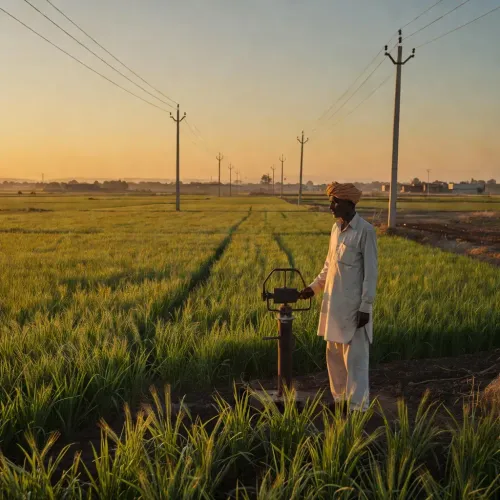
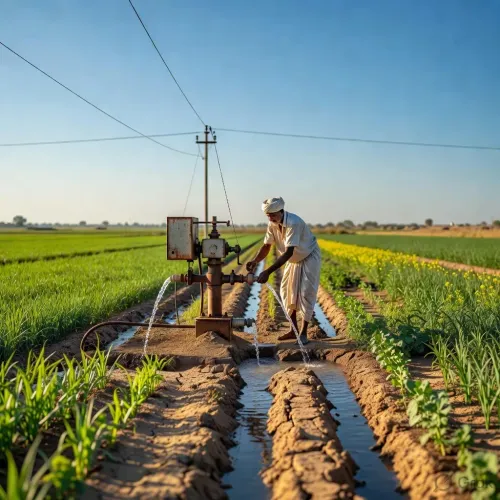
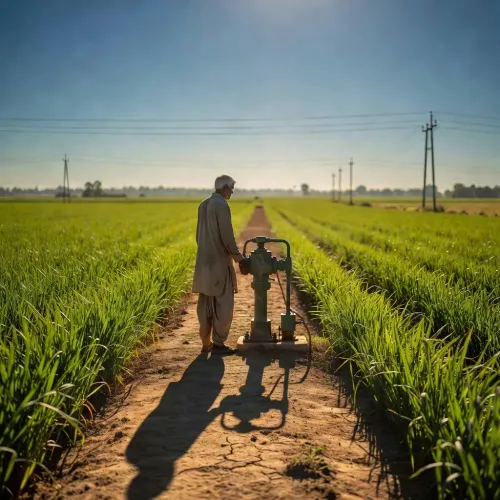
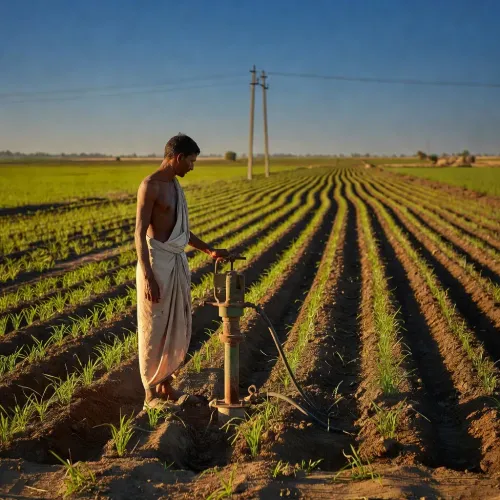
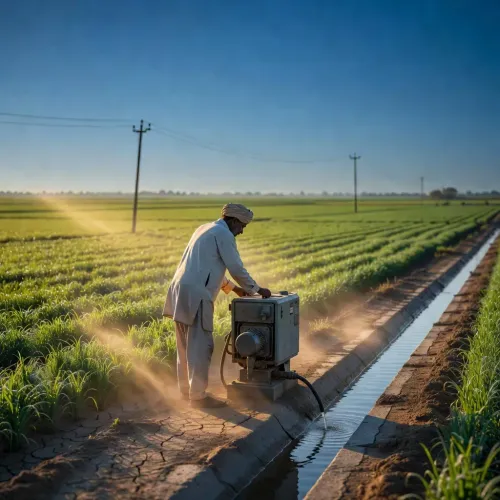
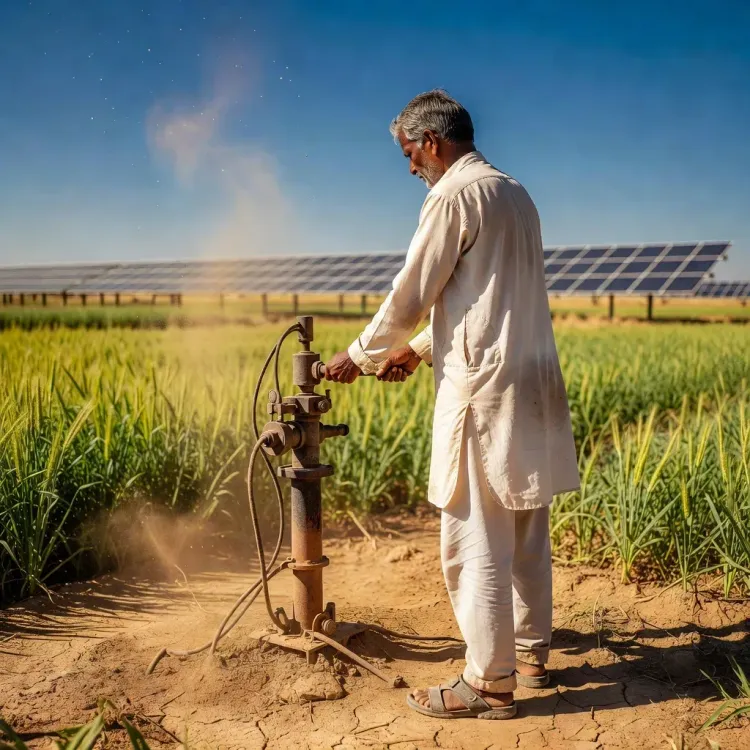
For decades, farmers across Rajasthan — like much of rural India — drew their irrigation power at night, when grid load was lower and supply more reliable. That forced growers to work their fields after dark: tiring, unsafe, and deeply inefficient. Daytime supply flips that calculus entirely, letting farmers irrigate, monitor crops, and run equipment in daylight hours.
The shift is made structurally possible by agricultural feeder separation — dedicating specific power lines to farm connections — and by Rajasthan's rapid expansion of solar generation capacity. The state sits on one of India's most sun-drenched belts, and successive governments have pressed that advantage. Feeding solar surplus into dedicated agricultural feeders during peak sun hours is precisely the kind of grid engineering that makes daytime supply viable without overloading the broader network.
Bhajanlal Sharma's 2027 Deadline and What It Will Take
Chief Minister Bhajanlal Sharma, who took office in December 2023, has staked measurable political capital on this target. Covering 27 of Rajasthan's 50 districts already represents a significant rollout — but the remaining districts, often more remote or grid-constrained, will demand accelerated feeder separation work, last-mile infrastructure investment, and continued renewable capacity addition.
Multiple Indian states — from Gujarat to Madhya Pradesh — have walked this path, using solar-linked daytime agricultural supply to simultaneously cut subsidy burdens on state discoms, reduce night-time accidents, and integrate renewable energy more smoothly into the grid. Rajasthan's model, if it meets its 2027 timeline, would place it among the front-runners in this national transition.
The broader policy alignment is also visible: the push dovetails with India's national renewable energy targets and central government schemes for power sector reforms — giving the state government both financial incentives and a larger political narrative to lean on.
With the 2027 deadline now publicly locked in, the clock is ticking — and Rajasthan's farmers are watching to see whether the grid catches up to the promise.
Point of View
Now public, converts a policy aspiration into an accountability benchmark that opposition parties will scrutinise closely. At the national level, this fits a broader BJP pattern of framing state governance around energy infrastructure as a proxy for development credibility. The real test will come in the harder-to-reach remaining districts, where grid investment costs rise and timelines tend to slip.
NationPress
30 Oct 2026
Frequently Asked Questions
How many districts in Rajasthan are getting daytime electricity for farmers?
As of October 2026, 27 districts in Rajasthan are receiving daytime electricity supply for farmers, with the remaining districts set to be covered by 2027 .
What is the Rajasthan government's deadline to provide daytime power to all farmers?
The Chief Minister's Office has stated that daytime electricity will be available to farmers in all districts of Rajasthan by 2027 .
Why is daytime power supply important for Rajasthan's farmers?
Daytime electricity allows farmers to irrigate and run equipment safely in daylight, replacing the traditional — and hazardous — practice of nighttime irrigation powered by erratic grid supply.
How is Rajasthan achieving daytime agricultural power supply?
The state uses agricultural feeder separation — dedicated power lines for farm connections — combined with its large and growing solar energy capacity to channel daytime solar surplus to farmers.
Who is the Chief Minister of Rajasthan overseeing this power initiative?
Bhajanlal Sharma of the BJP is the Chief Minister of Rajasthan, in office since December 2023 , under whose government this agricultural electrification push is being implemented.