India's FTAs cover 76% of global GDP; 8 more deals could add $15 trillion
Synopsis
India's free trade agreements now cover 76% of global GDP — and Minister Piyush Goyal says eight more deals are in the works that would add another $15 trillion. Set against the IMF's bleak 1.9% global trade growth forecast, India is targeting a $1 trillion export milestone this year, betting that its FTA network can outpace a slowing world.
Key Takeaways
India's existing FTAs provide preferential market access covering 76% of global GDP, equivalent to $115 trillion , according to Minister Piyush Goyal .
Nine recently finalised agreements account for $60 trillion of that coverage, with older deals adding $10 trillion .
Negotiations are underway for eight additional bilateral or multilateral agreements that could add a further $15 trillion in preferential access.
India has set a $1 trillion export target for the current fiscal year, targeting 15% growth despite the IMF projecting global trade expansion of just 1.9% .
India's GDP growth stood at 7.7% last year and 7.8% in Q1 of the current year, with growth expected to stay above 7% in the September quarter.
Telangana has set a goal to grow from a $200 billion economy to $3 trillion by 2047 , backed by pharma, aerospace, AI, and quantum computing strengths.
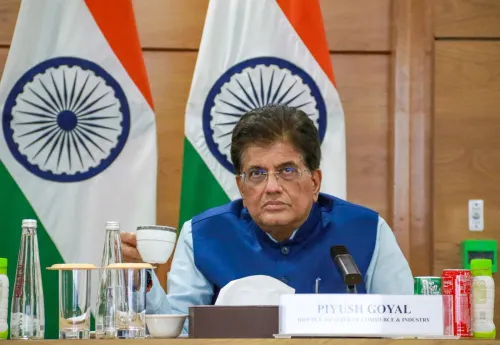
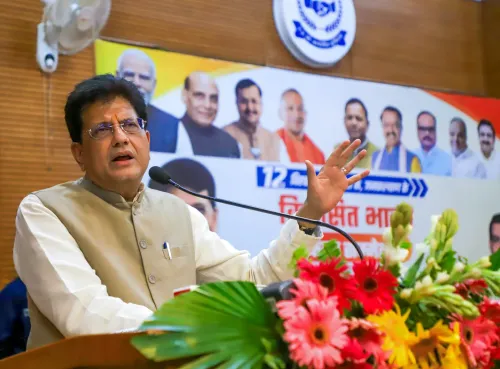
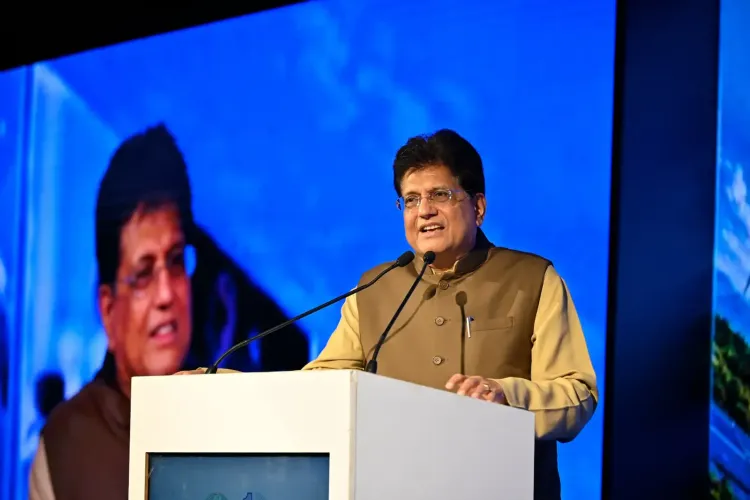
Commerce and Industry Minister Piyush Goyal on 30 October 2026 said India's free trade agreements (FTAs) now provide preferential market access covering approximately 76 per cent of the global GDP of $115 trillion, with negotiations underway for eight additional bilateral or multilateral agreements that would collectively add a further $15 trillion in preferential access. Goyal made these remarks while addressing the curtain raiser of the 'Invest Telangana Global Summit' in New Delhi.
Breakdown of India's Trade Agreement Coverage
According to Goyal, India's existing trade agreements had already unlocked preferential access to a global GDP of $70 trillion — comprising $10 trillion through agreements concluded more than a decade ago and an additional $60 trillion through nine recently finalised agreements. With negotiations ongoing for eight more pacts, India's cumulative preferential access is on course to touch 76 per cent of all global economic output.
This comes amid a challenging global trade environment. The International Monetary Fund (IMF) has projected global trade growth of barely 1.9 per cent this year. Against that backdrop, Goyal said India had set an ambitious target of $1 trillion in exports, aiming for 15 per cent growth in the current fiscal year — a target he described as reflecting the collective conviction of exporters, industry associations, and businesses to outpace conventional forecasts.
India's Economic Trajectory
Highlighting India's broader economic performance, Goyal noted that the country had moved from being among the so-called 'Fragile Five' economies a decade ago to becoming the world's fifth-largest economy and its fastest-growing major economy. He cited GDP growth of 7.7 per cent in the previous year and 7.8 per cent in the first quarter of the current year, and expressed confidence that growth would remain above 7 per cent in the quarter ending September.
Telangana's $3 Trillion Ambition
Goyal congratulated Telangana Chief Minister A. Revanth Reddy, describing the state's aspiration to grow from an economy of approximately $200 billion to $3 trillion by 2047 as achievable through collective effort by the Central Government, state government, industry, investors, and citizens. He drew a historical parallel, referencing the Motupalli Abhaya Shasana — a maritime trade charter issued in 1244 by Kakatiya ruler Ganapati Deva — to underscore that investors have always sought policy certainty and continuity.
'Impossible doesn't exist in my dictionary,' Goyal said, adding that realising Telangana's target would require contributions from the state government, businesses, farmers, fishermen, scientists, innovators, startups, women entrepreneurs, and technical manpower alike.
Sectors Driving Telangana's Potential
Goyal identified pharmaceuticals, aerospace and defence, value-added agriculture, food processing, research and development, and services as areas where Telangana is well positioned to contribute to the Viksit Bharat vision. He also spotlighted opportunities in global capability centres, design and innovation, and the state's growing talent pool in artificial intelligence and quantum computing.
Notably, Goyal called for taking Telangana's Geographical Indication (GI)-tagged products — including Tandur red gram, Chatpata chilli, and Nizamabad turmeric — to global markets, stressing the importance of traceability, packaging, and branding to help farmers earn a premium for their produce.
What Happens Next
The outcome of the eight ongoing FTA negotiations will be closely watched by industry, as successful conclusion could significantly expand India's export footprint at a time of subdued global trade growth. The Invest Telangana Global Summit itself is expected to attract investors across sectors, with the state's pharma, tech, and agri-processing sectors likely to be in focus.
Point of View
And India has moved faster on bilateral deals in the past three years than it did in the previous decade. Yet the gap between market access on paper and actual export realisation remains a persistent challenge; the $1 trillion export target requires 15% growth in a year when global demand is barely stirring. Telangana's $3 trillion by 2047 ambition is bold arithmetic that depends on sustained central-state coordination and FDI inflows that are, as yet, aspirational. The Motupalli reference was clever optics, but investors will be watching policy continuity and ease-of-doing-business rankings, not historical charters.
NationPress
30 Oct 2026
Frequently Asked Questions
What share of global GDP does India's FTA network now cover?
India's free trade agreements provide preferential market access covering approximately 76% of the global GDP of $115 trillion, according to Commerce and Industry Minister Piyush Goyal. This includes $10 trillion from older agreements and $60 trillion from nine recently finalised deals.
How many new trade agreements is India currently negotiating?
India is currently in negotiations for eight additional bilateral or multilateral trade agreements. Successful conclusion of these deals would add a further $15 trillion in preferential market access to India's existing network.
What is India's export target for the current fiscal year?
India has set a target of $1 trillion in exports for the current fiscal year, aiming for 15% growth. This is set against an IMF projection of global trade growth of just 1.9% amid broader global economic challenges.
What is Telangana's economic growth target and why is it significant?
Telangana aims to grow from an economy of approximately $200 billion to $3 trillion by 2047. Minister Goyal described the target as achievable, citing the state's strengths in pharmaceuticals, aerospace, AI, quantum computing, and value-added agriculture.
How has India's economic standing changed over the past decade?
India has moved from being among the so-called 'Fragile Five' economies a decade ago to becoming the world's fifth-largest economy and its fastest-growing major economy. GDP growth stood at 7.7% last year and 7.8% in the first quarter of the current year.