CM Bhajanlal launches free uniforms for 40 lakh Rajasthan students
Synopsis
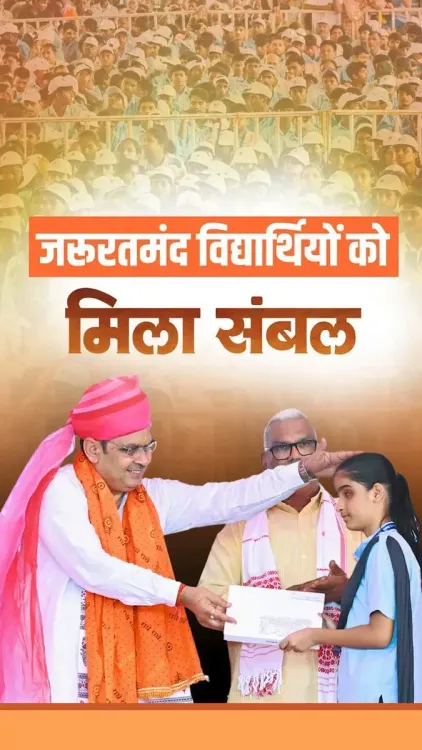
Chief Minister Bhajanlal Sharma launched free uniform distribution for over 40 lakh needy students from Classes 1 to 8 in Rajasthan, fulfilling a state budget pledge, at a Guru Purnima ceremony in Bharatpur's Vair tehsil on July 29, 2026.
Key Takeaways
CM Bhajanlal Sharma addressed a Guru Purnima ceremony at Khedli Gurjar, Vair tehsil, Bharatpur on July 29, 2026 .
The Rajasthan government is distributing free uniforms to over 40 lakh students enrolled in Classes 1 to 8 .
The scheme targets economically needy students and was a commitment made in the state's annual budget.
CM Sharma cited PM Narendra Modi's vision for accessible, quality education as the inspiration for the initiative.
The rollout aligns with the national Samagra Shiksha framework aimed at reducing indirect costs that deter school attendance.
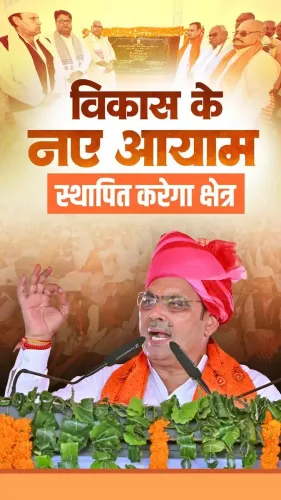
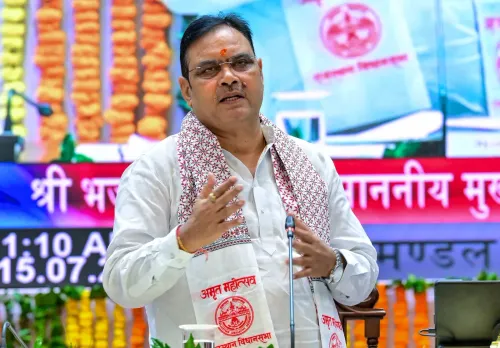
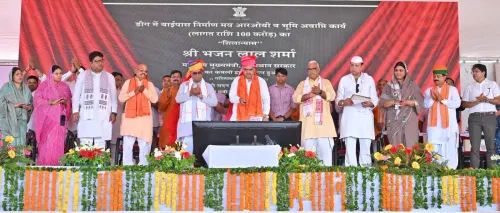
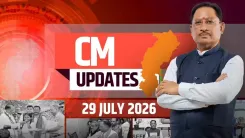
On Guru Purnima, Wednesday, July 29, 2026, a budget promise became a ground reality. Chief Minister Bhajanlal Sharma addressed a ceremony at Khedli Gurjar in the Vair tehsil of Bharatpur, announcing that the Rajasthan government is now distributing free uniforms to over 40 lakh students from Classes 1 to 8 — fulfilling a pledge made in this year's state budget.
A budget vow lands in Bharatpur
Speaking at the Guru Purnima event, CM Sharma said the government had made a firm commitment in the budget to provide free uniforms to needy students across the state. 'उस संकल्प को आज धरातल पर उतारा जा रहा है' — 'that pledge is being brought to the ground today,' he declared. The rollout begins in Vair tehsil, with district administrations across Rajasthan expected to carry the distribution forward.
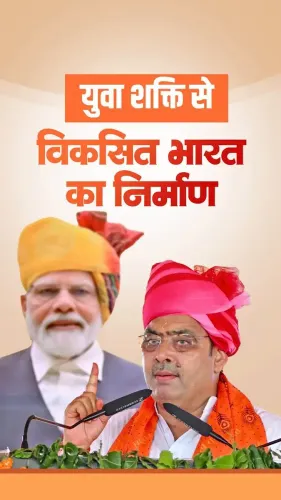
Sharma credited Prime Minister Narendra Modi's vision as the driving inspiration, framing the initiative as part of a broader national push to make quality education accessible at the elementary level. The scheme targets students from economically weaker sections, ensuring that the cost of a school uniform does not become a barrier to attendance.
Why uniforms matter for rural school enrolment
The uniform distribution aligns with the national Samagra Shiksha framework, under which states are encouraged to remove indirect costs that keep children — especially girls and children from marginalised communities — out of classrooms. In rural Rajasthan, where household incomes remain constrained, even the cost of a set of school clothes can tip a family's decision on enrolment.
The Rajasthan government's choice of Guru Purnima — a day traditionally dedicated to honouring teachers and the pursuit of knowledge — as the launch moment carries deliberate symbolic weight. It frames the welfare measure within the cultural vocabulary of learning and reverence for education.
Progress on how quickly the uniforms reach students across Rajasthan's remaining districts will be the real test of the scheme's implementation muscle — and a preview of the government's delivery credibility ahead of the next budget cycle.
Point of View
On-ground welfare moment — timed on Guru Purnima for maximum cultural resonance. For the BJP in Rajasthan, fulfilling a named budget promise publicly reinforces a narrative of delivery-oriented governance that the party has leaned on since December 2023. The Modi-citation is also deliberate: it ties a state welfare scheme to the Centre's Samagra Shiksha architecture, making the initiative feel like part of a larger national movement rather than a standalone state act. The real political dividend, however, will depend on whether distribution reaches rural and tribal pockets equitably — or stalls at the district-headquarters level.
NationPress
29 Jul 2026
Frequently Asked Questions
Which students will get free uniforms in Rajasthan 2026?
Students from Classes 1 to 8 who are identified as economically needy are eligible. The Rajasthan government announced distribution for over 40 lakh such students across the state.
When did Rajasthan start distributing free uniforms to school students?
The distribution was officially launched on July 29, 2026 , on the occasion of Guru Purnima , at a ceremony in Khedli Gurjar, Vair tehsil, Bharatpur .
What did CM Bhajanlal Sharma say about the free uniform scheme?
CM Sharma said the government had made a budget commitment to provide free uniforms to needy students, and that pledge was being fulfilled on the ground. He credited PM Narendra Modi's inspiration for the state's focus on quality and accessible education.
Is the Rajasthan free uniform scheme linked to a central government programme?
The scheme aligns with the national Samagra Shiksha framework, which encourages states to eliminate indirect costs — like uniforms — that can prevent children from attending school.
Why was Guru Purnima chosen to launch the Rajasthan uniform distribution?
Guru Purnima is traditionally dedicated to honouring teachers and the pursuit of knowledge, making it a symbolically resonant occasion for the government to launch an education-linked welfare initiative.