CM Bhajanlal meets Shivraj Singh Chouhan, rural jobs act praised
Synopsis
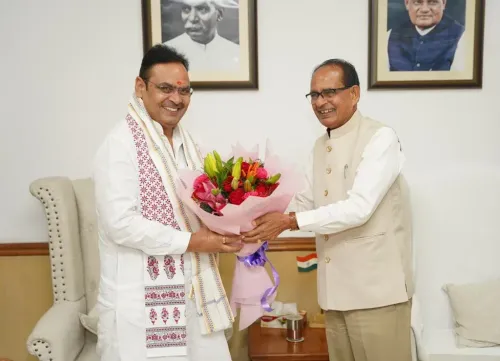
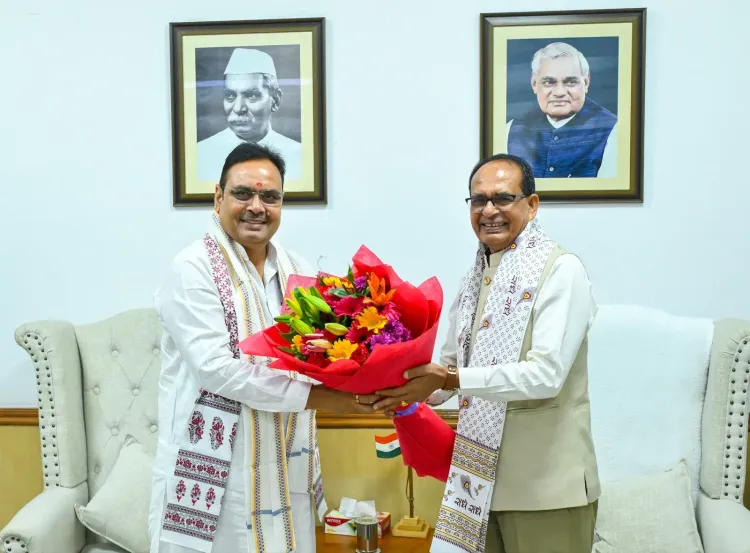
Rajasthan Chief Minister Bhajanlal Sharma met Union Minister Shivraj Singh Chouhan in New Delhi on 7 July 2026. Chouhan praised the state's Viksit Bharat rural employment act and the CM's Gram Vikas Chaupals, calling the grassroots implementation a model of systematic rural development.
Key Takeaways
CM Bhajanlal Sharma held a bilateral meeting with Union Minister Shivraj Singh Chouhan in New Delhi on 7 July 2026 .
Chouhan praised Rajasthan's implementation of the Viksit Bharat Guarantee for Rozgar evam Aajivika Mission (Rural) Act , calling it systematic and ground-level.
The Act ensures rural labourers are provided work from the first day of the scheme, with structured development planned for every village.
Gram Vikas Chaupals — CM-led village forums for direct grievance redressal — received specific appreciation from the Union Minister.
Rajasthan's model supplements the national MGNREGA framework with state-specific guarantees and personalised outreach.
The approach may influence similar legislation in other BJP -governed states under the broader Viksit Bharat agenda.
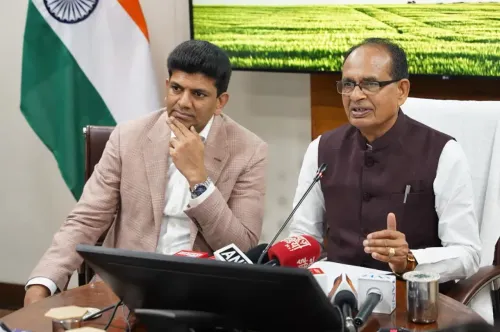
Chief Minister Bhajanlal Sharma of Rajasthan met Union Minister for Rural Development, Agriculture and Farmers Welfare Shivraj Singh Chouhan in New Delhi on 7 July 2026 during an official visit to the capital. The meeting drew national attention to Rajasthan's implementation of a state-level rural employment guarantee law and the Chief Minister's direct village outreach initiative.
Context
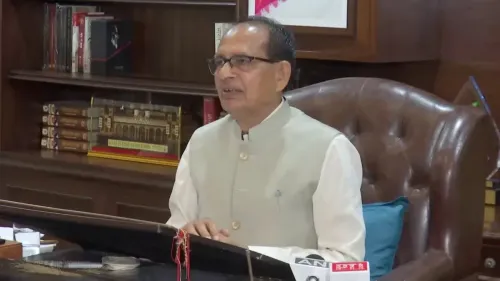
During the meeting, Shivraj Singh Chouhan praised the Rajasthan government's rollout of the Viksit Bharat Guarantee for Rozgar evam Aajivika Mission (Rural) Act, a state legislation aimed at guaranteeing employment and livelihood to rural workers. He stated that the Act had been 'व्यवस्थित रूप से धरातल पर लागू किया गया है' — 'systematically implemented on the ground' — under CM Bhajanlal Sharma's leadership. The Union Minister noted that workers were being provided employment from the very first day of the scheme's operation.
Chouhan further highlighted that the Act is being used to ensure 'orderly development of every village,' signalling central government satisfaction with the pace and structure of Rajasthan's rural employment push.
Policy Backdrop
Rajasthan's state law builds on the foundation of the Mahatma Gandhi National Rural Employment Guarantee Act (MGNREGA), enacted by Parliament in 2005, which guarantees at least 100 days of wage employment annually to rural households. State governments across India have increasingly supplemented MGNREGA with additional legislation and outreach mechanisms to address seasonal unemployment and local infrastructure deficits.
Rajasthan's model under the Viksit Bharat framework places emphasis on immediate work allocation and structured village-level planning, reflecting a broader trend among BJP-governed states to personalise and accelerate delivery of centrally aligned rural welfare schemes.
Stakeholders and Impact
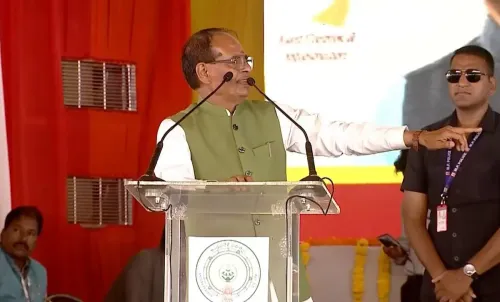
Shivraj Singh Chouhan also commended CM Bhajanlal Sharma's Gram Vikas Chaupals — village-level open forums where the Chief Minister personally visits communities to hear grievances and plan local development. Chouhan said the Chief Minister 'deserves congratulations' for going directly to villages and listening to people's problems himself. These Chaupals represent a direct-engagement model of governance that bypasses bureaucratic intermediaries for first-hand feedback.
The primary beneficiaries are rural labourers and village communities across Rajasthan, who gain access to guaranteed work opportunities and a direct channel to the state's top executive for redressal of local concerns.
What's Next
The central government is expected to continue reviewing state-level rural employment models, with Rajasthan's approach potentially serving as a reference for other states. Observers will watch whether similar legislation is adopted in other BJP-ruled states as part of the broader Viksit Bharat agenda. The continuity and scale of Gram Vikas Chaupals across Rajasthan's 33 districts will be a key indicator of the programme's long-term institutional depth.
Point of View
Reinforcing the party's grassroots-delivery narrative under the Viksit Bharat brand. The emphasis on 'first-day' work allocation is a pointed contrast to longstanding criticism of MGNREGA for delayed wages and poor demand generation. Whether Rajasthan's model delivers measurable outcomes — or remains a communication exercise — will determine its replicability across BJP-governed states.
NationPress
8 Jul 2026
Frequently Asked Questions
What is the Viksit Bharat Guarantee for Rozgar evam Aajivika Mission Rural Act in Rajasthan?
It is a Rajasthan state legislation that guarantees employment and livelihood support to rural workers, designed to supplement the national MGNREGA framework with immediate work allocation and village-level development planning under the Viksit Bharat programme.
What are Gram Vikas Chaupals in Rajasthan?
Gram Vikas Chaupals are village-level open forums initiated by CM Bhajanlal Sharma where he personally visits communities to listen to residents' problems and oversee local development planning, bypassing bureaucratic layers for direct engagement.
Why did CM Bhajanlal Sharma meet Shivraj Singh Chouhan in Delhi?
CM Bhajanlal Sharma met Union Minister Shivraj Singh Chouhan in New Delhi on 7 July 2026 during an official visit to the capital. The meeting centred on Rajasthan's rural employment initiatives and received public praise from Chouhan for their systematic implementation.
What is Shivraj Singh Chouhan's current role?
Shivraj Singh Chouhan is the Union Minister for Rural Development, Agriculture and Farmers Welfare in the Government of India. He is a former Chief Minister of Madhya Pradesh and a senior BJP leader.
How does Rajasthan's rural employment act differ from MGNREGA?
While MGNREGA guarantees at least 100 days of wage employment nationally, Rajasthan's Viksit Bharat rural employment act is a state-level supplement that emphasises immediate work allocation from day one and structured village-by-village development, going beyond the national baseline.