Shivraj Singh Chouhan announces VB-Gram Jeevan Ram Act from July 1
Synopsis
Union Minister Shivraj Singh Chouhan announced the Viksit Bharat–Gram Jeevan Ram Act will launch on 1 July 2026, with an interim allocation of Rs 95,692 crore (rising to Rs 1.51 lakh crore with state contributions), promising zero employment disruption during the transition from MGNREGA.
Key Takeaways
The Viksit Bharat–Gram Jeevan Ram Adhiniyam is set to come into force on 1 July 2026 , replacing or substantially reforming MGNREGA.
An interim allocation of Rs 95,692 crore has been proposed for states and UTs; with state contributions the total reaches approximately Rs 1.51 lakh crore .
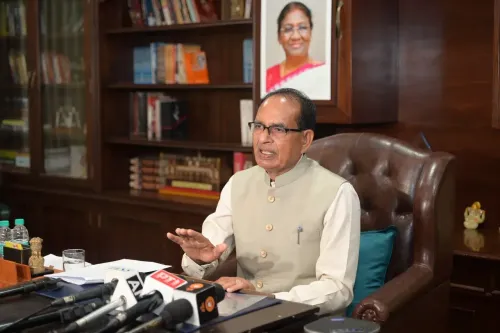
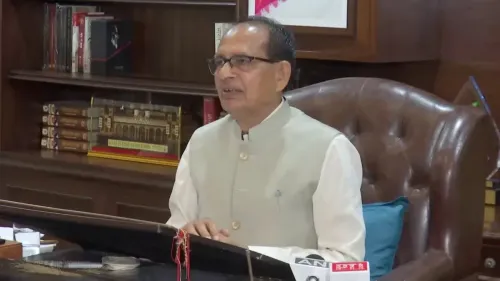
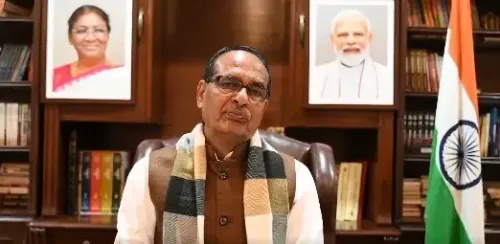
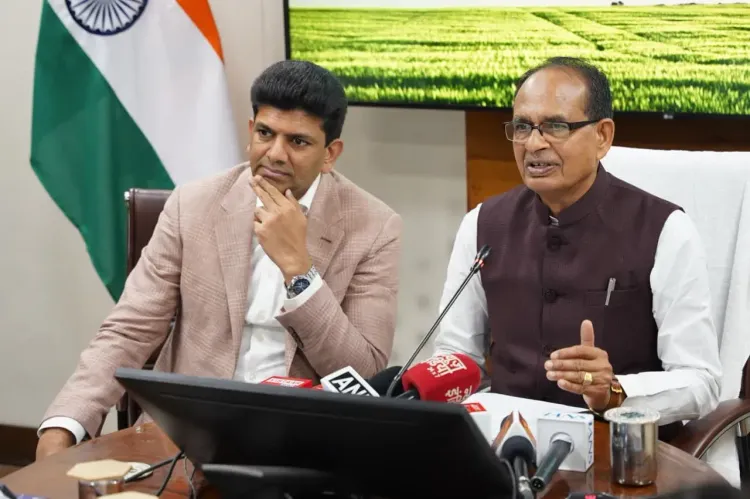
Minister Shivraj Singh Chouhan chaired a video-conference with Rural Development Ministers of all states and UTs from New Delhi on 9 June 2026 to coordinate the transition.
The government has committed that no rural worker will lose even a single day of employment during the shift from MGNREGA to the new framework.
Digital delivery mechanisms — DBT, e-KYC and face authentication — were reviewed at the meeting to underpin timely wage payments under the new scheme.
The announcement coincides with the second anniversary of PM Modi's third-term oath-taking on 9 June 2024 .
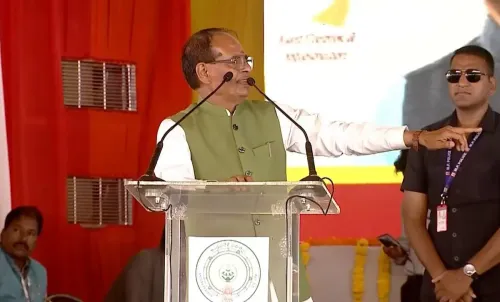
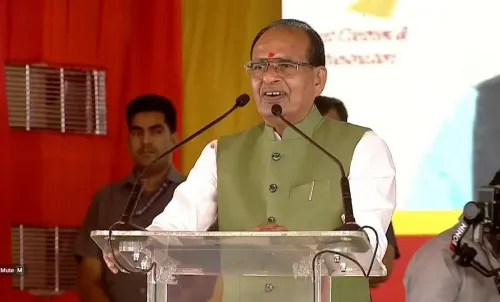
Union Agriculture and Rural Development Minister Shivraj Singh Chouhan on Tuesday, 9 June 2026 announced that the Viksit Bharat–Gram Jeevan Ram Adhiniyam (VB-GJR Act) will come into force from 1 July 2026, marking what he described as a landmark transition in rural employment delivery. Chouhan made the announcement via a post on X, coinciding with the second anniversary of Prime Minister Narendra Modi's third-term oath-taking, and said he had convened a video-conference with Rural Development Ministers of all states and Union Territories from New Delhi to prepare for the rollout.
Context
Chouhan's post, written in Hindi, opens by calling the day 'historic' — 'आज का दिन ऐतिहासिक है' — noting that it marks exactly two years since PM Modi was sworn in for a third term on 9 June 2024. He recalled Modi's pledge from the ramparts of Red Fort to work with 'three times the speed and energy' in the third term, and framed the new rural employment legislation as the fulfilment of that promise.
The minister said the video-conference with state Rural Development Ministers focused on ensuring a seamless transition from MGNREGA to the new framework, with an explicit commitment that 'not a single day's loss of employment' would be suffered by any rural worker during the changeover.
Policy Backdrop
The Mahatma Gandhi National Rural Employment Guarantee Act (MGNREGA), enacted in 2005, guarantees up to 100 days of wage employment annually to rural households and remains one of the world's largest public works programmes. The new VB-GJR framework appears designed to supersede or substantially reform MGNREGA within the broader Viksit Bharat 2047 vision, which links village-level employment security to poverty elimination and self-reliance targets.
Successive Union Budgets since 2014 have progressively introduced Direct Benefit Transfer (DBT), Aadhaar-linked payments and geo-tagging to reduce leakages and improve wage-payment timelines under MGNREGA. The meeting on Tuesday reviewed the status of DBT, e-KYC and face authentication mechanisms — digital infrastructure that will underpin the new scheme's delivery architecture.
Allocation and Stakeholder Impact
Chouhan announced a proposed interim allocation of Rs 95,692 crore for states and Union Territories under the new framework. Including states' matching contributions, the total fund pool is expected to reach approximately Rs 1.51 lakh crore — a figure that, if confirmed, would represent one of the largest single-year rural employment outlays in the country's history.
The minister stressed that timely wage payments and uninterrupted development work are central commitments of the transition. Rural labourers — the primary beneficiaries — number in the tens of crores, and any disruption during the shift between legal frameworks could affect household incomes across India's most economically vulnerable districts. State governments will bear implementation responsibility and are expected to submit readiness reports ahead of the 1 July commencement date.
What's Next
With less than a month to the 1 July 2026 go-live date, the focus shifts to state-level preparedness: completing e-KYC and face-authentication enrolment for existing MGNREGA workers, migrating job-card data to the new system, and ensuring DBT pipelines are tested. Parliamentary scrutiny — including possible questions on transition safeguards, wage arrears and the legal status of the new Act — is likely when the Monsoon Session of Parliament convenes.
Chouhan closed his post with a statement of intent: 'गांव गरीबी मुक्त, रोजगार युक्त, आत्मनिर्भर' — 'villages free from poverty, equipped with employment, self-reliant' — positioning the VB-GJR Act as a 'milestone' in that journey under PM Modi's leadership.
Point of View
Framing a major administrative transition as a milestone of governance delivery rather than routine policy. The Rs 1.51 lakh crore combined outlay, if it holds in final budgetary approvals, would substantially exceed recent MGNREGA allocations and could reshape the political economy of rural welfare ahead of several state elections. Chouhan's emphasis on 'zero disruption' and DBT-linked wage payments addresses a persistent criticism of MGNREGA — delayed and diverted wages — suggesting the new Act is designed partly to neutralise that vulnerability. The convergence of a new legal framework, a large fund announcement and a technology-readiness review in a single day points to a coordinated rollout strategy rather than an ad hoc communication.
NationPress
24 Oct 2026
Frequently Asked Questions
What is the Viksit Bharat Gram Jeevan Ram Act?
The Viksit Bharat–Gram Jeevan Ram Adhiniyam (VB-GJR Act) is a new rural employment and development law announced by Union Minister Shivraj Singh Chouhan, set to come into force on 1 July 2026 as a successor framework to MGNREGA, aimed at providing continuous employment and self-reliance to rural households.
How much money has been allocated under the new rural employment scheme?
An interim allocation of Rs 95,692 crore has been proposed for states and Union Territories. Including states' matching contributions, the total fund pool is expected to reach approximately Rs 1.51 lakh crore.
Will MGNREGA workers lose employment during the transition to the new scheme?
The government has explicitly committed that no rural worker will lose even a single day of employment during the transition from MGNREGA to the new VB-GJR framework, as confirmed by Minister Chouhan after a video-conference with all state Rural Development Ministers.
What digital systems will be used under the new rural employment scheme?
The new framework will use Direct Benefit Transfer (DBT), e-KYC and face authentication to ensure timely wage payments and reduce leakages, building on digital infrastructure already partially deployed under MGNREGA.
Why did Shivraj Singh Chouhan call 9 June 2026 a historic day?
Chouhan called 9 June 2026 historic because it marks the second anniversary of Prime Minister Narendra Modi's oath-taking for a third consecutive term on 9 June 2024, and he framed the launch of the VB-GJR Act as a fulfilment of Modi's pledge to work with greater speed and energy in that term.