Shivraj Singh Chouhan hails smooth MGNREGA-to-Viksit Bharat scheme shift
Synopsis
Union Rural Development Minister Shivraj Singh Chouhan on 5 July 2026 announced the seamless completion of the transition from MGNREGA to the Viksit Bharat–G-RAM JI Yojana, congratulating state ministers and officials for coordinating the nationwide changeover.
Key Takeaways
Shivraj Singh Chouhan declared on 5 July 2026 that the transition from MGNREGA to the Viksit Bharat–G-RAM JI Yojana is complete.
The minister described the changeover as 'entirely seamless and uninterrupted' ( पूरी तरह सुचारु और निर्बाध ).
Chouhan congratulated rural development ministers of all states and officials of both central and state governments.
MGNREGA , enacted in 2005 , guarantees up to 100 days of wage employment annually to rural households — a mandate the new scheme is expected to carry forward.
The transition is framed within the Viksit Bharat (Developed India by 2047) policy vision.
Operational performance of the new scheme — employment days, wages, asset creation — will be the key metric to watch in coming months.
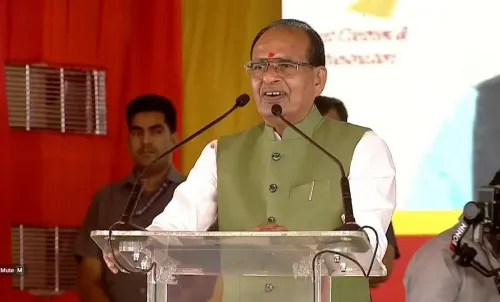
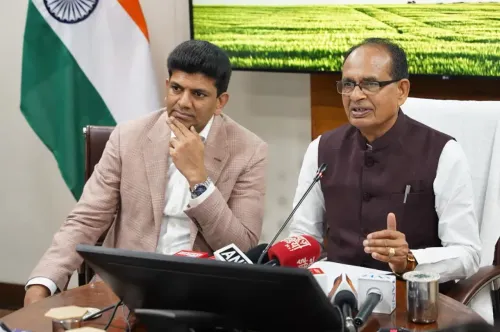
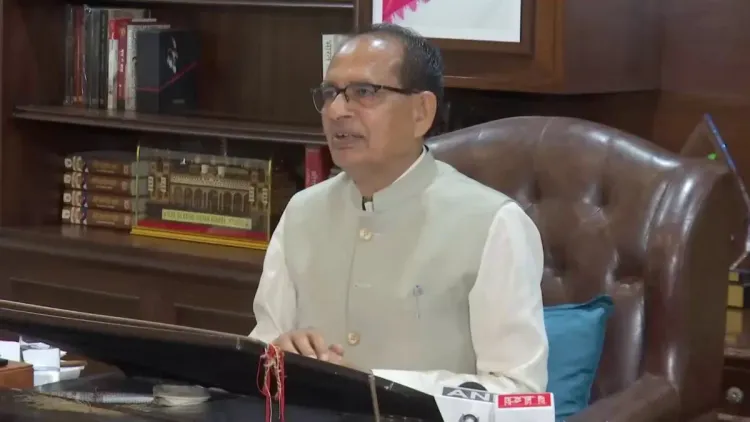
Union Agriculture and Rural Development Minister Shivraj Singh Chouhan on Sunday, 5 July 2026, declared that the transition from MGNREGA to the Viksit Bharat–G-RAM JI Yojana has been completed smoothly and without disruption, congratulating state rural development ministers and officials across both central and state governments for the seamless changeover.
Posting on X in Hindi, Chouhan wrote: 'मनरेगा से विकसित भारत–जी-राम जी योजना का स्मूथ ट्रांजिशन पूरी तरह सुचारु और निर्बाध रूप से संपन्न हुआ है' — ('The smooth transition from MGNREGA to the Viksit Bharat–G-RAM JI Yojana has been completed in an entirely seamless and uninterrupted manner.')
Context
The Mahatma Gandhi National Rural Employment Guarantee Act (MGNREGA), enacted in 2005, has been the cornerstone of rural wage employment policy in India, legally guaranteeing up to 100 days of employment annually to rural households. The scheme has operated across all states and union territories, with the Ministry of Rural Development overseeing its implementation and fund flows. Any structural transition away from MGNREGA represents a significant administrative and policy undertaking, requiring coordination between the central government and state rural development departments.
Chouhan, a four-term former Chief Minister of Madhya Pradesh and a senior BJP leader, now holds the dual portfolio of Agriculture and Rural Development at the Centre — placing him at the helm of this transition.
Policy Backdrop
The Viksit Bharat (Developed India) vision, targeting a fully developed India by 2047, has been a guiding framework in government policy documents since 2022. Successive administrations have sought to evolve MGNREGA beyond its original wage-employment mandate toward greater asset creation, livelihood diversification, and convergence with other rural schemes. The Viksit Bharat–G-RAM JI Yojana appears to be the formal vehicle for this next phase, embedding rural employment within the broader national development architecture.
Policy emphasis in recent years has also focused on technology-driven transparency in rural scheme implementation, reducing leakages, and tightening coordination between state and central administrations — all elements that a transition of this scale would need to address.
Stakeholders and Impact
The most direct beneficiaries of any rural employment guarantee scheme are rural households — particularly marginal farmers, agricultural labourers, and women in rural India — who depend on guaranteed wage work during lean agricultural seasons. A smooth transition, as Chouhan has described, is critical to ensuring there is no gap in wage payments or work availability for these households during the changeover period.
State rural development departments bear the primary implementation burden, and Chouhan's public acknowledgement of their role signals that inter-governmental coordination was a central challenge that has now, per the minister, been resolved. The congratulations extended to state ministers and officials from both central and state governments underscores the federal character of the exercise.
What's Next
With the transition declared complete, attention will now turn to the operational details of the Viksit Bharat–G-RAM JI Yojana — including employment day targets, wage rates, asset creation benchmarks, and digital infrastructure for worker registration and payment. Parliamentary standing committee reviews and the Ministry of Rural Development's annual reports will be watched for data on how employment generation holds up under the new framework. Any disruption to wage payments or work availability at the ground level in the coming months will be an early stress test for the new scheme's architecture.
Point of View
Rebranded under the 'Viksit Bharat' umbrella that the current government has made its signature development narrative. By publicly crediting state governments — including those potentially led by opposition parties — the minister is signalling a cooperative federalism framing, which also pre-empts criticism of a top-down imposition. The real test, however, will be whether the new scheme preserves the demand-driven, legally guaranteed character of MGNREGA or shifts toward a supply-side, government-directed model — a distinction that will matter enormously to India's most economically vulnerable rural households.
NationPress
3 Oct 2026
Frequently Asked Questions
What is the Viksit Bharat G-RAM JI Yojana?
The Viksit Bharat–G-RAM JI Yojana is a rural employment and development scheme announced as the successor to MGNREGA, framed within the government's Viksit Bharat (Developed India by 2047) policy vision. It is overseen by the Ministry of Rural Development.
What is MGNREGA and why is the transition significant?
MGNREGA, enacted in 2005, legally guarantees up to 100 days of wage employment per year to rural households across India. Transitioning away from it to a new scheme is a major policy shift affecting crores of rural workers and requiring coordination across all states.
What did Shivraj Singh Chouhan say about the scheme transition?
Chouhan posted on X on 5 July 2026 that the transition from MGNREGA to the Viksit Bharat–G-RAM JI Yojana has been completed in a 'seamless and uninterrupted manner,' and congratulated state rural development ministers and central and state officials.
Who is responsible for implementing the new rural employment scheme?
The Ministry of Rural Development at the Centre, headed by Shivraj Singh Chouhan, is the nodal ministry. State rural development departments are responsible for on-the-ground implementation.
Will rural workers lose benefits during the MGNREGA transition?
The minister has stated the transition was smooth and uninterrupted, suggesting no intended gap in benefits. However, actual continuity of wage payments and work availability for rural households under the new scheme will become clearer as operational data emerges in coming months.