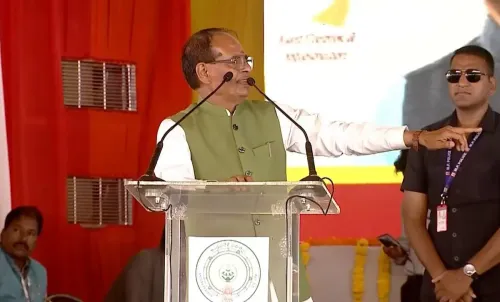
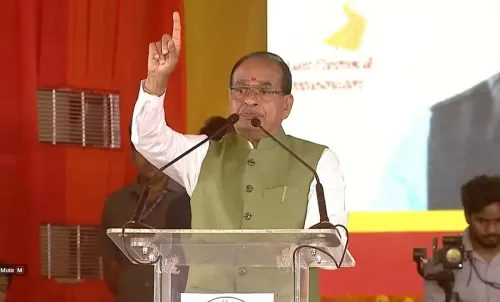
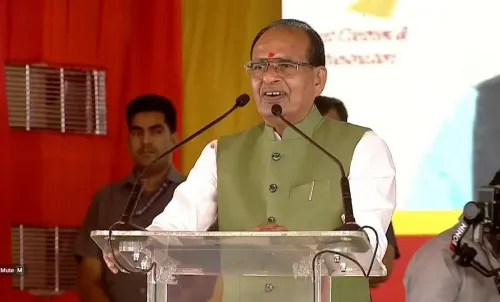
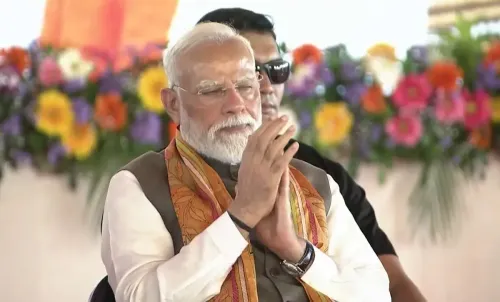
Shivraj meets Bengal CM, flags MGNREGA gaps, unveils July scheme
Synopsis
Agriculture Minister Shivraj Singh Chouhan met West Bengal's Chief Minister at Krishi Bhavan on 8 June 2026, flagged MGNREGA implementation gaps, approved pending rural employment funds, and announced the Viksit Bharat – Gram Ji scheme launch from 1 July, along with a state-specific scientific roadmap for agriculture.
Key Takeaways
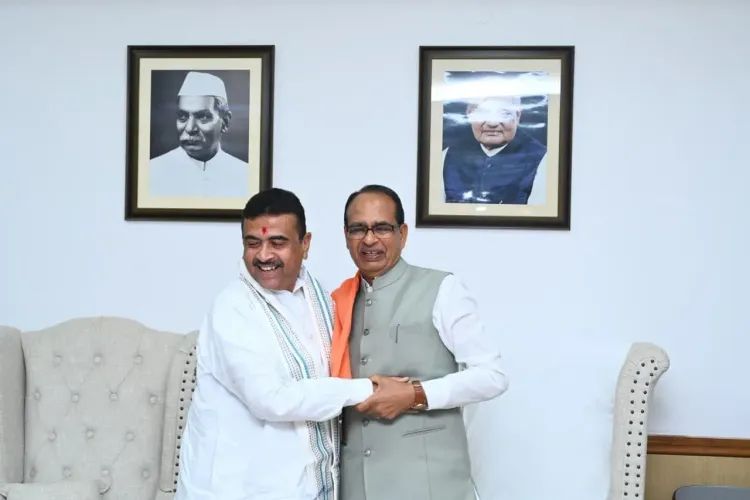
Shivraj Singh Chouhan held talks with the West Bengal Chief Minister at Krishi Bhavan, New Delhi on 8 June 2026 .
The Centre acknowledged that welfare schemes had not reached West Bengal's people 'as expected' due to irregularities in MGNREGA and other rural programmes.
Pending MGNREGA man-days and funds for the remaining period have been approved immediately to prevent any break in rural employment.
The Viksit Bharat – Gram Ji scheme is set to launch on 1 July 2026 , extending the Centre's village-saturation framework to West Bengal.
A scientific roadmap tailored specifically for West Bengal's agriculture and rural development will be prepared by the Centre.
Chouhan invoked PM Narendra Modi 's leadership as the driving force behind the renewed push for West Bengal's agricultural and rural transformation.
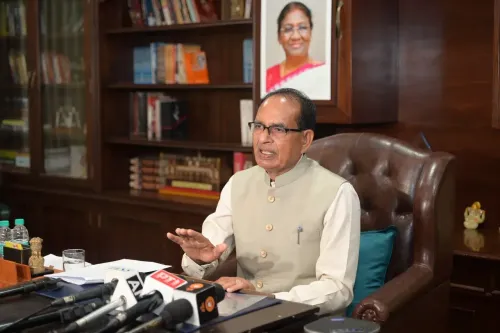
Union Agriculture Minister Shivraj Singh Chouhan met the Chief Minister of West Bengal at Krishi Bhavan, New Delhi, on Monday, 8 June 2026, for wide-ranging talks on rural development, agricultural welfare, and the rollout of central schemes in the state. The discussions centred on accelerating welfare delivery to farmers and rural households, with Chouhan announcing immediate approval of pending MGNREGA man-days and funds and confirming a new central scheme set to launch on 1 July 2026.
Context
Chouhan shared the meeting details on X, writing in Hindi that the two leaders held 'vistar se vichar-vimarsh' (detailed deliberations) on rural development, agricultural welfare, and the effective implementation of the Viksit Bharat – Gram Ji scheme. He described West Bengal as 'sasy-shyamala aur apar sambhavanaon wali dharti' — 'a land lush with crops and immense potential' — while acknowledging that welfare schemes had not reached the state's people 'as expected' in recent years. He attributed part of this to irregularities in MGNREGA and other rural development programmes.
The minister added that the situation in West Bengal had caused him distress, but expressed satisfaction that corrective steps were now in motion. He also confirmed that the remaining man-days and funds required under MGNREGA for the current period have been approved immediately, so that 'not a single day of development is wasted.'
Policy Backdrop
The Mahatma Gandhi National Rural Employment Guarantee Act (MGNREGA), enacted in 2005, guarantees up to 100 days of wage employment annually to rural households across India. West Bengal has periodically featured in central-state disagreements over fund releases and scheme utilisation under this programme, with audit findings pointing to delays and leakages in implementation.
The reference to 'Viksit Bharat – Gram Ji' aligns the state-level push with Prime Minister Narendra Modi's broader national framework for saturating welfare delivery in every village by the centenary of Indian independence. Chouhan explicitly invoked Modi's leadership, stating that the Centre would leave no stone unturned in advancing agriculture and rural development in West Bengal.
Stakeholders and Impact
The primary beneficiaries of the measures discussed are West Bengal's millions of small and marginal farmers and rural wage workers who depend on MGNREGA employment during lean agricultural seasons. Immediate release of pending MGNREGA funds is expected to prevent a break in employment generation before the new scheme's launch on 1 July 2026.
Chouhan announced that the Centre will prepare a 'scientific roadmap' specifically for West Bengal to accelerate progress in villages, farming, and agriculture — a state-specific approach that signals a shift from generic national templates to targeted intervention plans. This is notable given the historically complex relationship between the state government and central rural-welfare machinery.
What's Next
All eyes will be on the operational guidelines and fund-flow mechanisms for the Viksit Bharat – Gram Ji scheme when it goes live on 1 July 2026, and on whether the promised scientific roadmap for West Bengal is formalised with measurable targets. Quarterly MGNREGA utilisation reports will be a key indicator of whether the ground-level implementation gaps flagged by Chouhan are being addressed. Further central-state coordination meetings and possible field reviews are anticipated as the Centre moves to close the delivery deficit it has publicly acknowledged.
Point of View
Rather than a generic national template, suggests the Centre is calibrating its approach ahead of electoral cycles in Bengal. The immediate release of MGNREGA funds, timed to bridge the gap before the 1 July scheme launch, reflects a deliberate effort to neutralise any narrative of central neglect. Taken together, the moves represent a dual-track strategy: administrative outreach paired with unmistakable political messaging.
NationPress
23 Oct 2026
Frequently Asked Questions
What did Shivraj Singh Chouhan discuss with the West Bengal Chief Minister on 8 June 2026?
They discussed rural development, agricultural welfare, and the effective implementation of central schemes including MGNREGA and the upcoming Viksit Bharat – Gram Ji scheme, with a focus on accelerating benefits to farmers and rural workers in West Bengal.
What is the Viksit Bharat Gram Ji scheme and when does it launch?
The Viksit Bharat – Gram Ji scheme is a new central rural-welfare initiative set to launch on 1 July 2026, aimed at saturating village-level development under the broader Viksit Bharat framework championed by PM Narendra Modi.
Why did Shivraj Singh Chouhan criticise MGNREGA implementation in West Bengal?
Chouhan stated that irregularities in MGNREGA and other rural development schemes had slowed the pace of development and prevented welfare benefits from reaching West Bengal's people as expected over recent years.
What immediate relief did the Centre announce for West Bengal's rural workers?
The Centre approved all pending MGNREGA man-days and the required funds for the remaining period immediately, ensuring there is no break in rural wage employment before the new scheme begins on 1 July 2026.
What is the scientific roadmap Shivraj Singh Chouhan mentioned for West Bengal?
Chouhan announced that the Centre will prepare a state-specific scientific roadmap for West Bengal to give new momentum to villages, farmers, and agriculture — a tailored plan distinct from generic national programme templates.