CM Bhajanlal Sharma chairs JDA review, eyes Jaipur as model city
Synopsis
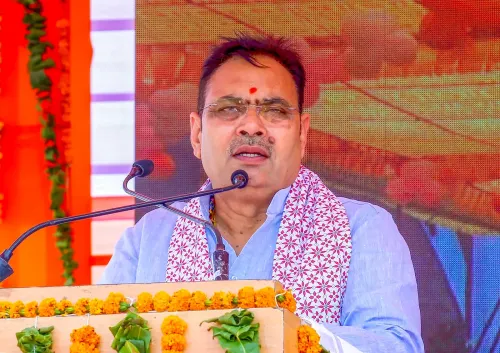
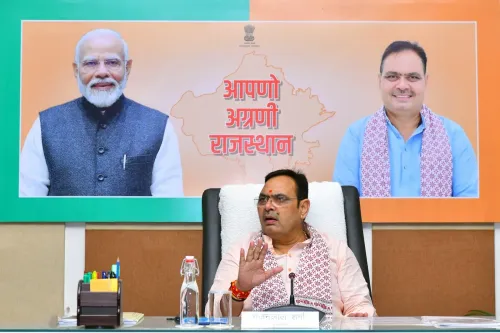
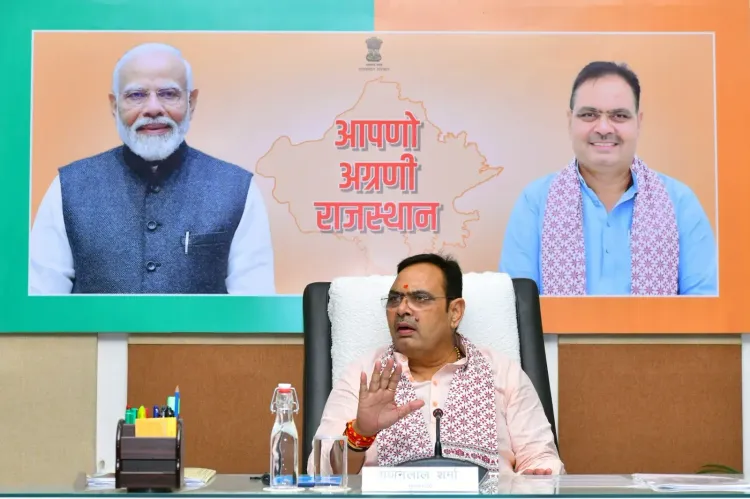
Chief Minister Bhajanlal Sharma chaired a Jaipur Development Authority review on 7 November 2026, calling for the city to be built as a model of organised, future-ready infrastructure. Chief Secretary V. Srinivas and senior CMO officials attended the high-level session.
Key Takeaways
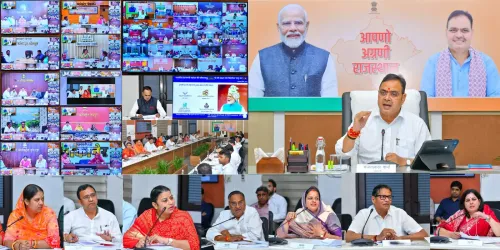
CM Bhajanlal Sharma chaired a Jaipur Development Authority review meeting on 7 November 2026 .
He directed that Jaipur's development must address both present demands and future infrastructure needs.
The state government's stated goal is to develop Jaipur as an 'excellent model' city with well-organised basic amenities.
Srinivas and Additional Chief Secretary Akhil Arora were among the senior officials present.
Jaipur was included in the Smart Cities Mission in 2015 , making it a long-standing focus for planned urban development in Rajasthan.
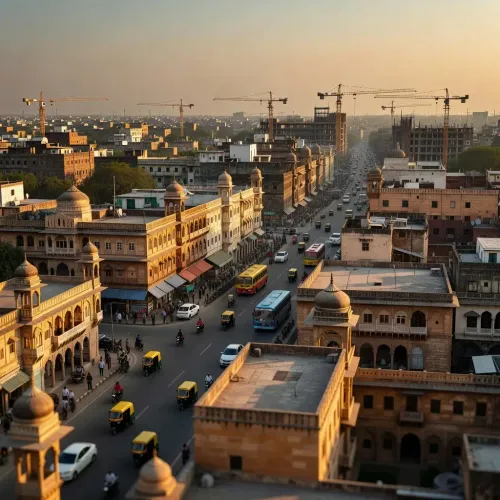
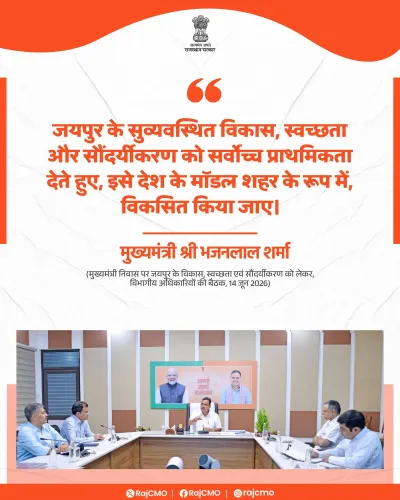
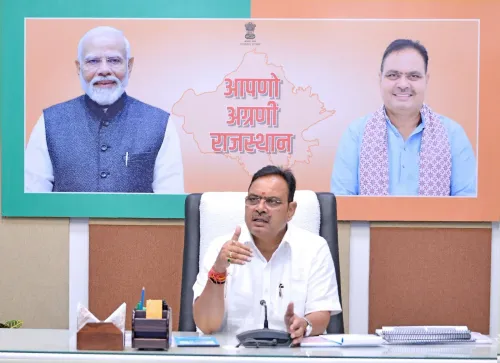
Jaipur's future is on the drawing board — again, but with new urgency. Chief Minister Bhajanlal Sharma chaired a high-level review meeting of the Jaipur Development Authority (JDA) on Saturday, 7 November 2026, directing that the capital city's expansion must account not just for today's demands but for the infrastructure needs of generations ahead.
Sharma was unambiguous in his vision: the state government's goal, he said, is to develop Jaipur as an 'उत्कृष्ट मॉडल' ('excellent model') city — one defined by better-organised and expanded basic amenities. The push is for a city that works both now and later.
Who was in the room — and what it signals
The meeting was attended by Chief Secretary V. Srinivas and Additional Chief Secretary (Chief Minister's Office) Akhil Arora, alongside other departmental officials. The presence of the Chief Secretary at a JDA review signals that this is not a routine departmental check-in — it is a whole-of-government exercise in prioritising the state capital's growth trajectory.
Jaipur's long road to planned urban growth
Jaipur was selected under the Smart Cities Mission in 2015 for area-based development and technology-driven urban projects. The city has since become a focal point for successive Rajasthan governments seeking to balance heritage preservation with rapid urban expansion. The JDA, as the statutory planning body, sits at the centre of every major housing, road, and infrastructure decision in the metropolitan area.
Periodic high-level reviews of JDA projects are a recurring feature of Rajasthan governance — but the framing here, 'future needs alongside present requirements', points to a longer planning horizon than typical mid-term reviews. It echoes the master-plan approach that urban planners have long argued is the only way to prevent Jaipur from repeating the chaotic sprawl seen in other fast-growing Indian cities.
What residents and planners will watch next
The Chief Minister's directive now sets the expectation for follow-through: updates to Jaipur's master plan, funding releases for pending JDA projects, and subsequent review meetings will all be measured against the 'model city' benchmark he has publicly set. For Jaipur's residents — navigating congested arterials, uneven civic amenities, and fast-spreading peri-urban zones — the proof will be in the projects that actually break ground.
Rajasthan's state capital is at an inflection point. Whether this meeting marks the start of a decisive push or another entry in a long ledger of planning intentions will become clear in the months ahead — and the pressure is now firmly on the JDA to deliver.
Point of View
Chief Minister Sharma is staking a long-horizon governance claim — one that positions Rajasthan's capital as a planned-city benchmark rather than a reactive patch-up job. The move fits a broader BJP state-government pattern of using high-profile urban-development reviews to signal administrative seriousness ahead of delivery milestones. With Jaipur's population and real-estate pressure growing steadily, the political cost of non-delivery on this 'model city' promise is real. Watch whether specific project announcements or master-plan amendments follow — that will separate vision from optics.
NationPress
7 Nov 2026
Frequently Asked Questions
What was decided in the Jaipur Development Authority meeting on 7 November 2026?
Chief Minister Bhajanlal Sharma chaired the meeting and directed that Jaipur be developed as a model city with better-organised basic amenities, keeping both present and future infrastructure needs in mind. Specific decisions from the meeting have not yet been publicly announced.
What is the Jaipur Development Authority (JDA)?
The Jaipur Development Authority is the statutory urban planning body responsible for development, housing, and infrastructure projects in Jaipur, the capital of Rajasthan.
Who attended the JDA review meeting chaired by CM Bhajanlal Sharma?
Chief Secretary V. Srinivas and Additional Chief Secretary (Chief Minister's Office) Akhil Arora were among the senior officials who attended the meeting alongside other departmental officers.
Is Jaipur a Smart City under the central government's Smart Cities Mission?
Yes, Jaipur was selected under the Smart Cities Mission in 2015 for area-based development and technology-driven urban projects.
What does CM Sharma mean by developing Jaipur as a 'model city'?
CM Sharma used the phrase to describe a city with high-quality, well-organised infrastructure and basic amenities that meets current needs while being planned for future urban growth — a benchmark standard for urban development in Rajasthan.