CM Bhajanlal Sharma: Rajasthan leads nation in PACS cooperative drive
Synopsis
Chief Minister Bhajanlal Sharma, speaking at the Ministry of Cooperation's 5th Foundation Day in New Delhi, said Rajasthan has achieved a national lead in affiliating Primary Agricultural Credit Societies with the Bharatiya Beej Sahakari Samiti and in forming new multi-purpose cooperative societies.
Key Takeaways
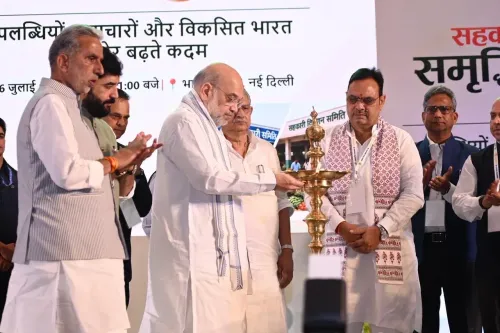
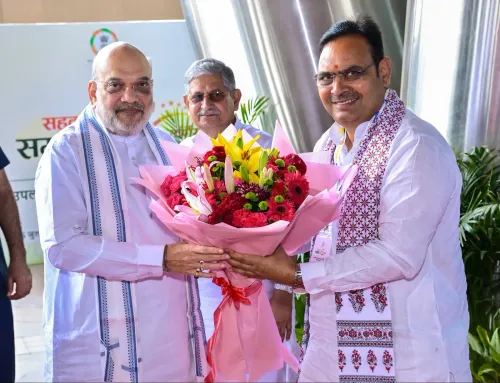
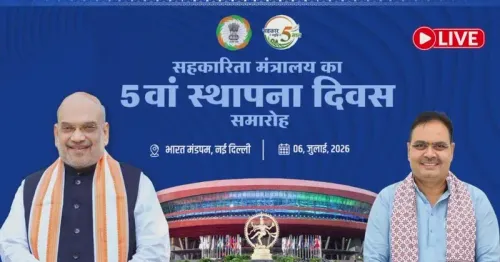
CM Bhajanlal Sharma addressed the Ministry of Cooperation's 5th Foundation Day in New Delhi on 6 July 2026 .
Rajasthan has claimed a national-level leading position in affiliating Primary Agricultural Credit Societies (PACS) with the Bharatiya Beej Sahakari Samiti .
The state has also led in the formation of new multi-purpose cooperative societies .
The Ministry of Cooperation was created in July 2021 to give dedicated policy focus to India's cooperative sector.
The PACS affiliation drive aims to improve certified seed access and reduce farmer dependence on private intermediaries.
State-wise comparative data on cooperative registrations is expected to be released by the ministry in coming months.
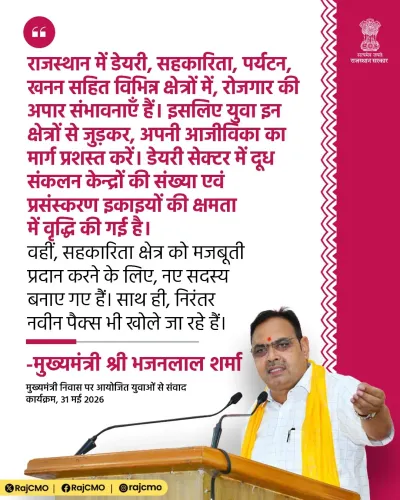
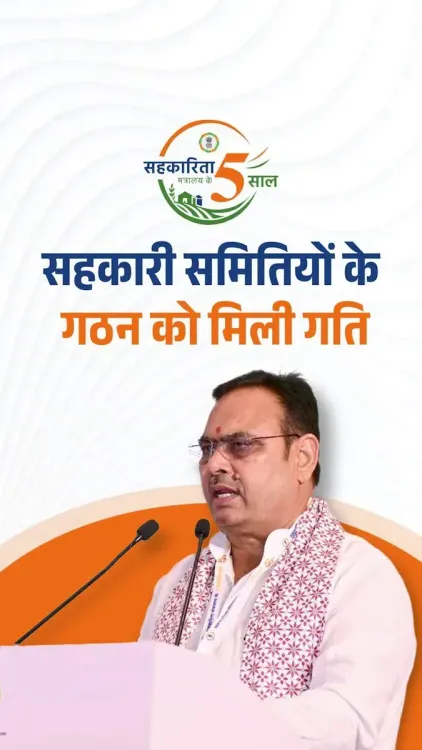
Chief Minister Bhajanlal Sharma of Rajasthan addressed the 5th Foundation Day celebration of the Ministry of Cooperation in New Delhi on Monday, 6 July 2026, declaring that Rajasthan has secured a leading position nationally in affiliating Primary Agricultural Credit Societies with the Bharatiya Beej Sahakari Samiti and in forming new multi-purpose cooperative societies.
Context
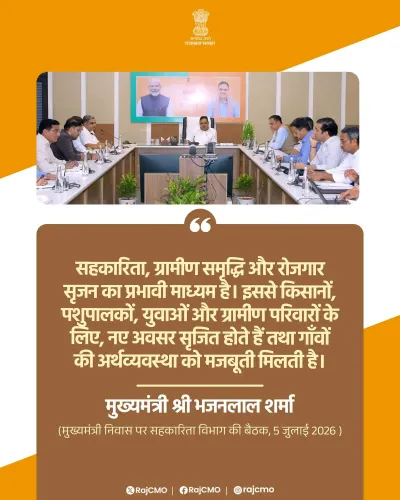
Speaking at the event, CM Bhajanlal Sharma said — translated from Hindi — that 'prathamik krishi rin samitiyon ko Bharatiya Beej Sahakari Samiti ki sadasyata dilaane' (affiliating primary agricultural credit societies with the national seed cooperative) and forming new multi-purpose cooperative societies are areas where Rajasthan has achieved a national-level lead. The Chief Minister's remarks came under the hashtag #आपणो_अग्रणी_राजस्थान, which translates to 'Our Leading Rajasthan', a phrase the state government has used to highlight development benchmarks.
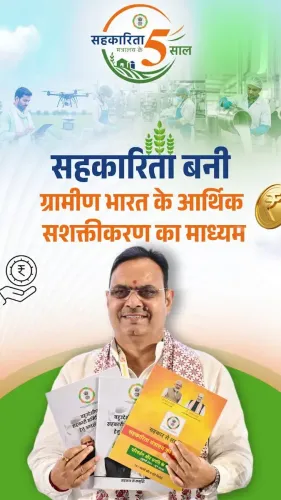
The Ministry of Cooperation was established in July 2021 as a dedicated central ministry to give focused policy attention to India's cooperative sector, which had previously been handled as a sub-function of the agriculture ministry. Its foundation day marks the anniversary of that creation.
Policy Backdrop
Since 2021, the central government has promoted a cluster of new national-level cooperatives — covering seeds, fertilisers, and exports — and has simultaneously pushed state governments to affiliate their village-level Primary Agricultural Credit Societies (PACS) with these bodies. The drive is part of a broader effort to integrate grassroots cooperative networks into larger agricultural supply chains and reduce farmer dependence on private intermediaries.
The Bharatiya Beej Sahakari Samiti is one such national cooperative, set up to improve the availability and quality of certified seeds through the cooperative network. Membership of PACS in this body is intended to give village-level societies a direct role in seed procurement and distribution, strengthening the last-mile link between national agricultural policy and individual farmers.
A parallel nationwide programme to computerise and modernise PACS, launched in 2021–22 with central funding, has also been a key pillar of this reform agenda, aiming to make these societies more transparent and operationally efficient.
Stakeholders and Impact
Rajasthan, a predominantly agrarian state in north-western India with a large rural cooperative network, stands to benefit significantly if PACS affiliations translate into improved seed access and credit flow for farmers. PACS members — predominantly smallholder and marginal farmers — are the primary beneficiaries of any expansion in cooperative services at the village level.
The formation of new multi-purpose cooperative societies extends the model beyond credit, potentially covering input supply, storage, and market linkages. This diversification is central to the central government's vision of cooperatives as full-service rural institutions rather than single-purpose credit bodies.
What's Next
State-wise data on new multi-purpose cooperative registrations and PACS affiliations is expected to be released as the Ministry of Cooperation tracks progress across states. Rajasthan's claimed national lead will be tested against comparable disclosures from other large agricultural states. Further announcements on PACS modernisation and cooperative expansion are anticipated at upcoming ministry-level events, with CM Bhajanlal Sharma having now publicly staked the state's reputation on its cooperative performance.
Point of View
Demonstrating measurable progress on a scheme championed by the Union government carries both administrative and political value. The emphasis on PACS affiliation and multi-purpose societies reflects the broader national push to transform cooperatives from single-function credit bodies into comprehensive rural service platforms. Whether Rajasthan's lead holds up to independent verification will determine how durable this positioning proves to be.
NationPress
6 Jul 2026
Frequently Asked Questions
What did CM Bhajanlal Sharma say at the Ministry of Cooperation Foundation Day?
CM Bhajanlal Sharma said Rajasthan has achieved a national-level leading position in affiliating Primary Agricultural Credit Societies with the Bharatiya Beej Sahakari Samiti and in forming new multi-purpose cooperative societies.
What is the Bharatiya Beej Sahakari Samiti?
The Bharatiya Beej Sahakari Samiti is a national-level seed cooperative promoted by the central government to improve the availability and quality of certified seeds through India's cooperative network.
What is the Ministry of Cooperation and when was it formed?
The Ministry of Cooperation is a dedicated central government ministry created in July 2021 to provide focused policy attention to India's cooperative sector, which was previously managed under the agriculture ministry.
What are Primary Agricultural Credit Societies (PACS)?
PACS are village-level cooperative bodies that provide short-term agricultural credit and input services to farmers; they are the grassroots foundation of India's rural cooperative network.
Why is Rajasthan's cooperative ranking significant?
Rajasthan's claimed national lead in PACS affiliations and new cooperative formations indicates the state is among the frontrunners in implementing the central government's post-2021 cooperative reform agenda, which aims to reduce farmer dependence on private intermediaries.