CM Bhajanlal Sharma Visits Ramdevra, Walks to Temple with Holy Flag
Synopsis
Rajasthan Chief Minister Bhajanlal Sharma undertook a foot procession to the Baba Ramdev temple in Ramdevra, Jaisalmer on 24 September 2026, carrying the saint's sacred flag, offering prayers for state welfare, listening to devotional compositions, and personally serving food to pilgrims at the free community kitchen.
Key Takeaways
CM Bhajanlal Sharma visited the Baba Ramdev Temple at Ramdevra, Jaisalmer on 24 September 2026 .
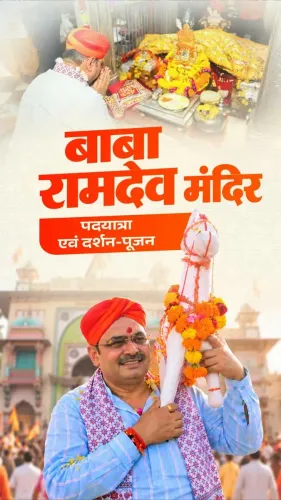
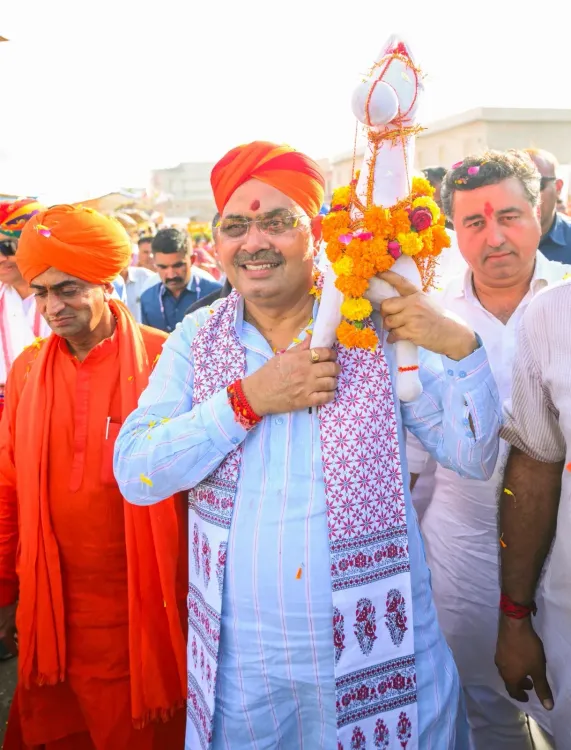
He began a padyatra (foot procession) from the bus stand, walking through the main market to the temple while carrying the sacred neja (flag) of Baba Ramdev.
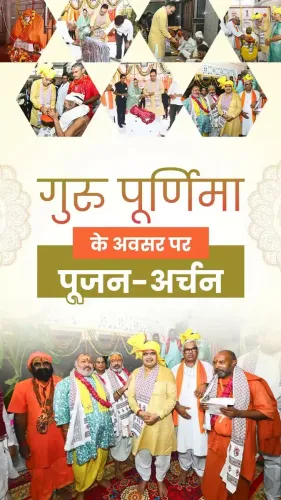
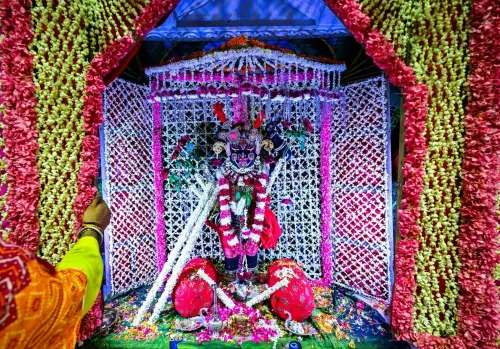
The CM offered prayers at the pavan samadhi of Baba Ramdev , seeking peace, happiness and prosperity for Rajasthan.
He also visited the samadhi of Dalibai , the saint's devoted historical follower, within the temple complex.
At the Jamma-Jagaran site , he listened to Baba Ramdev's rikhiyas (devotional compositions).
CM Sharma personally served sanctified food ( prasadi ) to pilgrims at the temple's free community kitchen .
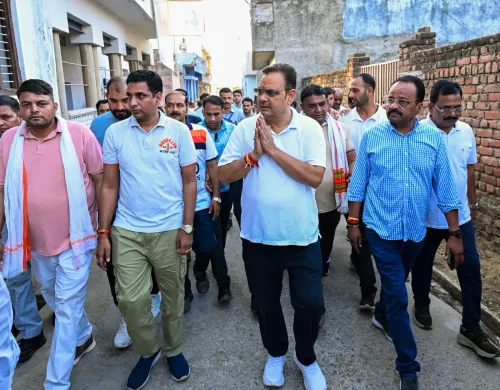
Barefoot devotion met statecraft on the desert sands of Jaisalmer on Thursday, 24 September 2026, as Rajasthan Chief Minister Bhajanlal Sharma walked on foot from the bus stand through the main market of Ramdevra, carrying the sacred flag — the neja (ध्वजा) — of folk saint Baba Ramdev, before offering prayers at the revered temple for the welfare of the state.
The Chief Minister's Office shared that CM Sharma sought the blessings of the pavan samadhi (sacred shrine) of Baba Ramdev at the celebrated Baba Ramdev Temple in Ramdevra, praying for peace, happiness, and prosperity across Rajasthan. He also paid his respects at the samadhi of Dalibai, the devoted historical follower of Baba Ramdev, whose own shrine sits within the same temple complex.
Padyatra from the Bus Stand — Flag in Hand
Before entering the temple, the Chief Minister began a padyatra (foot procession) from the local bus stand, walking through Ramdevra's main market to arrive at the shrine — a gesture that mirrors the tradition of countless pilgrims who approach the deity on foot as an act of surrender and devotion. The sight of a sitting Chief Minister carrying Baba Ramdev's neja — the iconic saffron flag that devotees offer at the temple — gave the visit a decidedly participatory rather than ceremonial character.
Jamma-Jagaran and Serving the Faithful
After the darshan, CM Sharma proceeded to the Jamma-Jagaran site, where he listened to Baba Ramdev's rikhiyas — devotional compositions and oral traditions central to the saint's worship. He then stepped into the temple's free community kitchen (nihshulk bhojanshala), personally serving prasadi — sanctified food — to pilgrims gathered there, a gesture that visibly placed him among the devotees rather than above them.
Baba Ramdev: Rajasthan's 14th-Century Folk Saint
Baba Ramdev, a 14th-century folk saint and deity, is one of Rajasthan's most widely venerated figures, particularly among rural and Meghwal communities across western Rajasthan. His shrine at Ramdevra village in Jaisalmer district draws hundreds of thousands of pilgrims — especially around the annual Ramdevra fair — making it one of the most significant folk-religious destinations in the state. Dalibai, whose samadhi the CM also visited, is celebrated as Baba Ramdev's most devoted follower, her story woven into the saint's oral tradition.
Chief ministers of Rajasthan visiting Ramdevra is not new — the site holds deep popular resonance across caste and community lines — but the specific texture of this visit, with the padyatra, the flag-bearing, and the hands-on seva at the kitchen, signals a deliberate identification with the devotional tradition rather than a photo-opportunity drop-in. As Rajasthan's political calendar thickens toward a series of key by-elections and civic polls, the optics of the Chief Minister walking the same dusty road as his constituents will not be lost on anyone watching.
Point of View
Rather than a motorcade arrival, positions the CM as a participant in the devotional tradition rather than a patron of it, a distinction voters in western Rajasthan are well-equipped to read. With Rajasthan's political landscape remaining closely contested since the 2023 assembly election, such grassroots-toned public appearances in districts like Jaisalmer serve a dual function: cultural affirmation and constituency cultivation. The visit also reinforces the state government's ongoing emphasis on religious tourism and heritage circuits as a soft-power economic lever for western Rajasthan.
NationPress
24 Sept 2026
Frequently Asked Questions
Why did Rajasthan CM Bhajanlal Sharma visit Ramdevra?
CM Bhajanlal Sharma visited the Baba Ramdev Temple at Ramdevra in Jaisalmer on 24 September 2026 to offer prayers for the peace, happiness and prosperity of Rajasthan. He also participated in a foot procession, listened to devotional compositions, and served food to pilgrims.
Where is Ramdevra and why is it religiously significant?
Ramdevra is a village in Jaisalmer district, western Rajasthan. It is home to the main temple of Baba Ramdev, a 14th-century folk saint revered across Rajasthan — especially among Meghwal and rural communities. The site draws hundreds of thousands of pilgrims annually.
Who is Dalibai and why did the CM visit her samadhi?
Dalibai is a celebrated historical devotee of Baba Ramdev, whose samadhi (sacred shrine) is located within the Ramdevra temple complex. CM Sharma paid his respects there as part of his broader darshan visit to the site.
What is the neja (ध्वजा) of Baba Ramdev?
The neja is a sacred saffron flag that is a central symbol of devotion to Baba Ramdev. Pilgrims traditionally carry or offer the neja at Ramdevra as an act of faith. CM Sharma carried the flag during his padyatra from the bus stand to the temple.
What is Jamma-Jagaran at Ramdevra?
Jamma-Jagaran is a devotional night-vigil tradition associated with Baba Ramdev worship at Ramdevra, where the saint's rikhiyas — oral devotional compositions — are recited and heard by pilgrims. CM Sharma listened to these recitations during his visit.