CM Bhajan Lal Sharma offers deep daan on Ganga Dussehra
Synopsis
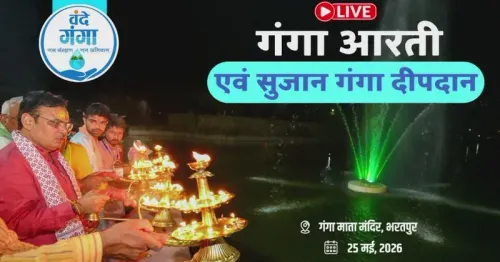
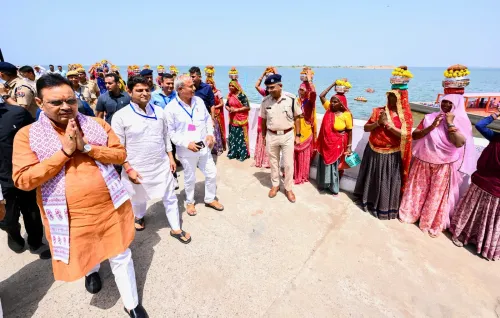
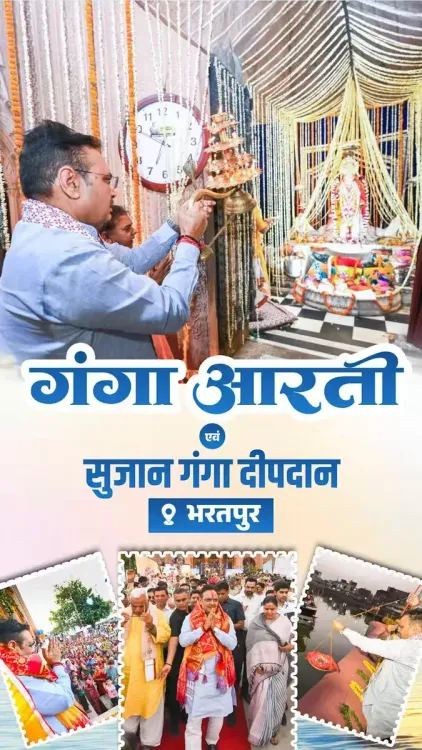
Rajasthan Chief Minister Bhajan Lal Sharma offered lamps at Sujan Ganga on Ganga Dussehra, praying for the progress, prosperity, and peace of Rajasthan's people. The ritual reflects a broader pattern of BJP-led state governments marking major Hindu festivals with public ceremonial participation.
Key Takeaways
CM Bhajan Lal Sharma performed deep daan at Sujan Ganga on the occasion of Ganga Dussehra .
He prayed for the happiness, prosperity, and well-being of Rajasthan's residents.
Ganga Dussehra marks the mythological descent of the Ganges, observed on Jyeshtha Shukla Dashami .
The ritual aligns with a recurring pattern of BJP chief ministers performing visible Hindu observances on major festivals.
The central Namami Gange programme (launched 2014 ) encourages state-level cultural and ecological engagement with the river.
CM Sharma has been in office since December 2023 .
Rajasthan Chief Minister Bhajan Lal Sharma performed the traditional ritual of deep daan (lamp offering) at Sujan Ganga on the occasion of Ganga Dussehra on Tuesday, 27 May 2026, praying for the well-being, prosperity, and happiness of the people of Rajasthan.
Context
In a post shared on X, CM Sharma wrote: 'Ganga Dussehra ke pawan avsar par Sujan Ganga mein deepdaan kar pradeshwasiyon ki sukh-samriddhi evam khushhaali ki mangal kamna ki' — 'On the auspicious occasion of Ganga Dussehra, I offered lamps at Sujan Ganga and prayed for the happiness, prosperity, and well-being of the people of the state.' He further expressed the wish that, by the grace of Maa Ganga, the state may continue to advance on the path of progress, prosperity, and peace.
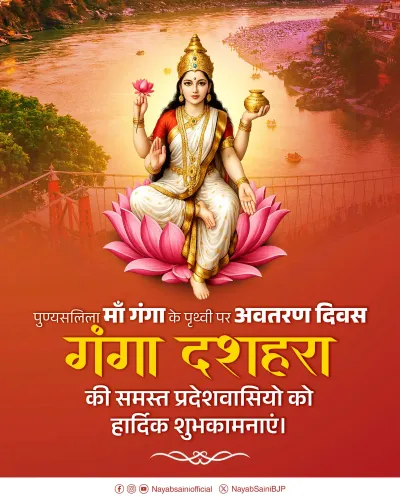
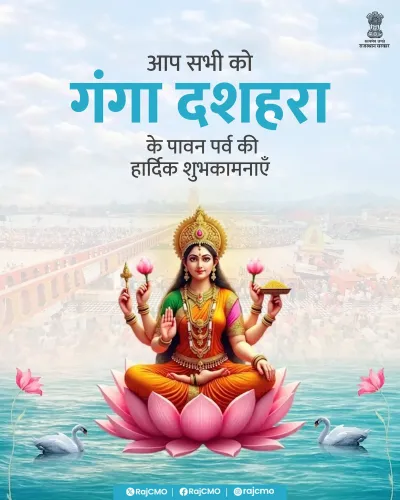
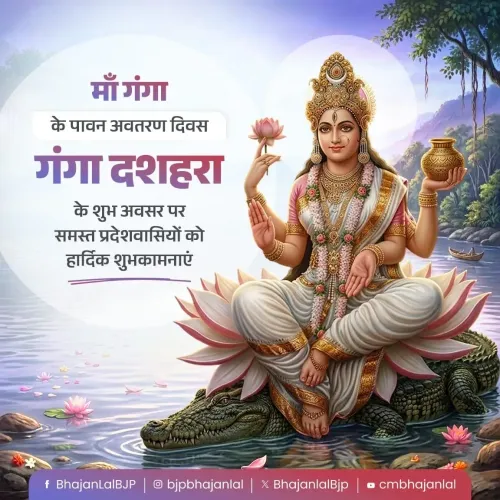
Ganga Dussehra falls on the Jyeshtha Shukla Dashami of the Hindu calendar and commemorates the mythological descent of the river Ganges to Earth. It is observed across northern India with rituals including lamp offerings, holy dips, and community prayers at riverbanks and water bodies.
Policy Backdrop
The participation of a state chief minister in river-side religious observances carries resonance beyond the ceremonial. The Namami Gange programme, launched by the central government in 2014, encourages state-level engagement in the cultural and ecological rejuvenation of the Ganges and its tributaries. While Rajasthan is not a Ganga-basin state in the conventional sense, the ritual underlines the broader cultural significance of the river across the Hindi belt.
BJP-led state governments have consistently seen chief ministers perform visible Hindu rituals on major festivals as part of public outreach. For CM Sharma, who assumed office in December 2023, such appearances form part of a broader pattern of cultural affinity signalling that resonates with the state's predominantly Hindu electorate.
Stakeholders and Impact
The primary audience for the gesture is the Hindu devotee community and the general residents of Rajasthan, for whom the chief minister's participation in a shared religious moment carries symbolic weight. The ritual reinforces the government's positioning as culturally rooted while projecting an image of a leader who shares in the spiritual life of the state.
Community and religious organisations that organise Ganga Dussehra events at local water bodies are also stakeholders, as the chief minister's presence — or public acknowledgment — lends institutional visibility to grassroots observances.
What's Next
Political observers will watch whether CM Sharma follows similar public participation in upcoming festivals such as Teej or Govardhan Puja, which carry significant electoral and cultural weight in Rajasthan. Any state budget announcements or policy decisions linked to riverfront development or cultural heritage sites in the coming months will be seen in the context of this pattern of cultural engagement by the current administration.
Point of View
Sharma is still in the phase of consolidating his public persona, and such rituals serve as low-cost, high-reach signals to the Hindu electorate. The gesture also fits neatly into the broader Namami Gange cultural ecosystem, giving a local water body national symbolic resonance. Analysts will track whether this ceremonial engagement translates into concrete riverfront or heritage-site policy commitments in the state budget cycle.
NationPress
15 Sept 2026
Frequently Asked Questions
What is Ganga Dussehra and why is it celebrated?
Ganga Dussehra is an annual Hindu festival observed on Jyeshtha Shukla Dashami that commemorates the mythological descent of the river Ganges to Earth. It is marked with rituals such as lamp offerings, holy dips, and community prayers at rivers and water bodies across northern India.
What did Rajasthan CM Bhajan Lal Sharma do on Ganga Dussehra 2026?
CM Bhajan Lal Sharma performed deep daan — a traditional lamp offering — at Sujan Ganga on Ganga Dussehra and prayed for the prosperity, happiness, and peace of Rajasthan's residents.
Who is Bhajan Lal Sharma?
Bhajan Lal Sharma is the Chief Minister of Rajasthan and a senior BJP leader who assumed office in December 2023 following the party's victory in the state assembly elections.
What is the Namami Gange programme?
Namami Gange is a central government programme launched in 2014 aimed at the ecological and cultural rejuvenation of the Ganges river, with state governments encouraged to participate in related initiatives.