CM Bhajanlal Spotlights Shekhawati's Heritage Sites
Synopsis
The Chief Minister's Office of Rajasthan on 21 July 2026 highlighted Shekhawati's religious and historical sites as symbols of the state's rich cultural heritage, continuing CM Bhajanlal Sharma's sustained push to promote the region's 18th- and 19th-century havelis, temples, and frescoes through official channels.
Key Takeaways
The Chief Minister's Office of Rajasthan posted on 21 July 2026 celebrating the heritage of the Shekhawati region.
Shekhawati spans Sikar , Jhunjhunu , and Churu districts and is known for its 18th- and 19th-century painted havelis and temples.
The post was addressed to Chief Minister Bhajanlal Sharma and shared under the hashtag #आपणो_अग्रणी_राजस्थान ('Our Leading Rajasthan').
Rajasthan governments have promoted Shekhawati as part of heritage tourism circuits since the early 2000s .
The spotlight raises expectations of future policy announcements on restoration funding or heritage circuit development in the region.
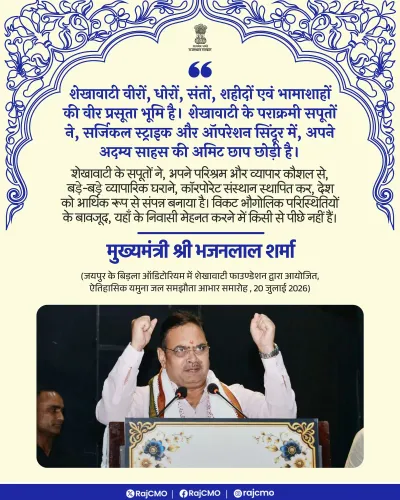
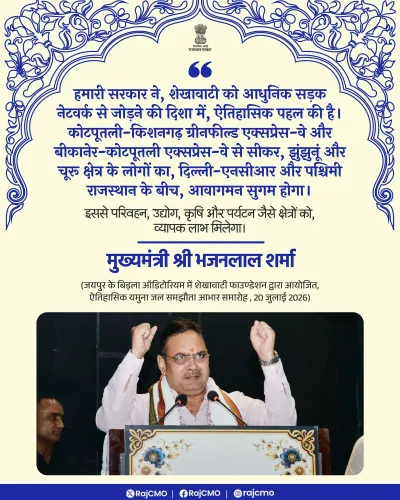
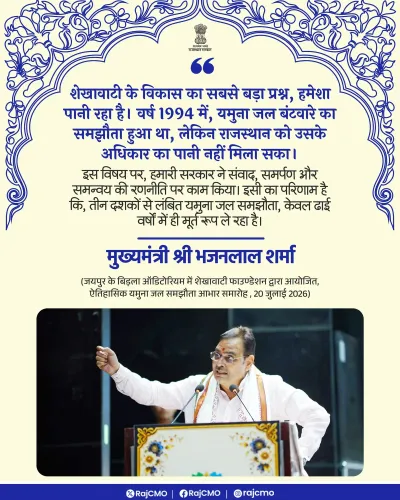
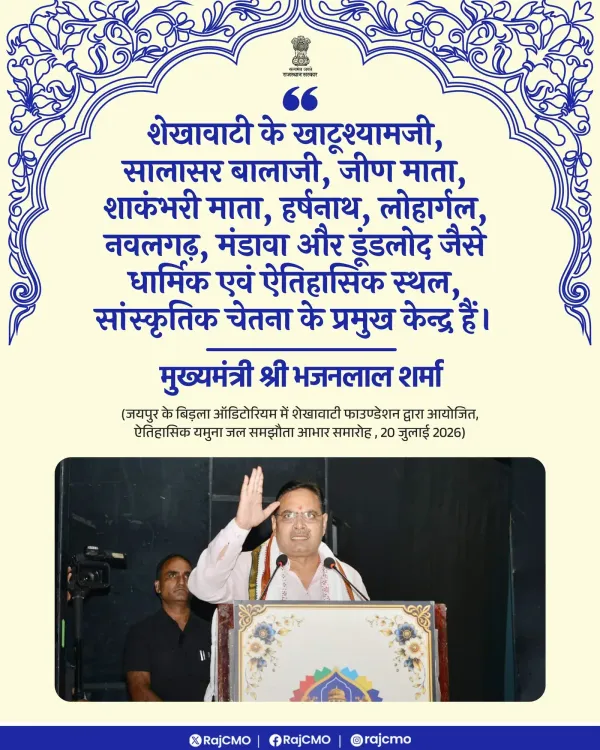
The Chief Minister's Office of Rajasthan on Tuesday, 21 July 2026 highlighted the religious and historical sites of the Shekhawati region, describing them as symbols of the state's rich cultural heritage in a post addressed to Chief Minister Bhajanlal Sharma.
Context
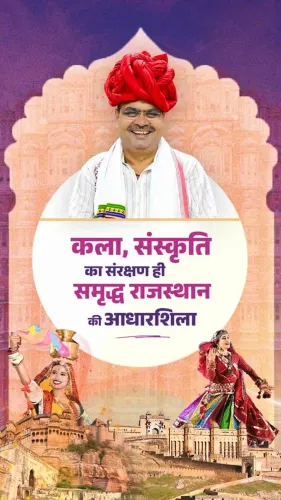
The post, shared under the hashtag #आपणो_अग्रणी_राजस्थान ('Our Leading Rajasthan'), reads: 'शेखावाटी के धार्मिक एवं ऐतिहासिक स्थल, हमारी समृद्ध सांस्कृतिक विरासत के प्रतीक हैं' — 'The religious and historical sites of Shekhawati are symbols of our rich cultural heritage.' The message is part of the Rajasthan government's sustained effort to spotlight regional heritage through official channels.
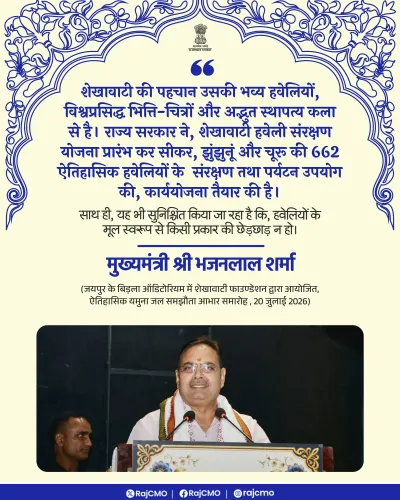
Shekhawati is a sub-region spanning the districts of Sikar, Jhunjhunu, and Churu in northern Rajasthan. It is internationally recognised for its dense concentration of 18th- and 19th-century painted havelis, ornate temples, and elaborate frescoes that chronicle the mercantile prosperity of the era.
Policy Backdrop
Rajasthan governments have promoted heritage tourism circuits, including routes through Shekhawati, under successive tourism policies since the early 2000s. The region's havelis and religious sites have been positioned as anchors for cultural and experiential tourism, drawing both domestic and international visitors.
Chief Minister Bhajanlal Sharma, who assumed office in December 2023, has placed cultural promotion alongside infrastructure and development priorities. Official social media messaging under his tenure has consistently amplified Rajasthan's heritage identity as a pillar of the state's brand.
Stakeholders and Impact
Residents of Sikar, Jhunjhunu, and Churu districts stand to benefit most directly from increased government attention on Shekhawati's heritage assets, particularly through potential boosts to local tourism and allied livelihoods. Heritage conservation groups and the hospitality sector in the region are also key stakeholders.
For heritage tourists — both from within India and abroad — official recognition of Shekhawati's sites reinforces the region's standing as a must-visit destination on Rajasthan's cultural map. The state's tourism economy, already one of the largest in India, relies significantly on such heritage circuits.
What's Next
The government's focus on Shekhawati raises the possibility of future announcements on restoration funding, heritage circuit development, or support for local cultural festivals. Any formal policy move in this direction would build on existing frameworks and signal deeper institutional commitment to the region's preservation.
Observers will watch whether this social media spotlight translates into budgetary allocations or scheme-level interventions for Shekhawati under the current tourism policy cycle.
Point of View
' the messaging aligns with CM Bhajanlal Sharma's broader effort to position Rajasthan as a heritage-first state under BJP governance. The choice of Shekhawati — a region with strong electoral significance across Sikar, Jhunjhunu, and Churu — also carries an implicit political dimension, signalling administrative attention to a constituency-rich zone. Whether this translates into concrete heritage funding will be the real test of the government's stated cultural priorities.
NationPress
21 Jul 2026
Frequently Asked Questions
What is Shekhawati known for?
Shekhawati is a region in northern Rajasthan spanning Sikar, Jhunjhunu, and Churu districts, renowned for its concentration of 18th- and 19th-century painted havelis, ornate temples, and elaborate frescoes that reflect the area's historical mercantile wealth.
Why did the Rajasthan CMO post about Shekhawati?
The Chief Minister's Office posted on 21 July 2026 to highlight Shekhawati's religious and historical sites as symbols of Rajasthan's rich cultural heritage, as part of the government's ongoing effort to promote regional heritage through official channels.
Who is Bhajanlal Sharma?
Bhajanlal Sharma is the BJP Chief Minister of Rajasthan, in office since December 2023, with a stated focus on state development and cultural promotion.
What is the 'Aapno Agrani Rajasthan' hashtag?
The hashtag #आपणो_अग्रणी_राजस्थान , which translates to 'Our Leading Rajasthan,' is used by the Rajasthan government in official social media posts to promote the state's development and cultural identity under CM Bhajanlal Sharma.
Is there a heritage tourism circuit in Shekhawati?
Yes, Rajasthan governments have periodically promoted heritage tourism circuits that include Shekhawati under successive tourism policies since the early 2000s, leveraging its havelis and historical sites to attract domestic and international visitors.