CM Bhajanlal visits Devmali, orders school and network fixes
Synopsis
Chief Minister Bhajanlal Sharma visited Devmali village in Beawar district on 3 July 2026, praying at the Devnarayan Temple, meeting farmer Ram Lal Gurjar, and issuing directives on girl-child education, mobile connectivity, and a proposed temple ropeway — all framed under PM Modi's 'Vikas bhi aur Virasat bhi' vision.
Key Takeaways
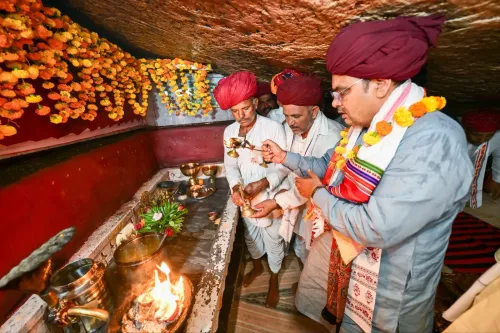
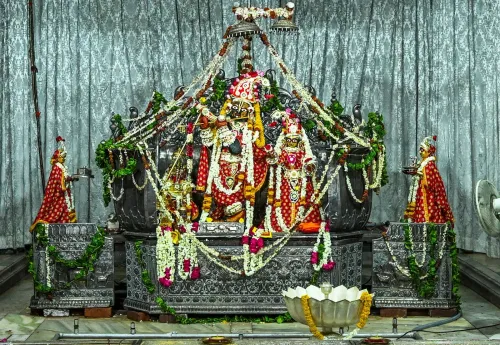
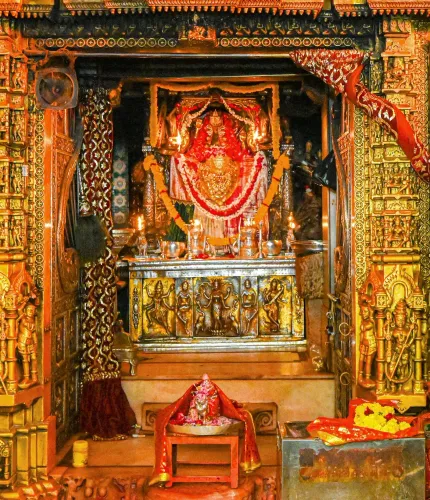
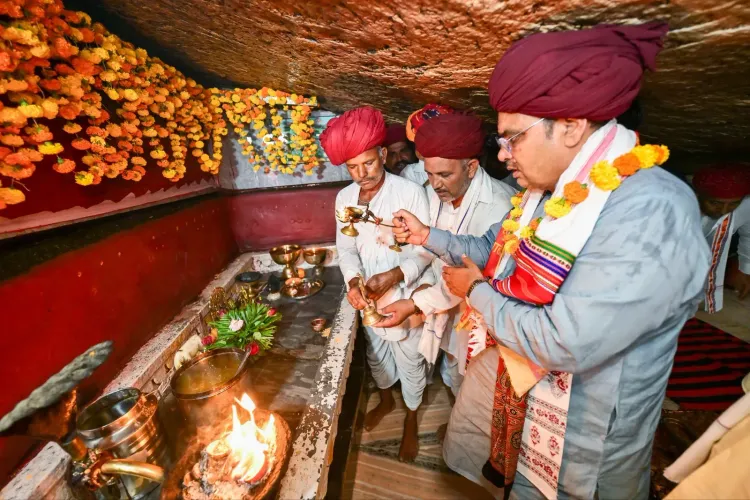
CM Bhajanlal Sharma visited Devmali village, Beawar district on 3 July 2026 and offered prayers at the Devnarayan Temple .
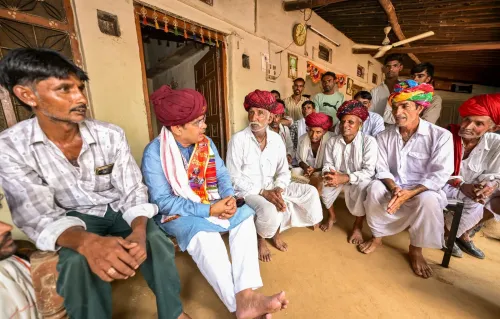
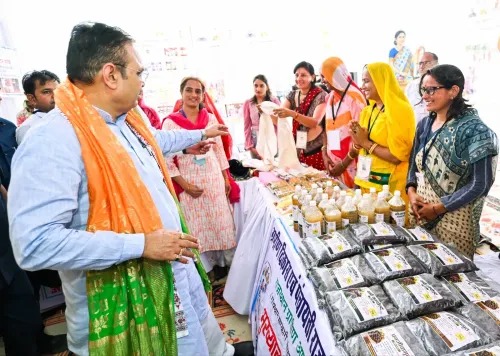
He met farmer Ram Lal Gurjar at his home and had tea with the family in an informal outreach interaction.
The District Collector was directed to ensure quality education and prevent school dropouts, with special emphasis on girl-child enrolment .
Immediate instructions were issued to resolve the mobile network connectivity problem in the village.
Officials were asked to explore the feasibility of a ropeway to the Devnarayan Temple as a heritage-tourism initiative.
All development works were directed to align with PM Narendra Modi 's 'Vikas bhi aur Virasat bhi' (Development and Heritage) vision.
Chief Minister Bhajanlal Sharma visited Devmali village in Beawar district, Rajasthan, on Friday, 3 July 2026, offering prayers at the Devnarayan Temple and meeting local residents, issuing on-the-spot administrative directives on education, mobile connectivity, and heritage infrastructure.
Context
The Chief Minister's Office of Rajasthan shared that CM Sharma first offered prayers at the Bhagwan Devnarayan Temple in Devmali, seeking prosperity for the state — 'pradesha ki sukh-samridhi ki kamna' (wishing for the state's happiness and prosperity). He then walked to the home of farmer Ram Lal Gurjar, where he sat with the family over tea in what officials described as an informal, warm interaction.
The visit covered a range of grassroots concerns: school quality, girl-child dropout rates, mobile network gaps, and the potential for a ropeway connecting the village to the hilltop temple. The Chief Minister's Office posted the account on X with the hashtag #AapnoAgraneeRajasthan (Our Forward Rajasthan).
Policy Backdrop
CM Sharma explicitly anchored the visit in Prime Minister Narendra Modi's guiding formulation: 'Vikas bhi aur Virasat bhi' — 'Development as well as Heritage.' He directed the district administration to plan all development works in Devmali in line with this dual vision, which PM Modi has articulated across multiple national addresses since 2014 to encourage states to pursue infrastructure growth without sacrificing cultural heritage.
On education, CM Sharma stressed that dropout situations — particularly for girls — must not arise, and that enrolment drives be actively pursued. He instructed the District Collector to ensure quality education is made available in the village. Rajasthan has historically grappled with female school dropout rates in rural belts, making the Chief Minister's explicit emphasis on balika shiksha (girl-child education) a pointed administrative signal.
Stakeholders and Impact
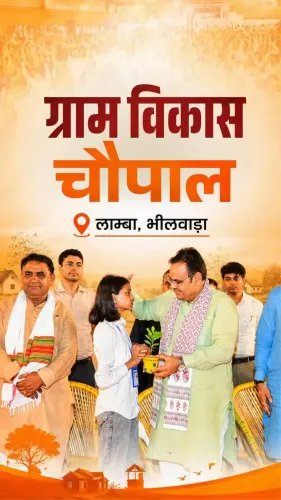
Village schoolchildren and their families were directly engaged by CM Sharma during the visit, with the Chief Minister gathering first-hand accounts of the state of education in the area. The District Collector of Beawar received immediate instructions to address the village's mobile network problem — a gap that affects both economic activity and access to government digital services for rural residents.
The proposed ropeway to the Devnarayan Temple carries both religious-tourism and local-livelihood implications. The Chief Minister directed officials to explore the feasibility of its construction, a move that could position Devmali as a heritage-tourism node within the broader 'Vikas bhi aur Virasat bhi' framework. Farmer Ram Lal Gurjar and his family represent the rural agrarian constituency that such village-outreach programmes are designed to engage.
What's Next
The immediate administrative watch-points are a district-level action plan on mobile network restoration in Devmali, a school enrolment and retention drive with particular attention to girl students, and a formal feasibility study for the temple ropeway. Such directives issued during Chief Ministerial field visits in Rajasthan have typically triggered follow-up compliance reports from district collectors within weeks.
Whether these instructions translate into measurable on-ground change will test the state government's capacity to convert high-visibility village visits into durable administrative outcomes — and will set a benchmark for similar outreach under the #AapnoAgraneeRajasthan campaign.
Point of View
Home teas with farmers — with on-the-spot administrative orders, a format designed to project both accessibility and executive authority. By explicitly invoking PM Modi's 'Vikas bhi aur Virasat bhi' framework, CM Sharma signals that the BJP-led state government intends to position rural development and heritage preservation as mutually reinforcing priorities rather than competing budget lines. The dual directives on girl-child education and mobile connectivity address two of rural Rajasthan's most persistent structural deficits, suggesting the visit is calibrated to demonstrate responsiveness on issues that resonate with the state's core voter base. The ropeway proposal, if it advances to a feasibility study, could also serve as a template for linking religious tourism with rural infrastructure across other heritage sites in the state.
NationPress
3 Jul 2026
Frequently Asked Questions
Why did CM Bhajanlal Sharma visit Devmali village?
CM Bhajanlal Sharma visited Devmali village in Beawar district on 3 July 2026 to offer prayers at the Devnarayan Temple, meet local residents including farmer Ram Lal Gurjar, and assess ground-level issues around education, mobile connectivity, and heritage infrastructure.
What is the Devnarayan Temple in Devmali?
The Devnarayan Temple in Devmali village, Beawar district, Rajasthan, is dedicated to the folk deity Devnarayan and is a locally significant religious site. CM Sharma visited the temple and directed officials to explore building a ropeway to improve access to it.
What orders did CM Bhajanlal Sharma give about education in Devmali?
CM Sharma instructed the District Collector of Beawar to ensure quality education in Devmali and specifically emphasised preventing school dropouts among girls and promoting enrolment. He gathered feedback directly from village schoolchildren and their families during the visit.
What is the 'Vikas bhi aur Virasat bhi' vision CM Sharma mentioned?
'Vikas bhi aur Virasat bhi' — meaning 'Development as well as Heritage' — is a policy formulation articulated by Prime Minister Narendra Modi from 2014 onward. CM Sharma directed that all development works in Devmali be carried out in line with this dual vision, linking infrastructure growth with heritage preservation.
What is the proposed ropeway near Devmali village about?
CM Bhajanlal Sharma directed district officials to explore the feasibility of constructing a ropeway to the Devnarayan Temple in Devmali. The proposal aims to improve access to the hilltop temple and could support religious tourism under the state's heritage-development framework.