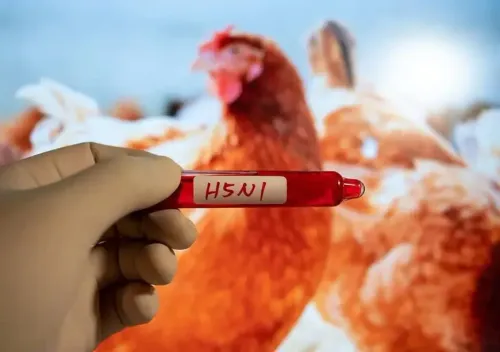
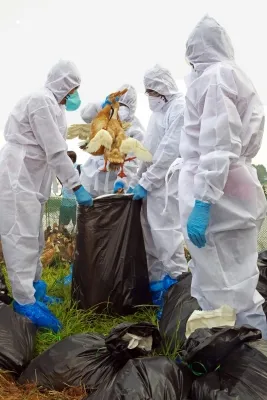
H5N1 bird flu detected in NSW: Australia's first suspected east coast case
Synopsis
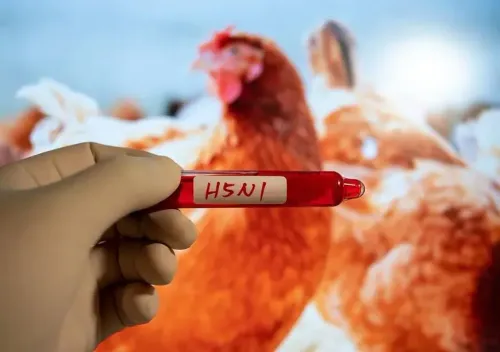
Australia's east coast has recorded its first suspected H5N1 bird flu case — a sick migratory giant petrel found near Hawks Nest, NSW. If confirmed, it would be the sixth case on the mainland and a significant geographic leap for a virus that only reached Australian shores weeks ago, ending the continent's status as the last major landmass free of the strain.
Key Takeaways
NSW authorities identified the first suspected H5N1 avian influenza case on Australia's east coast on 4 July 2025 .
The virus was detected in a sick migratory giant petrel found near Hawks Nest , approximately 165 km northeast of Sydney .
If confirmed, it will be the sixth H5N1 case on the Australian mainland and the first on the east coast.
All five previous cases were found in migratory birds in June — four in Western Australia and one in South Australia .
NSW Agriculture Minister Tara Moriarty said there is no impact on the poultry industry and no cause for consumer concern.
The H5N1 clade 2.3.4.4b variant has caused unprecedented bird and wildlife deaths globally since 2020 , reaching North America in 2021 and South America in 2022.
Australian authorities have identified the first suspected case of H5N1 avian influenza on the country's east coast, after a sick migratory giant petrel was found near Hawks Nest, a coastal town approximately 165 km northeast of Sydney, in the state of New South Wales (NSW). Preliminary tests returned a positive result for the highly pathogenic strain, officials confirmed on Friday, 4 July 2025.
What the Testing Showed
NSW Agriculture Minister Tara Moriarty told reporters that samples taken from the stricken seabird have been forwarded to the national science agency for confirmatory testing. If the result is validated, it would mark the sixth confirmed H5N1 case on the Australian mainland and the first on the east coast.
All five earlier detections involved migratory birds identified in June — four in Western Australia (WA) and one in South Australia (SA). Prior to those discoveries, the Australian mainland was considered the only continental landmass free of the strain that has devastated bird and wildlife populations globally since 2020.
No Poultry Industry Impact Reported
Minister Moriarty moved to reassure consumers, stating that the state government had already notified the poultry industry. 'We haven't had any reports of the poultry industry being impacted,' she said. 'So there's no need to panic, keep buying eggs, keep buying chicken.'
The NSW government's rapid industry notification reflects contingency protocols developed over several years. NSW Chief Veterinary Officer Jo Coombe said Australian authorities were 'very aware' of the looming threat and had spent years preparing for a potential local outbreak.
Background: What Is H5N1 and Why It Matters
Avian influenza A(H5N1) is a subtype of influenza virus that primarily infects birds and mammals, with rare documented transmission to humans. The goose/Guangdong lineage of H5N1 viruses first emerged in 1996 and has caused recurrent outbreaks in bird populations ever since.
Since 2020, a variant belonging to the H5 clade 2.3.4.4b has triggered an unprecedented wave of mortality in wild birds and poultry across Africa, Asia, and Europe. The virus reached North America in 2021 and extended into Central and South America by 2022, making Australia's prolonged absence from the outbreak map increasingly notable — until now.
What Happens Next
Confirmatory results from the national science agency are awaited. Authorities are monitoring the surrounding coastal areas and have placed the poultry industry on alert. The detection of the strain in a migratory seabird underscores the difficulty of preventing avian flu from crossing borders, as migratory routes serve as natural vectors for the virus. Wildlife and biosecurity officials are expected to intensify surveillance along the NSW coastline as the migratory season continues.
Point of View
Not if. What is notable is that authorities appear to have anticipated this: NSW had surveillance protocols in place and notified the poultry industry promptly. The harder question now is whether containment frameworks built around isolated detections in remote WA can scale to a densely farmed eastern seaboard. Australia's poultry sector, concentrated in NSW and Victoria, represents a far larger economic exposure than anything the earlier western detections threatened. The confirmatory test result will determine the immediate response, but the strategic posture needs to shift regardless.
NationPress
3 Jul 2026
Frequently Asked Questions
What is the suspected H5N1 bird flu case found in NSW?
Authorities in New South Wales detected a suspected H5N1 avian influenza case in a sick migratory giant petrel found near Hawks Nest, about 165 km northeast of Sydney. Preliminary tests returned positive for the highly pathogenic strain, and confirmatory testing is underway at the national science agency.
Is this the first H5N1 case in Australia?
No. It is the first suspected case on Australia's east coast. If confirmed, it would be the sixth H5N1 detection on the Australian mainland — all five previous cases were found in migratory birds in June, four in Western Australia and one in South Australia.
Is the poultry industry or food supply affected?
NSW Agriculture Minister Tara Moriarty said there have been no reports of the poultry industry being impacted. She urged consumers to continue buying eggs and chicken, stating there is no need for public concern at this stage.
What is the H5N1 clade 2.3.4.4b variant?
It is a highly pathogenic variant of the H5N1 avian influenza virus that has caused unprecedented deaths in wild birds and poultry globally since 2020. It spread across Africa, Asia, and Europe before reaching North America in 2021 and Central and South America in 2022, making Australia one of the last major regions to be affected.
What happens next after the NSW H5N1 detection?
Samples have been sent to the national science agency for confirmatory testing. Authorities are monitoring coastal areas and have placed the poultry industry on alert. NSW Chief Veterinary Officer Jo Coombe said officials have spent years preparing for a local outbreak and are actively tracking the situation.