HP CM Office Greets Pilgrims as Amarnath Yatra 2026 Begins
Synopsis
The Chief Minister's Office of Himachal Pradesh marked the commencement of Amarnath Yatra 2026 on 3 July with a devotional message invoking peace, courage, and prosperity for all pilgrims seeking the blessings of Baba Barfani at the sacred cave shrine in Jammu and Kashmir.
Key Takeaways
The Chief Minister's Office of Himachal Pradesh issued a goodwill message on 3 July 2026 marking the start of the Amarnath Yatra 2026 .
The post invoked blessings of Baba Barfani — the naturally formed ice Shiva lingam — for peace, courage, and prosperity for all devotees.
The Shri Amarnathji Shrine Board , established in 2000 , manages the pilgrimage including route logistics, medical facilities, and security coordination.
The Amarnath cave shrine is situated at approximately 3,888 metres altitude and is accessible via the Pahalgam and Baltal routes.
State governments across India routinely issue such messages, reflecting the pan-Indian character of the yatra and its significance to pilgrims from Himachal Pradesh and beyond.
The yatra season traditionally concludes on Raksha Bandhan , with registration figures and security updates expected from the Shrine Board.
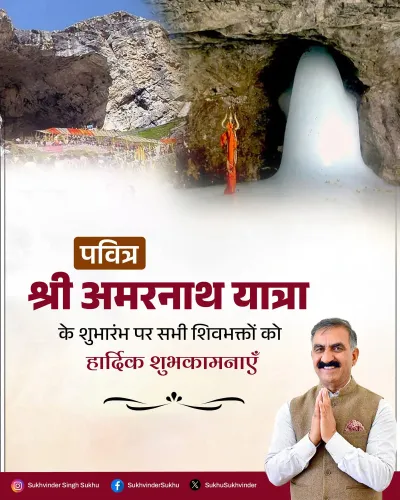
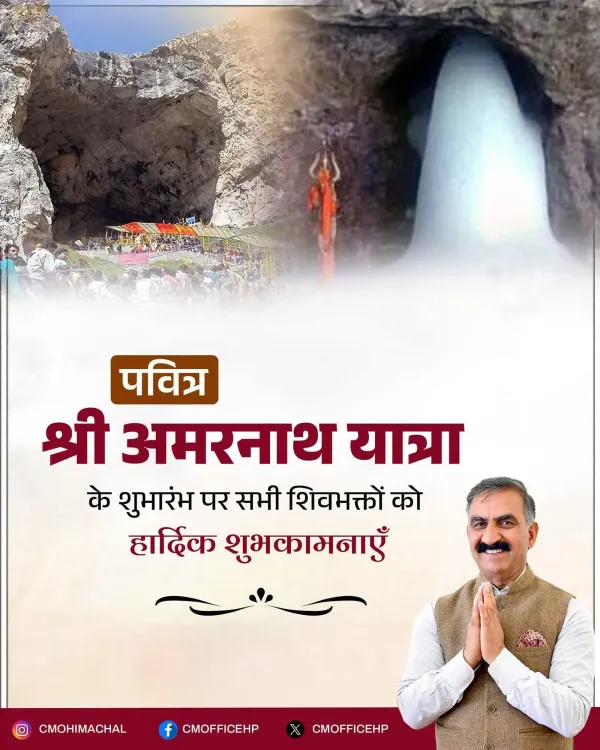
The Chief Minister's Office of Himachal Pradesh on Friday, 3 July 2026, extended warm wishes to devotees as the sacred Amarnath Yatra 2026 commenced, invoking blessings of peace, courage, and prosperity for all pilgrims undertaking the annual pilgrimage to the Amarnath cave shrine in Jammu and Kashmir.
Context
The post, shared on the official CMO Himachal Pradesh handle, reads: 'Devaadhidev Mahadev ki paavan Amarnath Yatra aaj se aarambh ho rahi hai' — 'The sacred Amarnath Yatra of Devaadhidev Mahadev begins today.' The office conveyed that this pilgrimage is 'a divine occasion of faith, devotion, and spiritual experience,' and expressed hope that the 'holy darshan of Baba Barfani would infuse peace, courage, and prosperity in the lives of all devotees.' The message concluded with the traditional invocation: 'Jai Baba Barfani.'
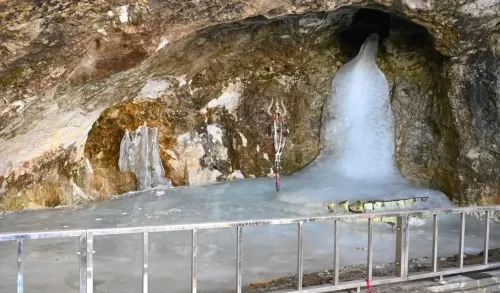
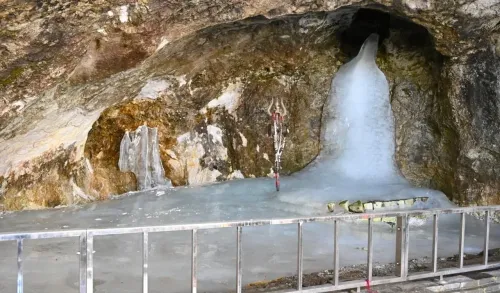
Baba Barfani — literally 'the ice-clad saint' — is the beloved popular name for the naturally formed ice Shiva lingam inside the Amarnath cave, situated at an altitude of approximately 3,888 metres in the Pahalgam region. The lingam waxes and wanes with the lunar cycle each summer, drawing lakhs of devotees from across India.
Policy Backdrop
The Shri Amarnathji Shrine Board (SASB), constituted in 2000, is the statutory body responsible for managing the pilgrimage — overseeing route infrastructure, medical facilities, registration of pilgrims, and coordination with security agencies including the CRPF and the Jammu and Kashmir administration.
State governments across India routinely issue goodwill messages at the start of the Amarnath Yatra, reflecting the pilgrimage's pan-Indian character. Such gestures align with a consistent pattern of political leaders acknowledging major Hindu pilgrimages, signalling both cultural solidarity and administrative awareness of logistics and security arrangements that affect pilgrims transiting through their states.
Stakeholders and Impact
Lakhs of Hindu pilgrims from across India, including a significant number from Himachal Pradesh, undertake the Amarnath Yatra each season. The pilgrimage has two principal routes — via Pahalgam in the Anantnag district and via Baltal in the Ganderbal district — both requiring coordinated logistics across multiple state and central agencies.
For Himachal Pradesh, the yatra carries particular resonance given the state's geographic proximity to Jammu and Kashmir and its own deep tradition of Shaivite pilgrimage culture. Pilgrims from the state often transit through Shimla, Mandi, and other hill districts en route to the shrine.
What's Next
Observers will watch for official pilgrim registration figures released by the Shri Amarnathji Shrine Board, security deployment updates from the CRPF, and any advisories on route conditions or medical preparedness as the season progresses. The yatra traditionally concludes on Raksha Bandhan, with the exact closing date varying each year based on the Hindu lunar calendar.
As the 2026 season unfolds, the volume of registrations and the efficiency of shrine management will be closely watched — both as a measure of administrative capacity and as a barometer of pilgrimage sentiment across the country.
Point of View
It reinforces the pattern of political offices publicly aligning with major Hindu religious observances — a consistent feature of Indian governance across party lines. Given Himachal Pradesh's geographic and cultural proximity to Jammu and Kashmir, the gesture also carries an implicit acknowledgement of the logistical role the hill state plays in facilitating pilgrims. Broader attention will now shift to the Shrine Board's operational readiness and security coordination for the 2026 season.
NationPress
3 Jul 2026
Frequently Asked Questions
When did Amarnath Yatra 2026 begin?
Amarnath Yatra 2026 began on 3 July 2026 , as marked by the commencement of the pilgrimage season to the Amarnath cave shrine in Jammu and Kashmir.
What is Baba Barfani?
Baba Barfani — meaning 'the ice-clad saint' — is the popular name for the naturally formed ice Shiva lingam inside the Amarnath cave, which waxes and wanes with the lunar cycle each summer.
Who manages the Amarnath Yatra?
The Shri Amarnathji Shrine Board (SASB) , constituted in 2000 , is the statutory body that manages the Amarnath pilgrimage, overseeing route infrastructure, pilgrim registration, medical facilities, and security coordination.
What routes are available for Amarnath Yatra?
The Amarnath Yatra has two principal routes: via Pahalgam in Anantnag district and via Baltal in Ganderbal district, both in Jammu and Kashmir.
Why did the Himachal Pradesh CM Office post about Amarnath Yatra?
The Chief Minister's Office of Himachal Pradesh issued the message to extend goodwill to pilgrims, reflecting the pan-Indian significance of the yatra and Himachal Pradesh's cultural and geographic proximity to the pilgrimage route.