Yadav Greets Amarnath Yatra Pilgrims, Cites Modi's Five Pledges
Synopsis
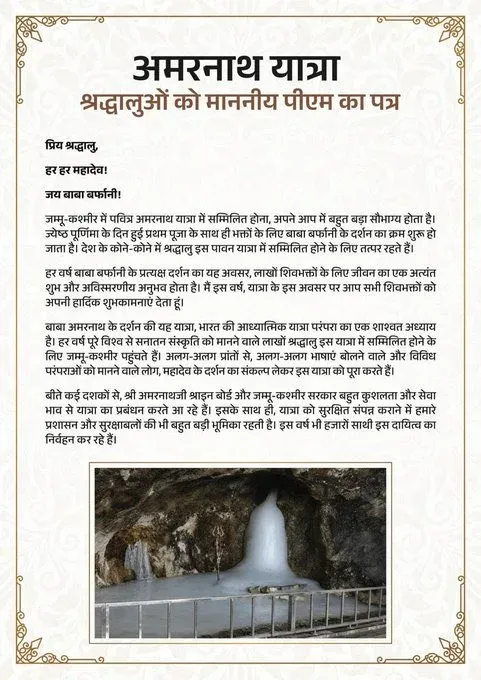
Union Environment Minister Bhupender Yadav on 3 July 2026 greeted pilgrims on the start of the Shri Amarnath Yatra, highlighting PM Modi's five resolutions — cleanliness, security, Vocal for Local, environment protection and nation first — as guiding principles for the annual Himalayan pilgrimage.
Key Takeaways
Union Environment Minister Bhupender Yadav extended greetings to pilgrims on the commencement of the Shri Amarnath Yatra on 3 July 2026 .
PM Narendra Modi has outlined five resolutions for the yatra: cleanliness, security, Vocal for Local, environment protection and nation first .
Yadav described the five resolutions as 'guiding lights for all of us,' connecting the pilgrimage to broader national priorities.
The Shri Amarnath Shrine Board , set up in 2000 , manages logistics, safety and sustainability for the annual pilgrimage in the ecologically sensitive Himalayas .
The Swachh Bharat Mission (launched 2014 ) underpins cleanliness drives on Himalayan pilgrimage routes including the Amarnath corridor.
Post- 2019 changes in Jammu and Kashmir have more tightly integrated pilgrimage management with Union Territory development and security frameworks.
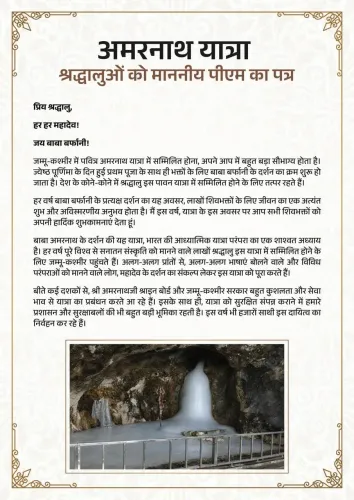
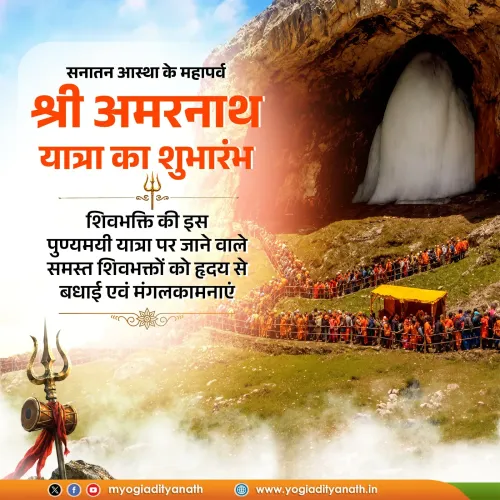
Union Environment Minister Bhupender Yadav on Friday, 3 July 2026, extended greetings to pilgrims on the commencement of the Shri Amarnath Yatra, invoking Prime Minister Narendra Modi's five resolutions for the sacred annual pilgrimage and praying for the well-being of all devotees.
Context
Writing in Hindi on X, Yadav opened with the invocation 'Jai Baba Amarnath' ('Victory to Baba Amarnath') and described the yatra as a 'pavaan parv' — a sacred festival of devotion, faith and reverence. He offered 'heartfelt good wishes to all devotees on the auspicious commencement of the Shri Amarnath Yatra.'
The minister highlighted five resolutions that PM Modi has called upon pilgrims to uphold: cleanliness, security, Vocal for Local, environment protection and nation first. Yadav described these as 'guiding lights for all of us,' underscoring the government's intent to weave national priorities into the fabric of the pilgrimage.
Policy Backdrop
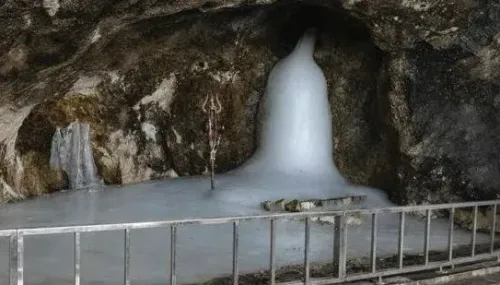
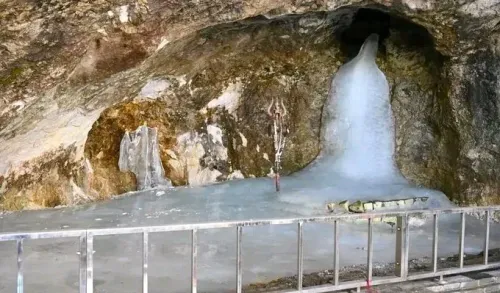
The Shri Amarnath Shrine Board, constituted in 2000, oversees logistics, safety and sustainability arrangements for the annual pilgrimage to the high-altitude cave shrine in the Himalayas. The shrine sits in an ecologically sensitive zone, making environmental management a perennial concern alongside security and crowd control.
The Swachh Bharat Mission, launched in 2014, has been progressively extended to cover Himalayan pilgrimage routes, promoting waste management and sanitation at altitude. Yadav's role as Environment Minister gives particular weight to his emphasis on the 'environment protection' resolution, as his ministry holds oversight responsibility for ecologically fragile pilgrimage corridors in Jammu and Kashmir.
Post-2019 administrative changes in Jammu and Kashmir have more closely integrated pilgrimage management with broader infrastructure and development priorities for the Union Territory, with security coordination remaining a central logistical challenge.
Stakeholders and Impact
Hundreds of thousands of pilgrims undertake the Amarnath Yatra each summer, making it one of India's most significant Hindu pilgrimages. Local communities in Jammu and Kashmir depend on the yatra season for livelihoods, and the 'Vocal for Local' resolution directly encourages pilgrims to purchase goods and services from local vendors rather than outside suppliers.
Environmental groups and conservation authorities watch the pilgrimage closely given its location in a fragile Himalayan ecosystem. The twin emphasis on cleanliness and environment protection in PM Modi's five resolutions reflects sustained pressure to reduce the ecological footprint of mass religious tourism at high altitude.
What's Next
Attention will now turn to how adherence to the five resolutions is monitored and communicated through the current yatra season. The Ministry of Environment, Forest and Climate Change may issue fresh guidelines for high-altitude pilgrimages, building on existing frameworks for sustainable religious tourism. The Amarnath Yatra's conduct this season will be watched as a test of the government's ability to balance mass participation, security imperatives and ecological responsibility in one of India's most challenging terrains.
Point of View
Local economy, security — into the ceremonial framing of major religious events, lending policy weight to what might otherwise be a routine seasonal greeting. The explicit citation of PM Modi's five resolutions signals a top-down effort to standardise the messaging around the Amarnath Yatra across the cabinet, with the Environment Minister's endorsement carrying additional institutional authority given his ministry's oversight of the ecologically sensitive pilgrimage corridor. This pattern, visible across multiple pilgrimages since 2014, reflects a deliberate conflation of devotional and developmental narratives that the BJP has used to broaden the political resonance of governance programmes. Observers will watch whether the five resolutions translate into measurable on-ground action — such as fresh environmental guidelines or Vocal for Local procurement mandates — or remain primarily rhetorical framing for the yatra season.
NationPress
1 Oct 2026
Frequently Asked Questions
When did the Amarnath Yatra 2026 begin?
The exact start date of the 2026 Amarnath Yatra has not been officially confirmed in verified public records, but Union Environment Minister Bhupender Yadav's post on 3 July 2026 marked the commencement with greetings to pilgrims.
What are PM Modi's five resolutions for Amarnath Yatra?
PM Narendra Modi outlined five resolutions for pilgrims undertaking the Amarnath Yatra: cleanliness, security, Vocal for Local, environment protection and nation first.
What is the Shri Amarnath Shrine Board?
The Shri Amarnath Shrine Board is a statutory body constituted in 2000 to manage the logistics, safety and sustainability of the annual Amarnath pilgrimage in Jammu and Kashmir.
Why is environment protection important for the Amarnath Yatra?
The Amarnath cave shrine is located in a high-altitude, ecologically sensitive Himalayan zone; mass pilgrimage can generate significant waste and strain fragile ecosystems, making environment protection a core concern for authorities.
What does Vocal for Local mean in the context of the Amarnath Yatra?
Vocal for Local encourages pilgrims to buy goods and services from local vendors and artisans in Jammu and Kashmir rather than from outside suppliers, supporting local livelihoods during the yatra season.