Pradhan Backs PM Modi's Five Pledges for Amarnath Yatra 2026
Synopsis
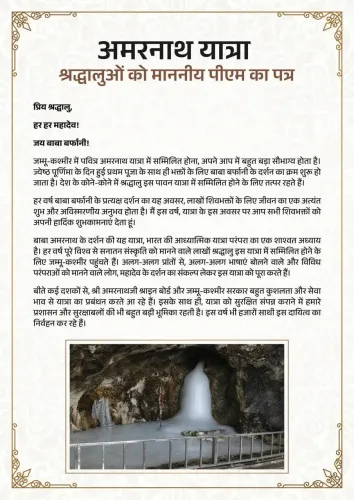
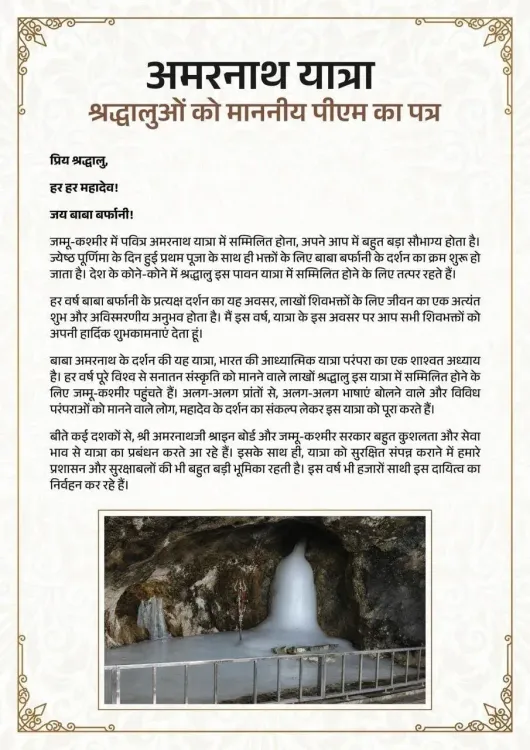
Union Education Minister Dharmendra Pradhan endorsed PM Narendra Modi's personal letter to Amarnath Yatra pilgrims on 3 July 2026, calling for five national pledges — cleanliness, safety, Vocal for Local, Ek Ped Maa Ke Naam, and Nation First — to be observed during the sacred Himalayan pilgrimage.
Key Takeaways
Dharmendra Pradhan shared the post on 3 July 2026 , amplifying PM Modi's outreach to Amarnath Yatra pilgrims.
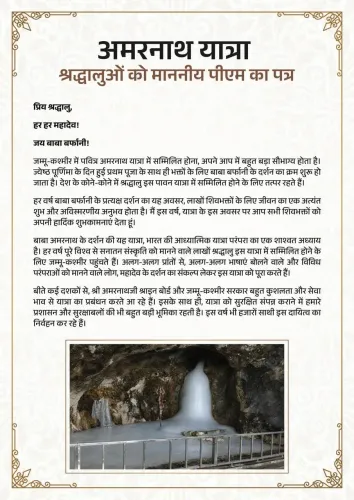
PM Narendra Modi wrote a personal letter to devotees urging five pledges : cleanliness, safety compliance, Vocal for Local, Ek Ped Maa Ke Naam, and Nation First.
The Amarnath Yatra is an annual pilgrimage to a high-altitude cave shrine in Jammu and Kashmir , venerated by millions of Hindus.
The 'Vocal for Local' initiative, launched in 2020, is being extended to the pilgrimage economy to support local vendors and artisans in Jammu and Kashmir .
The 'Ek Ped Maa Ke Naam' campaign links environmental action to the yatra, encouraging pilgrims to plant trees in an ecologically sensitive Himalayan region.
The messaging follows the central government's pattern of integrating civic and national campaigns into major religious events since the reorganisation of Jammu and Kashmir in 2019 .
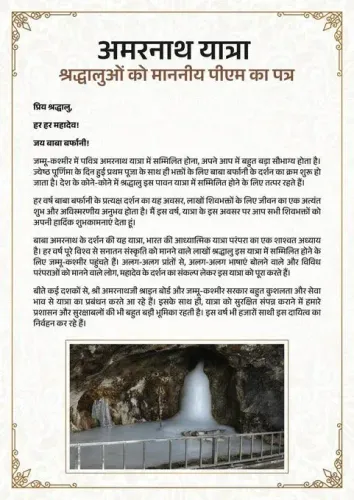
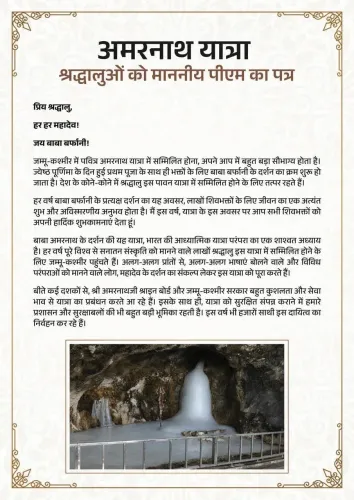
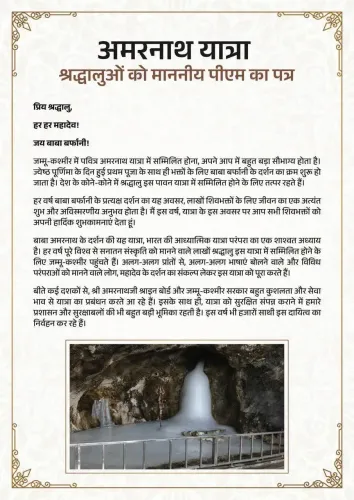
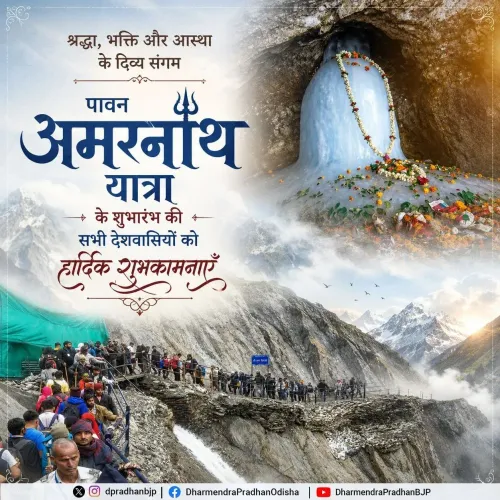
Union Education Minister Dharmendra Pradhan on Friday, 3 July 2026, shared a message on X endorsing Prime Minister Narendra Modi's letter to Amarnath Yatra pilgrims, calling on devotees to observe five national pledges during the sacred pilgrimage to the Amarnath shrine in Jammu and Kashmir.
In his post, Minister Pradhan described the Amarnath Yatra as 'haari aastha, aadhyatmik virasat aur saanskritik ekta ka paavan prateek' — 'a sacred symbol of our faith, spiritual heritage, and cultural unity.' He highlighted that Prime Minister Modi had written a personal letter to pilgrims, urging them to embrace five commitments: cleanliness, adherence to safety rules, 'Vocal for Local', 'Ek Ped Maa Ke Naam' (One Tree in Mother's Name), and 'Rashtra Pratham' (Nation First).
Context
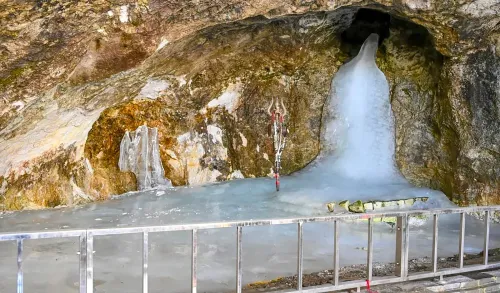
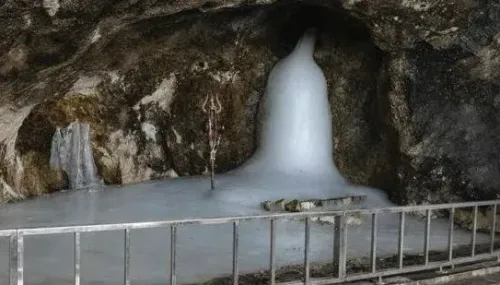
The Amarnath Yatra is one of India's most significant Hindu pilgrimages, drawing hundreds of thousands of devotees annually to a high-altitude cave shrine in the Himalayan ranges of Jammu and Kashmir, where a naturally formed ice lingam is venerated as a manifestation of Lord Shiva. The yatra is conducted under extensive central government security and logistical arrangements, particularly since the reorganisation of Jammu and Kashmir as a Union Territory following the abrogation of Article 370 in 2019.
Minister Pradhan concluded his post with a prayer to Baba Barfani — the folk name for the deity at the shrine — that all pilgrims' journeys be safe, auspicious, and spiritually rewarding, signing off with the invocation 'Har Har Mahadev'.
Policy Backdrop
The Vocal for Local initiative, launched in 2020, encourages citizens to prefer domestically produced goods, and its inclusion in the Amarnath Yatra messaging signals an effort to channel pilgrim spending toward local artisans and vendors in Jammu and Kashmir. The 'Ek Ped Maa Ke Naam' campaign is a government-led tree-plantation drive that links environmental action to a personal and emotional commitment, asking citizens to plant a tree in their mother's name.
The integration of civic and environmental pledges into a major religious pilgrimage reflects a broader pattern in which the central government uses high-footfall cultural events as platforms for public messaging on hygiene, sustainability, and economic self-reliance. Infrastructure and security upgrades for the yatra have been a consistent policy priority since 2019.
Stakeholders and Impact
The primary stakeholders are the lakhs of Hindu pilgrims who undertake the yatra each season, local residents and vendors along the pilgrimage route in Jammu and Kashmir, and the administrative machinery of the Union Territory that coordinates logistics, health, and security. The 'Vocal for Local' pledge, if widely observed, could provide a direct economic boost to artisans and small traders in the region.
Environmental groups and forest officials in Jammu and Kashmir stand to benefit from the 'Ek Ped Maa Ke Naam' component, which, if adopted at scale by pilgrims, could contribute meaningfully to green cover in a ecologically sensitive Himalayan zone. The 'Nation First' pledge reinforces a narrative of civic responsibility that the government has sought to embed in large public gatherings.
What's Next
Official pilgrim registration and daily movement figures from the Shri Amarnathji Shrine Board will indicate the scale of this year's yatra and whether the five pledges gain measurable traction among devotees. Observers will watch for any formal mechanisms — such as pledge booths, plantation drives at base camps, or local-produce stalls — set up to translate the Prime Minister's letter into on-ground action.
The yatra's conclusion will also offer data points on safety compliance and environmental outcomes, which the government is likely to cite as evidence of the success of its citizen-engagement model for managing large-scale religious events in Jammu and Kashmir.
Point of View
One of Hinduism's most emotive pilgrimages, as a vehicle for campaigns ranging from environmental action to economic self-reliance. By having a senior minister amplify a Prime Ministerial letter, the government signals institutional weight behind what might otherwise read as ceremonial messaging. The five pledges map neatly onto the BJP's core governance themes: swachhata (cleanliness), suraksha (security), atmanirbharta (self-reliance), environment, and national unity — all channelled through a single religious event. This strategy also serves a political geography purpose: keeping Jammu and Kashmir's pilgrimage economy and its national salience in the public conversation.
NationPress
2 Oct 2026
Frequently Asked Questions
What are the five pledges PM Modi asked Amarnath Yatra pilgrims to follow?
Prime Minister Narendra Modi's letter to Amarnath Yatra pilgrims urged five commitments: cleanliness, adherence to safety rules, Vocal for Local (supporting indigenous products), Ek Ped Maa Ke Naam (planting a tree in one's mother's name), and Rashtra Pratham (Nation First).
What is the Amarnath Yatra and where does it take place?
The Amarnath Yatra is an annual Hindu pilgrimage to a high-altitude cave shrine in the Himalayan ranges of Jammu and Kashmir, where a naturally formed ice lingam is worshipped as a manifestation of Lord Shiva. It draws lakhs of devotees each year.
What is the 'Ek Ped Maa Ke Naam' campaign?
'Ek Ped Maa Ke Naam' — meaning 'One Tree in Mother's Name' — is a government-led tree-plantation initiative that asks citizens to plant a tree as a tribute to their mothers, combining environmental goals with an emotional, personal commitment.
Why did Dharmendra Pradhan post about the Amarnath Yatra?
As a senior BJP leader and Union Education Minister, Dharmendra Pradhan shared PM Modi's message to Amarnath Yatra pilgrims on 3 July 2026 to amplify the government's call for pilgrims to observe five national pledges during the sacred journey.
What is Vocal for Local and how does it relate to the Amarnath Yatra?
Vocal for Local is a government initiative launched in 2020 to encourage Indians to buy domestically produced goods. Its inclusion in the Amarnath Yatra messaging urges pilgrims to support local artisans and vendors in Jammu and Kashmir during their journey.