Goyal backs PM Modi's five pledges for Amarnath Yatra 2026
Synopsis
Commerce Minister Piyush Goyal has called on crores of Amarnath pilgrims to embrace PM Modi's five pledges — Cleanliness, Security, Vocal for Local, Environmental Protection, and Nation First — framing them as a guide to a responsible and spiritually meaningful yatra in 2026.
Key Takeaways
Union Commerce and Industry Minister Piyush Goyal posted on 3 July 2026 urging devotees to adopt five pledges for the Amarnath Yatra .
The five pledges articulated by PM Narendra Modi are: Cleanliness, Security, Vocal for Local, Environmental Protection, and Nation First .
The Vocal for Local pledge is linked to the Atmanirbhar Bharat programme and aims to support local traders and artisans in Jammu and Kashmir .
The cleanliness push aligns with the Swachh Bharat Abhiyan , which has targeted major pilgrimage sites since 2014 .
The Environmental Protection pledge addresses ecological pressure on the high-altitude Himalayan ecosystem around the shrine.
Senior ministers amplifying these pledges each yatra season reflects a sustained central-government strategy linking regulated religious tourism with economic nationalism and civic duty.
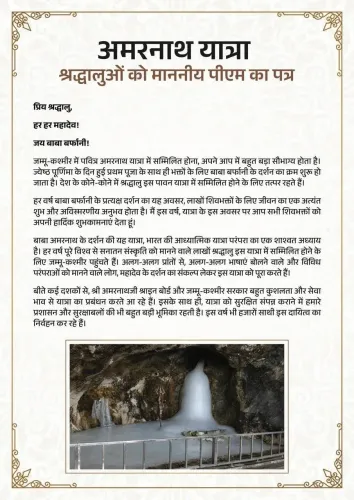
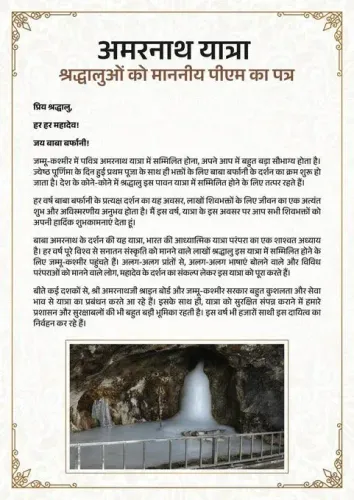
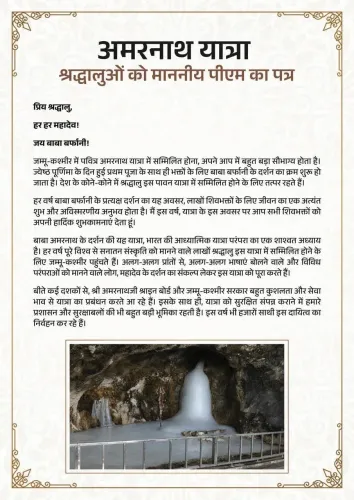
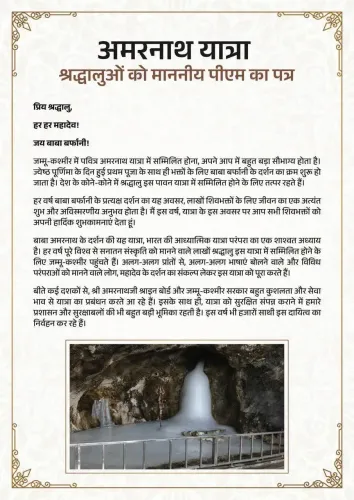
Union Commerce and Industry Minister Piyush Goyal on Friday, 3 July 2026, invoked the sanctity of the Amarnath Yatra and urged crores of Shiva devotees to adopt the five pledges articulated by Prime Minister Narendra Modi for a meaningful and responsible pilgrimage.
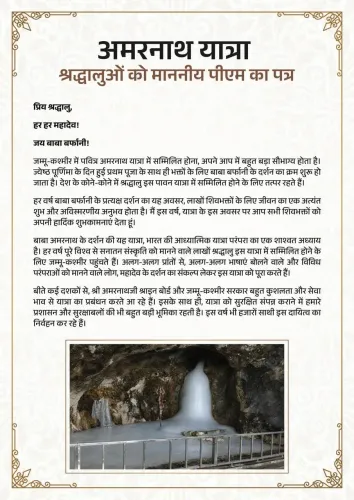
In a post on X, Goyal wrote: 'बाबा अमरनाथ की पावन यात्रा करोड़ों शिवभक्तों की अटूट आस्था का प्रतीक है' ('The sacred Amarnath Yatra is a symbol of the unbreakable faith of crores of Shiva devotees'). He highlighted the five pledges Prime Minister Modi has sought from pilgrims — Cleanliness, Security, Vocal for Local, Environmental Protection, and Nation First — calling them a source of inspiration for all. He concluded with the invocation 'Har-Har Mahadev' and a prayer that Baba Burfani bless every pilgrim with a safe and auspicious journey.
Context
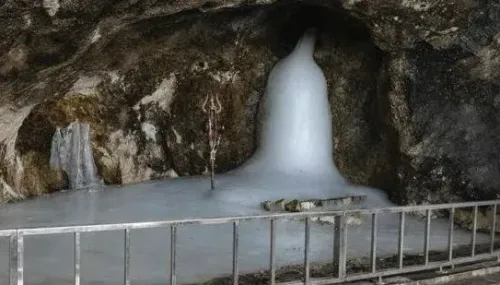
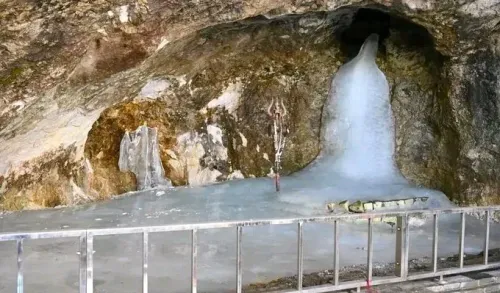
The Amarnath Yatra is one of India's most significant annual Hindu pilgrimages, drawing hundreds of thousands of devotees each summer to the high-altitude cave shrine located in Jammu and Kashmir. The yatra typically runs for several weeks during the summer months and involves trekking through challenging Himalayan terrain. Goyal's post comes at the start of the yatra season, reflecting a broader tradition among senior government figures of publicly aligning with the pilgrimage.
The five pledges Goyal references were articulated by Prime Minister Modi as a framework for responsible religious tourism. Each pledge ties a spiritual journey to a civic or national duty — from keeping pilgrimage routes clean to purchasing locally made goods from traders in the region.
Policy Backdrop
The emphasis on cleanliness connects directly to the Swachh Bharat Abhiyan, launched in 2014, which incorporated targeted drives at major pilgrimage sites including Amarnath. The Vocal for Local pledge is rooted in the Atmanirbhar Bharat programme, which encourages consumers to prioritise domestically produced goods — a message that carries direct economic relevance for local traders and artisans in Jammu and Kashmir.
Following the administrative reorganisation of Jammu and Kashmir in 2019, the central government has consistently emphasised improved security infrastructure and crowd-management protocols for the yatra. The 'Security' pledge reinforces that official posture, asking devotees themselves to remain vigilant and cooperative with authorities.
Stakeholders and Impact
The primary stakeholders are the lakhs of pilgrims who undertake the yatra each year, as well as local traders, guides, and hospitality providers in the Baltal and Pahalgam base-camp corridors. The Vocal for Local pledge, if widely adopted, can channel pilgrim spending toward indigenous products rather than imported or mass-manufactured goods, providing a direct economic boost to communities along the route.
The Environmental Protection pledge addresses a long-standing concern: the ecological sensitivity of the high-altitude Himalayan ecosystem around the shrine, which has faced pressure from large pilgrim footfalls, single-use plastics, and waste management challenges. Government messaging that frames environmental responsibility as a spiritual duty has been a recurring strategy to encourage voluntary compliance.
What's Next
State and central government agencies are expected to announce detailed arrangements covering crowd management, waste disposal, local procurement guidelines, and security deployment for the ongoing yatra season. Senior ministers amplifying the five-pledge framework on social media signals that this messaging will remain central to official communication throughout the pilgrimage period. Observers will watch whether concrete on-ground measures — such as designated Vocal for Local stalls or expanded eco-friendly infrastructure — are announced to back the pledges with policy action.
Point of View
Atmanirbhar Bharat, and national security — through the language of faith and devotion. By publicly endorsing PM Modi's five-pledge framework, Goyal reinforces the party's positioning as both a custodian of Hindu religious tradition and a driver of economic nationalism. The Vocal for Local emphasis is particularly strategic, given that it channels pilgrim spending toward J&K's local economy — a region the Centre has been keen to showcase as thriving post-2019. The messaging also pre-empts criticism around environmental degradation at the shrine by framing ecological responsibility as a spiritual obligation rather than a regulatory burden.
NationPress
2 Oct 2026
Frequently Asked Questions
What are the five pledges PM Modi asked Amarnath pilgrims to follow?
PM Modi's five pledges for Amarnath pilgrims are Cleanliness, Security, Vocal for Local, Environmental Protection, and Nation First. These are intended to make the yatra both spiritually meaningful and civically responsible.
What is the Amarnath Yatra and when does it take place?
The Amarnath Yatra is an annual Hindu pilgrimage to the Amarnath cave shrine in Jammu and Kashmir, drawing hundreds of thousands of devotees. It takes place during the summer months, typically running for several weeks through challenging Himalayan terrain.
What did Piyush Goyal say about the Amarnath Yatra 2026?
On 3 July 2026, Piyush Goyal posted on X calling the Amarnath Yatra a symbol of the unbreakable faith of crores of Shiva devotees, urging all pilgrims to adopt PM Modi's five pledges and praying for a safe and auspicious journey for every devotee.
What is Vocal for Local and why is it relevant to the Amarnath Yatra?
Vocal for Local is a government initiative under the Atmanirbhar Bharat programme that encourages consumers to buy domestically produced goods. In the context of the Amarnath Yatra, it urges pilgrims to purchase from local traders and artisans in Jammu and Kashmir, providing a direct economic boost to communities along the route.
How has the central government improved security for the Amarnath Yatra after 2019?
Following the administrative reorganisation of Jammu and Kashmir in 2019, the central government has consistently emphasised enhanced security infrastructure and crowd-management protocols for the yatra. The 'Security' pledge in PM Modi's framework also calls on devotees to remain vigilant and cooperate with authorities.