PM Modi Greets Devotees as Amarnath Yatra 2026 Begins
Synopsis
Prime Minister Narendra Modi on 3 July 2026 extended greetings to all Shiva devotees marking the start of the Amarnath Yatra, sharing a Sanskrit shloka praising Baba Barfani and praying for pilgrims' health, prosperity, and well-being.
Key Takeaways
Prime Minister Narendra Modi posted greetings on 3 July 2026 marking the commencement of the Amarnath Yatra .
He prayed for 'happiness, prosperity, good fortune and excellent health' for all pilgrims undertaking the yatra.
The post included a classical Sanskrit shloka extolling Baba Barfani as beyond comprehension yet accessible through devotion.
The Amarnath cave shrine, located in the Himalayas of Jammu and Kashmir , sits at approximately 3,888 metres above sea level.
The Shri Amarnath Shrine Board is the statutory body responsible for regulating and facilitating the annual pilgrimage.
The yatra is a key economic and security barometer for Jammu and Kashmir , involving pilgrims, security forces, and local communities.
Prime Minister Narendra Modi on Friday, 3 July 2026 extended greetings to all Shiva devotees on the commencement of the Amarnath Yatra, invoking blessings of Baba Barfani and sharing a Sanskrit verse in praise of the shrine's presiding deity.
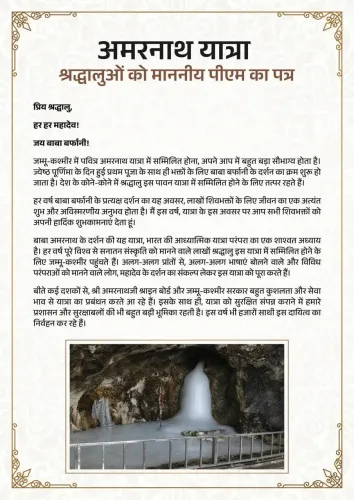
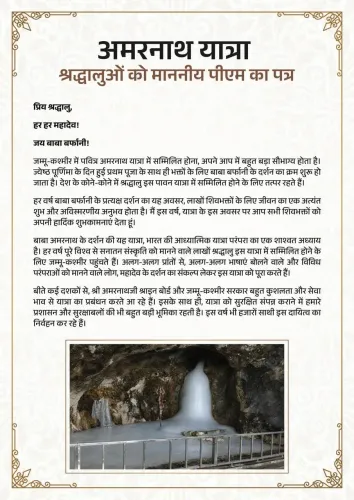
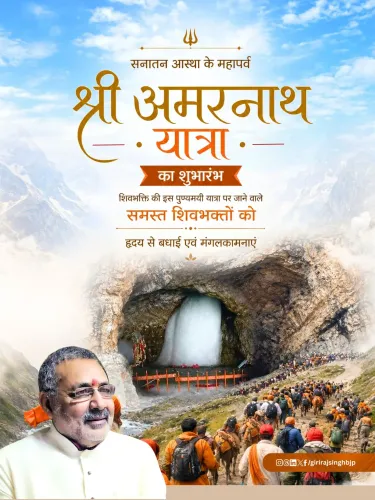
In his post on X, Modi wrote: 'समस्त शिवभक्तों को पावन-पुनीत श्री अमरनाथ यात्रा के शुभारंभ की अनंत शुभकामनाएं!' — 'Infinite good wishes to all Shiva devotees on the auspicious commencement of the sacred Shri Amarnath Yatra!' He prayed that the divine pilgrimage bring 'happiness, prosperity, good fortune and excellent health' to all undertaking it.
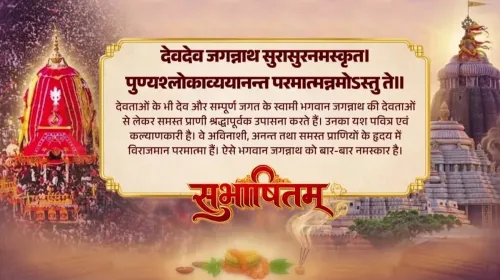
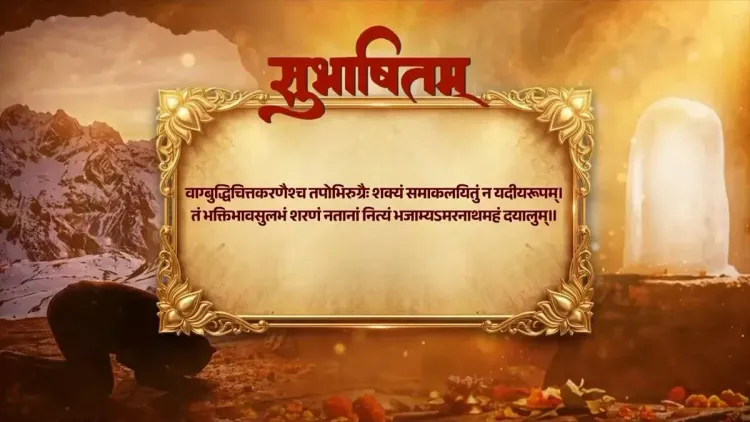
The post concluded with a classical Sanskrit shloka: 'वाग्बुद्धिचित्तकरणैश्च तपोभिरुग्रैः...' — roughly translated, 'He whose form cannot be fully comprehended through speech, intellect, mind, senses, or even the most severe austerities — that merciful Amarnath, easily accessible through devotion to those who bow in surrender, I worship always.'
Context
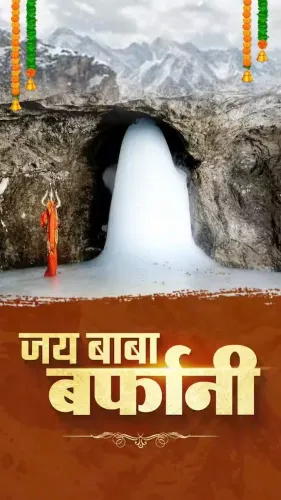
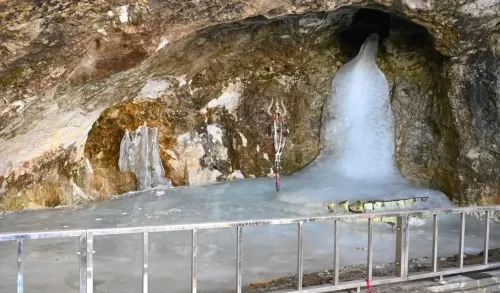
The Amarnath Yatra is one of India's most significant Hindu pilgrimages, drawing hundreds of thousands of devotees each year to a high-altitude cave shrine in the Himalayas of Jammu and Kashmir. The shrine houses a naturally formed ice Shiv lingam, revered as Baba Barfani — literally 'the snow-clad god'. The pilgrimage typically runs for several weeks during the summer months, when the high mountain passes become accessible.
Prime Minister Modi has consistently used his social media presence to issue devotional greetings on major Hindu pilgrimages and festivals, reinforcing cultural and religious touchpoints in public discourse. His message on the yatra's commencement follows an established pattern of such outreach.
Policy Backdrop
The Amarnath Yatra has been a subject of sustained government attention since the 1990s, when militancy in the region led to disruptions in pilgrimage access. Since then, central and state administrations have maintained dedicated security deployments and logistical support to ensure the safety of pilgrims on the route.
Following the reorganisation of Jammu and Kashmir into a Union Territory in 2019, the administration has placed renewed emphasis on normalcy, tourism revival, and improved connectivity to religious sites. The Shri Amarnath Shrine Board, a statutory body constituted under the J&K government, oversees registration, regulation, and facilitation of the yatra each season.
Stakeholders and Impact
The pilgrimage has far-reaching significance for multiple groups. Hindu pilgrims from across India and abroad undertake the arduous trek to the shrine, which sits at an altitude of approximately 3,888 metres above sea level. Security forces maintain a significant deployment along the twin routes — Pahalgam in Anantnag district and Baltal in Ganderbal district — to protect the pilgrimage column.
Local Kashmiri communities, including traders, porters, and hospitality providers, also have a direct economic stake in the yatra season. The pilgrimage generates substantial seasonal income for the region and is seen as a barometer of normalcy in Jammu and Kashmir.
What's Next
Attention will now turn to the scale of pilgrim registrations for the 2026 season, route-wise security arrangements, and any fresh infrastructure announcements from the administration. The smooth conduct of the yatra is widely viewed as an indicator of ground conditions in Jammu and Kashmir, making it a closely watched event for both religious and political observers.
Point of View
Projecting personal piety and classical learning. Set against the backdrop of post-2019 changes in Jammu and Kashmir, the message also carries an implicit political subtext: that the pilgrimage proceeds unimpeded, reinforcing the government's narrative of restored normalcy in the Union Territory. The yatra's smooth conduct will remain a key test of that claim through the season.
NationPress
2 Oct 2026
Frequently Asked Questions
When did the Amarnath Yatra 2026 begin?
The Amarnath Yatra 2026 commenced around 3 July 2026 , the date on which Prime Minister Narendra Modi posted his greetings marking the pilgrimage's start.
What did PM Modi say about the Amarnath Yatra?
PM Modi extended 'infinite good wishes' to all Shiva devotees and prayed that the pilgrimage bring happiness, prosperity, good fortune, and excellent health to all undertaking it. He also shared a Sanskrit shloka in praise of Baba Barfani .
Who is Baba Barfani?
Baba Barfani — literally 'the snow-clad god' — is the name given to the naturally formed ice Shiv lingam inside the Amarnath cave shrine in Jammu and Kashmir , which is the object of veneration during the annual pilgrimage.
Which body manages the Amarnath Yatra?
The Shri Amarnath Shrine Board is the statutory body constituted under the Jammu and Kashmir administration that regulates pilgrim registration, safety, and all logistical arrangements for the annual Amarnath Yatra .
What is the significance of the Amarnath Yatra for Jammu and Kashmir?
The Amarnath Yatra is a major economic driver for Jammu and Kashmir , generating seasonal income for local traders, porters, and hospitality providers. It is also viewed as a barometer of security and normalcy in the region.