CM Pema Khandu Meets Ramakrishna Mission on Higher Education Institutes
Synopsis
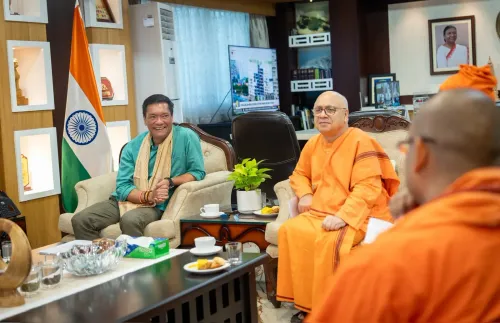
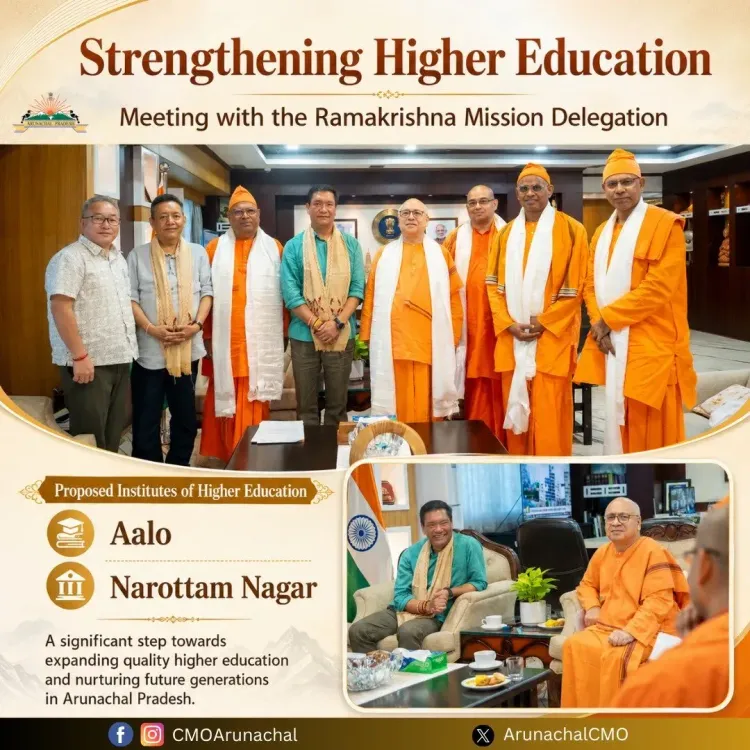
Chief Minister Pema Khandu of Arunachal Pradesh met a Ramakrishna Mission delegation on 3 July 2026 to explore setting up Institutes of Higher Education at Aalo and Narottam Nagar, aiming to expand access for tribal youth in underserved districts.
Key Takeaways
CM Pema Khandu held discussions with the Ramakrishna Mission on 3 July 2026 on new higher education institutes.
Proposed locations are Aalo (West Siang district headquarters) and Narottam Nagar , where the Mission already has an educational presence.
The Ramakrishna Mission , founded in 1897 , operates schools, colleges, and hospitals across Northeast India.
The initiative aligns with the National Education Policy 2020 mandate to expand higher education in underserved regions.
Key next steps include a potential MoU, land allocation, and funding arrangements for the proposed institutes.
Tribal youth in interior Arunachal Pradesh are the primary intended beneficiaries, reducing costly outmigration for higher studies.
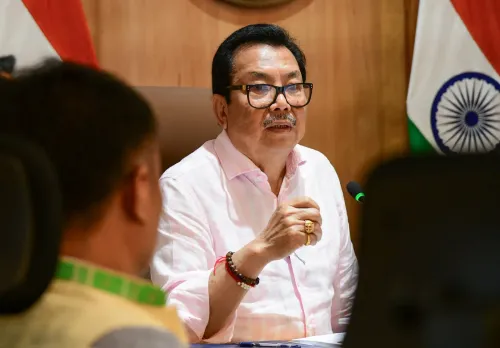
The Chief Minister's Office of Arunachal Pradesh announced on Friday, 3 July 2026 that Chief Minister Pema Khandu held discussions with a delegation from the Ramakrishna Mission, led by Revered Swami Bodhasarananda Ji, on establishing Institutes of Higher Education at Aalo and Narottam Nagar.
Context
Arunachal Pradesh has long faced a significant deficit in higher education infrastructure, a challenge rooted in its rugged Himalayan terrain and a population dispersed across remote valleys and ridgelines. The state has historically relied on a combination of central government institutions and non-state actors to bridge this gap. The meeting between CM Khandu and the Ramakrishna Mission delegation signals a continued push to bring credentialled higher education closer to students in interior districts.
Aalo, the district headquarters of West Siang, and Narottam Nagar — where the Ramakrishna Mission already maintains an educational presence — are the two proposed locations under discussion. Selecting these sites reflects a deliberate effort to anchor new institutions in areas that already have some civic and educational infrastructure.
Policy Backdrop
The discussions align directly with the National Education Policy 2020, which explicitly calls for expanding higher education access in underserved and geographically challenging regions through public-private and public-philanthropic partnerships. The Northeast has been a focal point of this push, with successive central administrations earmarking funds and encouraging established bodies to set up campuses in the region.
The Ramakrishna Mission, founded in 1897, is among India's most respected philanthropic-educational organisations and has operated schools, colleges, and hospitals across the Northeast for decades. Its institutional track record makes it a natural partner for a state government seeking quality assurance alongside geographic reach.
Stakeholders and Impact
The primary beneficiaries of any proposed institutes would be Arunachal Pradesh's tribal youth, many of whom currently travel to Assam, Delhi, or other states to access degree-level education — a journey that is both expensive and disruptive. Establishing institutions in Aalo and Narottam Nagar could meaningfully reduce this outmigration and retain educated youth within the state.
For the Ramakrishna Mission, expansion into these locations would extend its Northeast footprint and deepen its engagement with communities that have historically had limited access to its educational network. Local communities, educators, and students in West Siang and surrounding districts stand to gain the most from any agreement that follows these discussions.
What's Next
The immediate focus will be on whether the discussions translate into a formal memorandum of understanding between the Arunachal Pradesh government and the Ramakrishna Mission. Key procedural steps would include land allocation by the state government, funding arrangements — potentially drawing on central Northeast development grants — and accreditation timelines for the proposed institutes.
If formalised, these institutions could become a model for how frontier states leverage established civil-society organisations to close higher education gaps, with implications for similar efforts across the broader Northeast region.
Point of View
It will serve as a template for similar philanthropic-institutional partnerships across other frontier states in the Northeast.
NationPress
3 Jul 2026
Frequently Asked Questions
What did CM Pema Khandu discuss with the Ramakrishna Mission?
CM Pema Khandu discussed the possibility of establishing Institutes of Higher Education at Aalo and Narottam Nagar in Arunachal Pradesh with a Ramakrishna Mission delegation led by Swami Bodhasarananda Ji on 3 July 2026.
Where are the proposed Ramakrishna Mission institutes in Arunachal Pradesh?
The proposed institutes are planned for Aalo, the district headquarters of West Siang, and Narottam Nagar, a location in Arunachal Pradesh where the Ramakrishna Mission already has an educational presence.
Who is Swami Bodhasarananda Ji?
Swami Bodhasarananda Ji is a senior monk of the Ramakrishna Mission who leads its educational outreach initiatives and headed the delegation that met CM Pema Khandu on 3 July 2026.
What is the Ramakrishna Mission's role in Northeast India education?
The Ramakrishna Mission, founded in 1897, has operated schools, colleges, and hospitals across Northeast India for decades, making it one of the most established non-state educational actors in the region.
How does this relate to the National Education Policy 2020?
The National Education Policy 2020 specifically calls for expanding higher education access in underserved regions through partnerships, and the proposed institutes in Arunachal Pradesh directly reflect that policy direction.