CM Bhajanlal's 'Hariyalo Rajasthan' drives green cover push
Synopsis
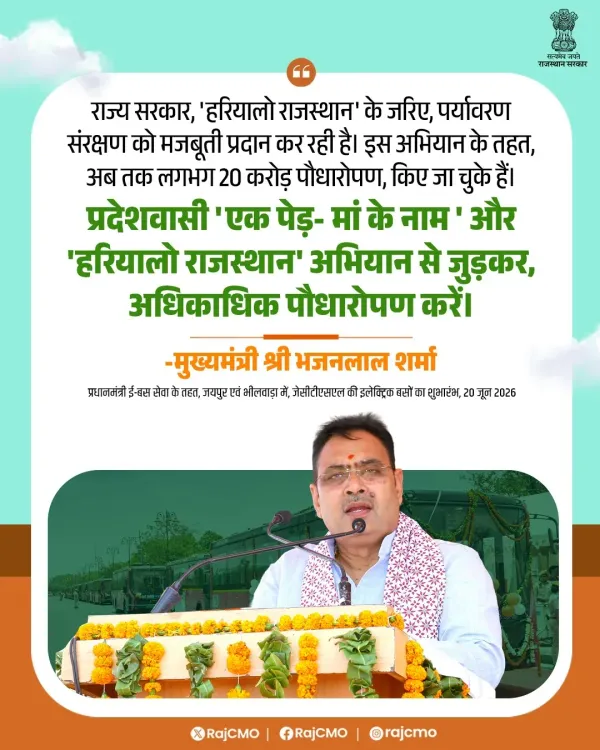
The Rajasthan Chief Minister's Office on 20 June 2026 highlighted the state government's 'Hariyalo Rajasthan' campaign as its vehicle for strengthening environmental conservation, tagging CM Bhajan Lal Sharma in a post framed under the 'Our Leading Rajasthan' banner.
Key Takeaways
The Rajasthan CMO posted on 20 June 2026 reaffirming the state's commitment to environmental conservation via 'Hariyalo Rajasthan' .
CM Bhajan Lal Sharma , in office since December 2023 , had identified tree plantation and green cover expansion as a government priority from the outset. 'Hariyalo Rajasthan' is a state-level afforestation campaign tailored to Rajasthan's arid and desert ecology , emphasising drought-resistant species and community participation.
The campaign aligns with national frameworks including the 1988 National Forest Policy , the Green India Mission , and CAMPA funding mechanisms.
Key beneficiaries include rural communities, farmers , and local NGOs engaged in environmental and community forestry work across the state.
Upcoming monsoon plantation drives and state budget allocations will be key indicators of the campaign's scale and ambition.
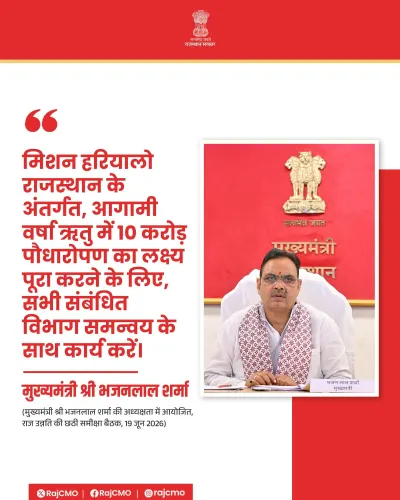
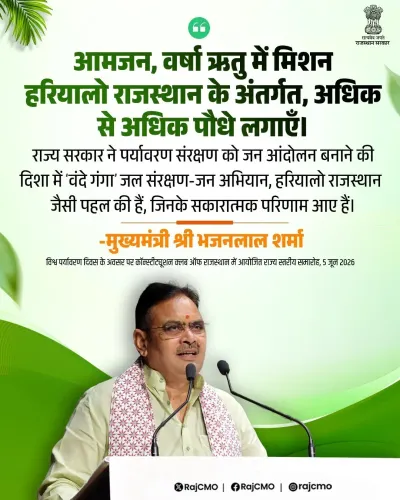
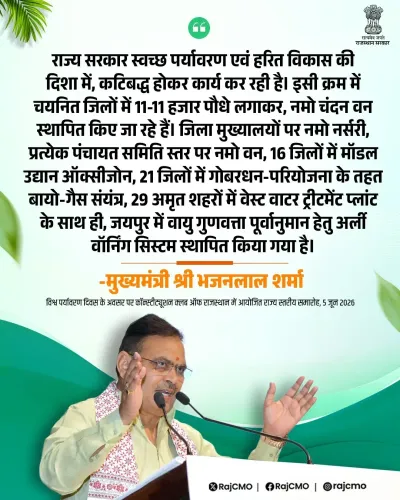
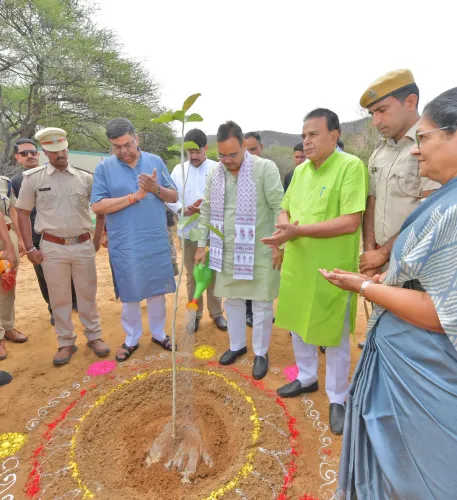
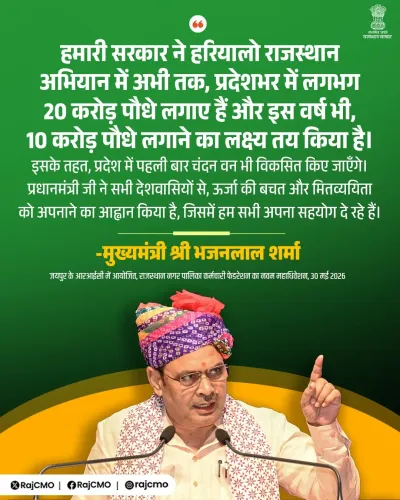
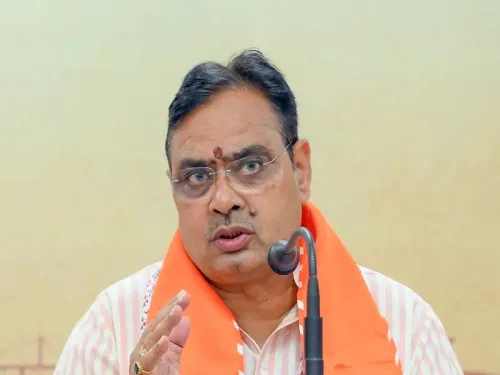
The Chief Minister's Office of Rajasthan announced on Saturday, 20 June 2026 that the state government is strengthening environmental conservation through its flagship afforestation campaign, 'Hariyalo Rajasthan', tagging Chief Minister Bhajan Lal Sharma in the post shared under the hashtag #आपणो_अग्रणी_राजस्थान ('Our Leading Rajasthan').
Context
The post, in Hindi, states: 'राज्य सरकार, हरियालो राजस्थान के जरिए, पर्यावरण संरक्षण को मजबूती प्रदान कर रही है' — ('The state government is strengthening environmental conservation through Hariyalo Rajasthan'). The message positions the campaign as a central plank of the BJP-led Rajasthan government's governance agenda since it assumed office in December 2023.
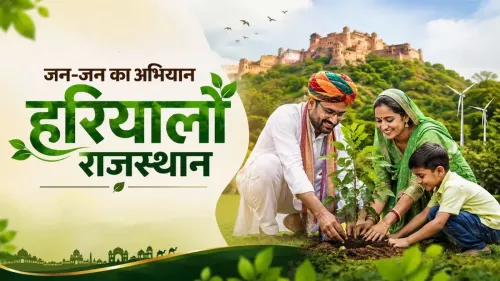
Bhajan Lal Sharma, who became Chief Minister following the 2023 Rajasthan assembly elections, had flagged expansion of tree plantation and green cover as a priority in the government's early policy direction. 'Hariyalo Rajasthan' — which translates broadly to 'Green Rajasthan' — is the state-level afforestation and environmental conservation campaign being promoted under his administration.
Policy Backdrop
Rajasthan presents a distinct ecological challenge for afforestation efforts. As a predominantly arid state with large swathes of the Thar Desert, the region records among the lowest rainfall averages in the country, making sustained green cover a persistent policy challenge. Campaigns in the state have historically focused on drought-resistant species and community-level participation to ensure survival rates of planted saplings.
At the national level, Indian states are expected to contribute to forest cover targets under the 1988 National Forest Policy and the Green India Mission, a sub-mission under the National Action Plan on Climate Change. States also access funds through the Compensatory Afforestation Fund Management and Planning Authority (CAMPA), which channels money collected for forest land diversion back into plantation and conservation activities.
Rajasthan's focus on 'Hariyalo Rajasthan' aligns this state-level push with these broader national frameworks, while tailoring the approach to desert ecology and water-scarce conditions that distinguish Rajasthan from more humid states running similar drives.
Stakeholders and Impact
The primary beneficiaries of afforestation campaigns in Rajasthan are rural communities and farmers, who stand to gain from improved soil retention, reduced desertification, and micro-climate stabilisation that tree cover can provide in arid zones. Local non-governmental organisations engaged in environmental work and community forestry are also key partners in ground-level implementation of such drives.
Successful afforestation in the state would carry implications beyond ecology — increased green cover can support livelihoods through agroforestry, reduce the intensity of dust storms that affect western Rajasthan, and contribute to the state's climate resilience commitments. The campaign's reach into rural areas makes it a potential vehicle for community mobilisation ahead of the monsoon plantation season.
What's Next
Attention will turn to progress reports from the ongoing and upcoming monsoon plantation drives, which are typically the most active phase of afforestation campaigns across India. Observers will also watch for any specific budget allocations to 'Hariyalo Rajasthan' in the next Rajasthan state budget session, as well as details of integration with central CAMPA funds.
The government's continued communication around the campaign — including direct tagging of CM Bhajan Lal Sharma — suggests an intent to keep environmental conservation visible as a governance deliverable, with the hashtag #आपणो_अग्रणी_राजस्थान framing it within a broader 'leading Rajasthan' narrative ahead of future political cycles.
Point of View
Memorable campaign identity — 'Hariyalo Rajasthan' — at a time when climate and ecology are gaining salience in state-level political communication. By tagging CM Bhajan Lal Sharma directly, the messaging personalises the initiative as a leadership-driven priority rather than a routine departmental activity. This fits a wider pattern among BJP-governed states of packaging governance deliverables in hashtag-driven, social-media-first communication to build a visible record ahead of electoral cycles. The real test will be whether plantation targets, survival rates, and budget allocations substantiate the campaign's ambitions in a state where desert conditions make afforestation genuinely difficult.
NationPress
21 Jun 2026
Frequently Asked Questions
What is 'Hariyalo Rajasthan'?
'Hariyalo Rajasthan' — meaning 'Green Rajasthan' — is the Rajasthan state government's afforestation and environmental conservation campaign, promoted under Chief Minister Bhajan Lal Sharma's administration to expand green cover, particularly through drought-resistant species suited to the state's arid ecology.
Who is Bhajan Lal Sharma?
Bhajan Lal Sharma is the BJP Chief Minister of Rajasthan who assumed office in December 2023 following the state assembly elections. He has identified tree plantation and environmental conservation as priorities of his government.
Why is afforestation difficult in Rajasthan?
Rajasthan is a predominantly arid state with large portions of the Thar Desert and among the lowest rainfall averages in India, making sustained green cover and sapling survival rates a persistent challenge that requires focus on drought-resistant species and community participation.
How does 'Hariyalo Rajasthan' connect to national forest policy?
The campaign aligns with the 1988 National Forest Policy and the Green India Mission under the National Action Plan on Climate Change. The state can also access CAMPA funds — money collected for forest land diversion — to finance plantation and conservation activities.
Who benefits from the Hariyalo Rajasthan campaign?
Rural communities and farmers stand to gain from improved soil retention, reduced desertification, and micro-climate benefits. Local NGOs involved in community forestry are also key partners, and broader ecological gains could include reduced dust storms in western Rajasthan.