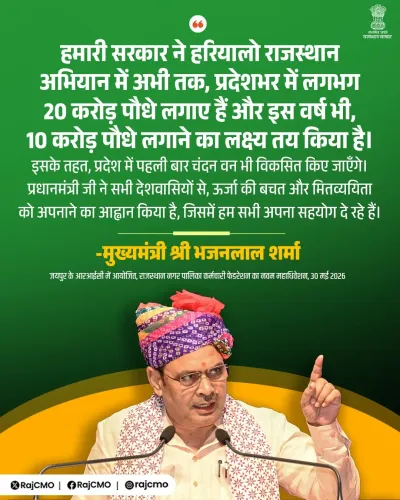
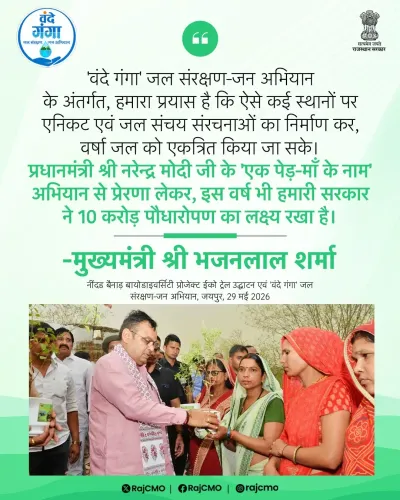
CM Bhajanlal urges Rajasthan to plant more trees under Mission Hariyalo
Synopsis
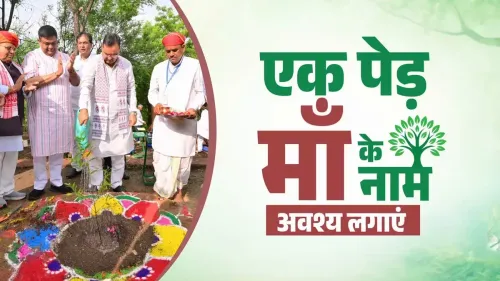
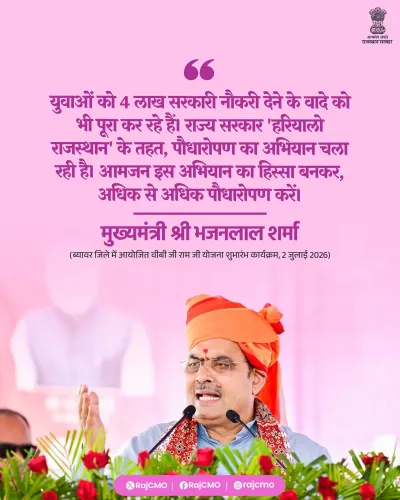
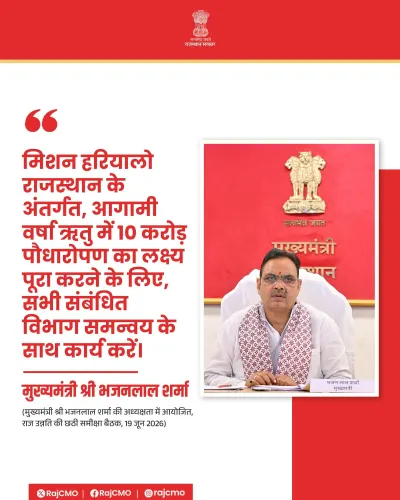
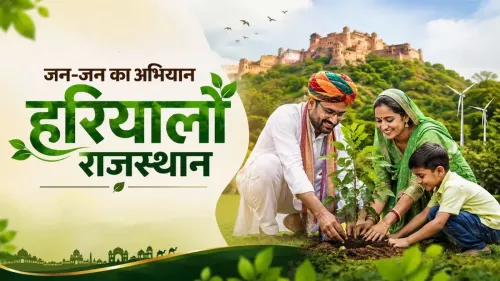
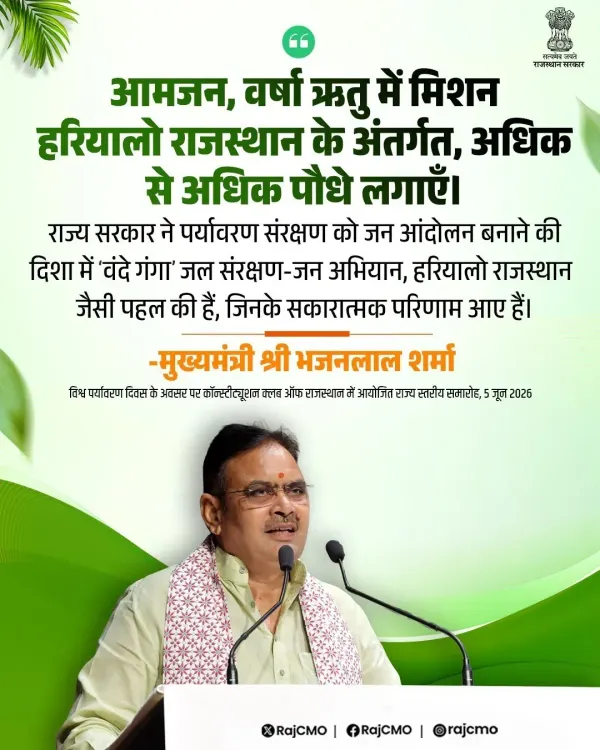
The Rajasthan CMO on 6 June 2026 called on citizens to plant maximum trees during the monsoon under Mission Hariyalo Rajasthan, coinciding with World Environment Day. The appeal, tagged to CM Bhajan Lal Sharma, aligns the state's greening drive with global environmental goals.
Key Takeaways
The Chief Minister's Office of Rajasthan posted the appeal on 6 June 2026 , coinciding with World Environment Day .
Mission Hariyalo Rajasthan is the state government's flagship tree plantation and greening initiative.
Citizens ( aamjan ) are urged to plant as many saplings as possible during the monsoon season .
Chief Minister Bhajan Lal Sharma was directly tagged in the post, signalling top-level political ownership.
Rajasthan has historically low forest density, making monsoon-timed afforestation drives a recurring state priority.
Post-monsoon survival rates and official plantation tallies will be the key metrics to watch after the 2026 rainy season.
The Chief Minister's Office of Rajasthan on Saturday, 6 June 2026 called on citizens across the state to plant as many trees as possible during the monsoon season under the state government's flagship greening initiative, Mission Hariyalo Rajasthan. The appeal, posted on the eve of World Environment Day, tagged Chief Minister Bhajan Lal Sharma and was accompanied by the hashtags #आपणो_अग्रणी_राजस्थान (Our Leading Rajasthan) and #WorldEnvironmentDay.
Context
The post urges residents — addressed as aamjan (common people) — to participate in Mission Hariyalo Rajasthan by planting the maximum number of saplings during the rainy season. The monsoon window is considered the most effective period for tree plantation in Rajasthan, as soil moisture improves sapling survival rates in an otherwise arid landscape. The message aligns the campaign with World Environment Day, the annual United Nations observance held on 5 June to promote environmental awareness globally.
Policy Backdrop
Mission Hariyalo Rajasthan is the Bhajan Lal Sharma government's structured tree plantation and greening programme, launched to increase vegetation cover across a state that spans large stretches of semi-arid and desert terrain. Rajasthan has historically recorded one of the lower forest-density figures among Indian states, making afforestation drives a recurring policy priority. State governments in Rajasthan have for several years timed mass plantation campaigns to coincide with the monsoon for ecological restoration and to counter desertification pressures.
The campaign also fits within India's broader national commitments on land restoration and biodiversity, with state-level drives contributing to targets under international climate and environment frameworks. Tagging the Chief Minister directly in the post signals that the initiative carries political ownership at the highest level of the state executive.
Stakeholders and Impact
The primary audience is Rajasthan's general public — farmers, urban residents, schools, and local bodies — all of whom are being mobilised to participate in plantation activities. Local communities in drought-prone and desert-adjacent districts stand to benefit most directly from increased green cover, which can moderate temperatures, improve groundwater recharge, and reduce soil erosion. Civil society groups and panchayati raj institutions are typically enlisted as ground-level partners in such seasonal drives.
For the Sharma government, a visible and participatory environment campaign also reinforces its positioning under the #आपणो_अग्रणी_राजस्थान (Our Leading Rajasthan) narrative, projecting the state as proactive on climate and sustainability issues ahead of future policy reviews.
What's Next
Attention will now turn to official reports on the number of saplings planted and their post-monsoon survival rates once the 2026 rainy season concludes. Any linked budget allocations, district-wise targets, or updates from the state environment department will indicate the programme's scale and seriousness. Sustained follow-up — including survival audits and community ownership mechanisms — will determine whether this monsoon's drive translates into lasting green cover for Rajasthan.
Point of View
The communication strategy elevates a routine seasonal drive into a political statement on environmental leadership. For a state as ecologically vulnerable as Rajasthan — with its vast arid zones and chronic drought cycles — consistent afforestation is a genuine governance imperative, not merely optics. The real test, as with past campaigns, will be whether plantation numbers are matched by credible survival audits and community stewardship in the months that follow.
NationPress
21 Oct 2026
Frequently Asked Questions
What is Mission Hariyalo Rajasthan?
Mission Hariyalo Rajasthan is the state government's tree plantation and greening initiative aimed at increasing vegetation cover across Rajasthan, particularly in its arid and semi-arid regions.
Why is the monsoon season chosen for tree plantation in Rajasthan?
The monsoon season provides the soil moisture necessary to improve sapling survival rates, making it the most effective window for afforestation in Rajasthan's otherwise dry terrain.
Who is leading Mission Hariyalo Rajasthan?
The initiative is led by the Rajasthan state government under Chief Minister Bhajan Lal Sharma of the BJP, who has been in office since December 2023.
What is World Environment Day and when is it observed?
World Environment Day is an annual United Nations observance held on 5 June each year to promote global awareness and action on environmental issues.
How does Rajasthan's afforestation drive connect to national climate goals?
State-level plantation campaigns like Mission Hariyalo Rajasthan contribute to India's broader national commitments on land restoration, biodiversity, and climate resilience under international environmental frameworks.