How is Rajasthan Leveraging Cultural Heritage for Environmental Conservation?
Synopsis
Rajasthan's Chief Minister Bhajan Lal Sharma emphasizes the state's dedication to environmental conservation, inspired by India's cultural heritage. He calls for collective action from citizens to ensure sustainable development and a greener future.
Key Takeaways
Rajasthan prioritizes environmental conservation inspired by cultural heritage.
Citizen participation is crucial for successful sustainability initiatives.
The state has planted approximately 20 crore saplings in two years.
Innovative water management projects are underway to combat scarcity.
Rajasthan leads in solar power generation with 22,860 MW capacity.
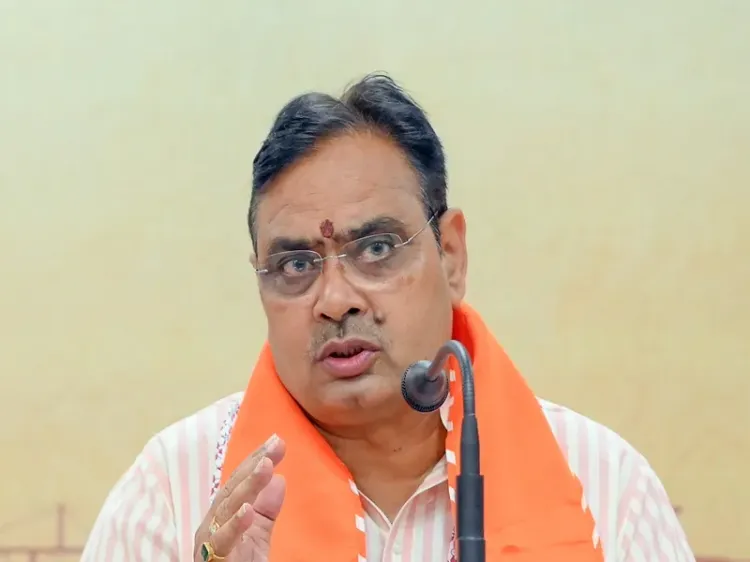
Jaipur, Dec 18 (NationPress) Rajasthan's Chief Minister Bhajan Lal Sharma stated on Thursday that the state government is utilizing India's ancient tradition of respect for nature to shape its policies and public initiatives. He urged citizens to take ownership of environmental preservation and collaborate to position Rajasthan as a pioneer in both development and environmental conservation, ensuring a sustainable future for future generations.
During the Hariyalo Rajasthan Environment Conclave in Jaipur, CM Sharma emphasized that the conservation of nature has always been a fundamental aspect of Indian culture.
"We revere rivers, mountains, trees, the earth, and the sun because the survival of life hinges on the safeguarding of nature," he remarked, referencing the historic Khejarli sacrifice of Rajasthan as a prime example of environmental stewardship.
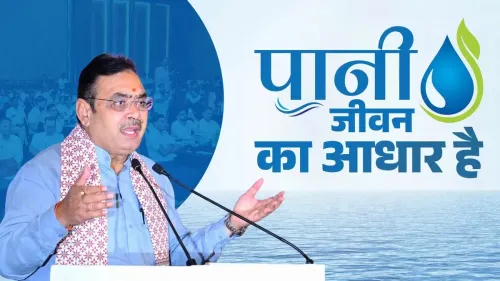
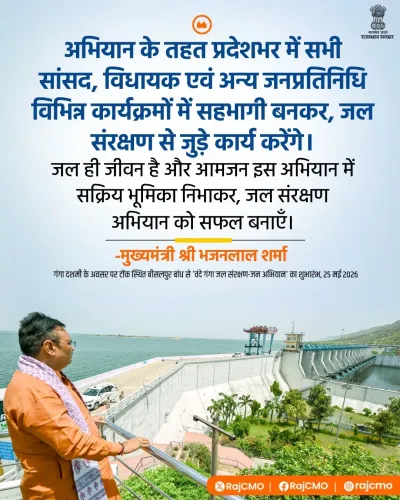
Addressing issues like climate change, air pollution, and water scarcity, the Chief Minister remarked that the state government has turned environmental protection into a movement driven by the people. The Vande Ganga Water Conservation Public Campaign includes initiatives like reviving traditional water sources, rainwater harvesting, and cleaning water bodies with the active involvement of the public.
As part of the Karmabhoomi se Matribhoomi campaign, over 14,000 groundwater harvesting structures have been constructed with assistance from non-resident Rajasthanis.
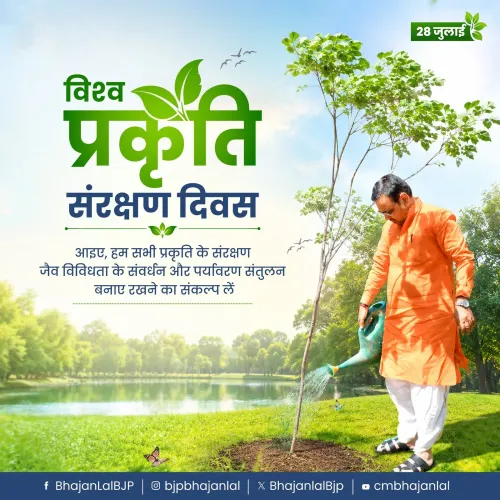
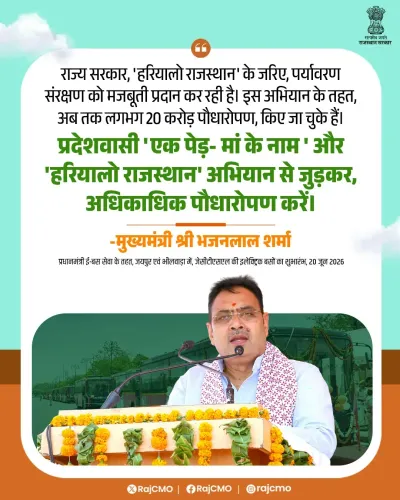
He also noted that through the Hariyalo Rajasthan initiative, inspired by Prime Minister Narendra Modi’s "Ek Ped Maa ke Naam" campaign, approximately 20 crore saplings have been planted in the last two years. Sharma highlighted that the Green Budget showcases the government’s commitment to tackling climate change.
A Centre of Excellence is being set up to advance the Climate Action Plan-2030 and promote clean and green technologies. To combat air pollution, continuous air quality monitoring stations, including mobile monitoring units, have been established across the state for real-time data collection.
The Chief Minister announced the introduction of the Circular Economy Incentive Scheme-2025. Authorized units are operational for the safe disposal of e-waste, plastic waste, and battery waste. Public awareness campaigns against single-use plastics are being promoted alongside plastic collection via reverse vending machines.
He asserted that the government is dedicated to establishing Rajasthan as a hub for green innovation.
CM Sharma pointed out that Rajasthan is rapidly advancing in clean and renewable energy, currently leading the nation with a solar power generation capacity of 22,860 MW.
Under the Pradhan Mantri KUSUM Yojana, 2,272 MW of solar capacity has been installed, enabling farmers in 22 districts to access electricity during the day and reducing reliance on coal-based power.
The Chief Minister noted that during its two-year tenure, the state government has developed a comprehensive plan for electricity and water availability, in addition to welfare programs for women, youth, farmers, and laborers.
Water availability is being enhanced through projects such as the Ram Jal Setu Link Project, Yamuna Water Agreement, Indira Gandhi Canal, Dewas Project, Mahi Dam, and Som-Kamla-Amba.
He mentioned that approximately 92,000 appointments have been made to provide employment for youth, with recruitment in progress for over 1.53 lakh posts. He added that Memorandums of Understanding worth Rs 35 lakh crore were signed at the Rising Rajasthan Global Investment Summit, with ground-breaking ceremonies already conducted for projects exceeding Rs 8 lakh crore.
Parliamentary Affairs Minister Jogaram Patel stated that under the Chief Minister's guidance, Rajasthan has implemented historic measures for environmental protection. He highlighted improvements in groundwater levels and an increase in forest cover, emphasizing that environmental protection is a shared societal responsibility.
During the conclave, the Chief Minister unveiled the 'My Life - Sustainable Lifestyle for Environment' poster. Short films showcasing the state government’s accomplishments over the past two years were also presented. Earlier, CM Sharma visited the exhibition.
Present at the event were Chief Secretary V. Srinivas, Principal Chief Conservator of Forests Arijit Banerjee, Additional Chief Secretary (Forest, Environment and Climate Change) Anand Kumar, Chairman of Rajasthan State Pollution Control Board Alok Gupta, Member Secretary Kapil Chandrawal, along with environmentalists, experts, and industry representatives.
Point of View
The initiatives led by Rajasthan's government under CM Bhajan Lal Sharma reflect a significant commitment to environmental stewardship, leveraging cultural values to inspire collective action. The emphasis on public participation in sustainability efforts is commendable and aligns with national goals for climate resilience.
NationPress
30 Sept 2026
Frequently Asked Questions
What initiatives has Rajasthan undertaken for environmental conservation?
Rajasthan has launched several initiatives, including the Vande Ganga Water Conservation Public Campaign, the Hariyalo Rajasthan campaign, and the Circular Economy Incentive Scheme-2025, focusing on sustainable water management and reducing plastic waste.
How many saplings have been planted under the Hariyalo Rajasthan campaign?
Approximately 20 crore saplings have been planted in the last two years as part of the Hariyalo Rajasthan initiative.
What is the significance of the Khejarli sacrifice mentioned by CM Sharma?
The Khejarli sacrifice is a historical event highlighting the deep-rooted cultural respect for nature in Rajasthan, representing the community's commitment to environmental conservation.
How is Rajasthan addressing air pollution?
Rajasthan is tackling air pollution through the establishment of continuous air quality monitoring centers and promoting public awareness about the dangers of single-use plastics.
What role does renewable energy play in Rajasthan's environmental strategy?
Rajasthan is focusing on renewable energy, currently leading the nation with a solar power generation capacity of 22,860 MW, helping to reduce dependence on coal-based energy.