CM Bhupendra Patel: Gujarat to Lead India's 2047 Vision
Synopsis
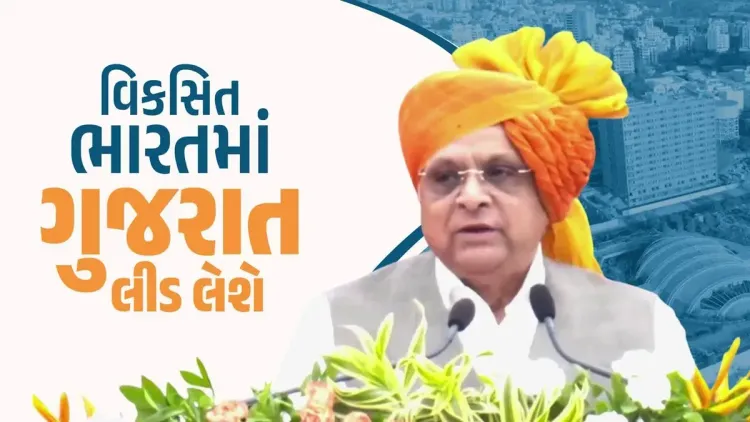
On Independence Day 2026, Gujarat Chief Minister Bhupendra Patel pledged that Gujarat will lead PM Modi's Viksit Bharat @ 2047 vision, highlighting semiconductors, green energy, space, and digital technology as key sectors, while committing to empower the poor, youth, farmers, and women.
Key Takeaways
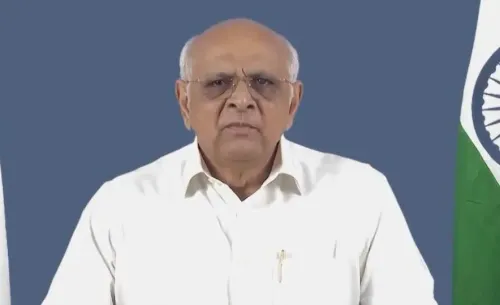
Gujarat CM Bhupendra Patel issued an Independence Day message on 15 August 2026 committing Gujarat to lead India's national development agenda.
He cited semiconductors, green energy, space, and digital technology as the four sectors through which India is setting a new global direction.
The message is anchored in PM Narendra Modi's Viksit Bharat @ 2047 framework, first outlined in 2023 .
Patel named four beneficiary groups — the poor, youth, farmers, and women — as central to the 'Earning Well, Living Well' vision.
Gujarat's ambitions align with two central schemes: the India Semiconductor Mission (2021) and the National Green Hydrogen Mission (2023) .
Gujarat's upcoming investors' summit and budget cycle will be key tests of whether today's pledge translates into concrete policy announcements.
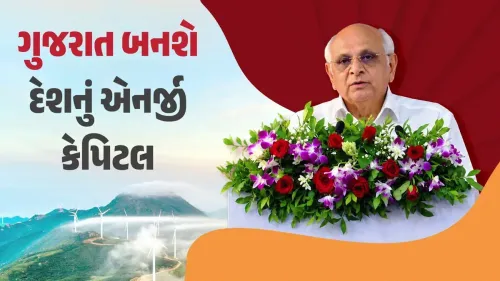
On Independence Day, 15 August 2026, Gujarat Chief Minister Bhupendra Patel cast his state as the engine of India's most ambitious national bet — a fully developed economy by the centenary of independence. In a message that swept from silicon chips to green hydrogen to women's empowerment, Patel declared that the world is already watching India with fresh hope, and that Gujarat intends to be at the front of that story.
Writing in Gujarati, the Chief Minister said: 'આખું વિશ્વ આજે ભારત તરફ નવી આશા સાથે જોઈ રહ્યું છે' — 'The entire world today looks towards India with new hope.' He pointed to semiconductors, green energy, space, and digital technology as the four pillars through which India is charting a new direction for the world.
Gujarat's Pledge Inside the Viksit Bharat Framework
Patel anchored his message squarely in Prime Minister Narendra Modi's 'Viksit Bharat @ 2047' vision — the national roadmap, publicly outlined in 2023, to transform India into a developed economy by the 100th anniversary of independence. His pledge was unambiguous: Gujarat will not merely participate, it will lead. The state has already positioned itself as a prime destination for semiconductor manufacturing clusters and renewable energy investment, aligning with central schemes like the India Semiconductor Mission — approved in 2021 — and the National Green Hydrogen Mission, launched in 2023.
These are not abstract ambitions. Gujarat's industrial corridor has attracted successive rounds of investment in chip assembly, solar manufacturing, and space-technology supply chains — making the CM's claim of 'leading' a statement of existing momentum as much as future intent.
'Earning Well, Living Well' — The Four Pillars of Inclusion
Patel framed growth not as a macroeconomic number but as a lived reality for four specific groups: the poor, youth, farmers (Annadata), and women (Narishakti). The vision he articulated — 'Earning Well, Living Well' — ties economic output directly to quality of life, a framing that echoes the central government's push to link flagship welfare schemes to productivity gains.
For women, the message builds on a national pattern of expanding self-help group networks and skill programmes. For farmers, it aligns with ongoing efforts around natural farming and direct-benefit transfers. For youth, it points toward the very semiconductor and digital sectors Patel named — industries that Gujarat is actively courting as job-creation engines for the next decade.
Why This Independence Day Message Carries Weight
State leaders routinely issue Independence Day statements, but Patel's carries a specific operational subtext. Gujarat's next major investors' summit and state budget cycle will be watched for concrete announcements on semiconductor fabrication incentives, green hydrogen corridors, and empowerment scheme allocations — the real scorecard against today's pledge.
India is in a genuine global competition for chip supply-chain diversification and clean-energy leadership. Every state that converts national policy into local investment wins a share of that future. Gujarat, with its port infrastructure, established industrial ecosystem, and political alignment with the central government, is positioned to convert ambition into allocation faster than most.
The world may be watching India. Gujarat, its Chief Minister says, is already moving.
Point of View
Green energy, and space — the exact sectors at the heart of India's industrial-policy push — he is staking Gujarat's claim to a disproportionate share of central scheme investment and foreign capital. The 'Earning Well, Living Well' framing is politically significant, linking high-technology ambition to grassroots welfare in a way that pre-empts criticism that growth bypasses the poor. With Gujarat already hosting semiconductor assembly discussions and renewable energy mega-projects, the CM is converting national rhetoric into a competitive advantage over rival states. The real test arrives at the next Vibrant Gujarat Summit, where pledges become project announcements.
NationPress
15 Aug 2026
Frequently Asked Questions
What is Viksit Bharat @ 2047?
'Viksit Bharat @ 2047' is PM Narendra Modi's national vision, outlined in 2023, to make India a fully developed economy by 2047 — the 100th anniversary of independence — through growth in technology, infrastructure, and inclusive welfare.
What did Gujarat CM Bhupendra Patel say on Independence Day 2026?
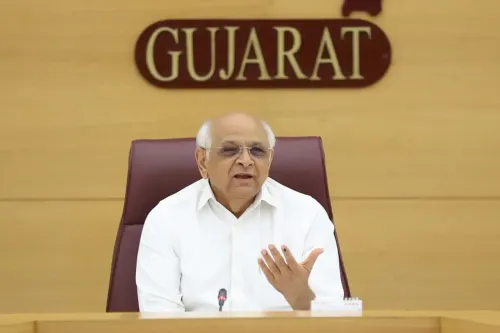
CM Bhupendra Patel said the world is watching India with new hope and pledged that Gujarat will lead the Viksit Bharat @ 2047 vision, focusing on semiconductors, green energy, space, digital technology, and empowerment of the poor, youth, farmers, and women.
What is the India Semiconductor Mission?
The India Semiconductor Mission is a central government programme approved in 2021 to build semiconductor manufacturing and design capabilities in India, offering incentives for chip fabrication and assembly units.
What is the National Green Hydrogen Mission?
Launched in 2023, the National Green Hydrogen Mission aims to scale green hydrogen production and exports in India, positioning the country as a global clean-energy supplier.
What does 'Earning Well, Living Well' mean in Gujarat's context?
'Earning Well, Living Well' is the development vision articulated by CM Bhupendra Patel that links economic productivity directly to quality of life, with a focus on uplifting the poor, youth, farmers, and women through technology-driven and welfare-backed growth.