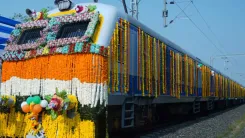
CM Bhupendra Patel Hails New Sabarmati–Varanasi Express Launch
Synopsis
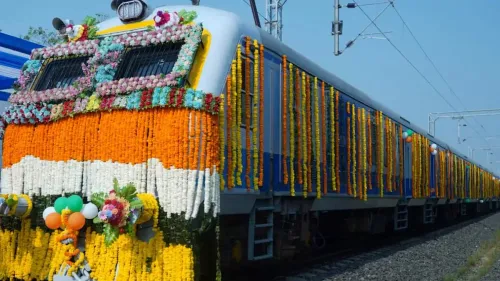
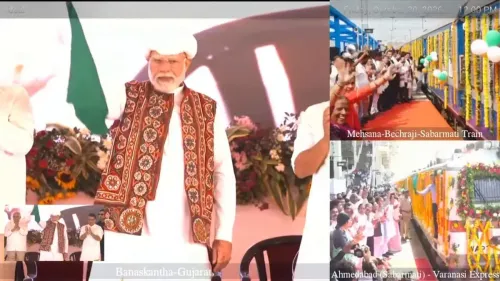
PM Modi flagged off the Ahmedabad (Sabarmati)–Varanasi Express and the Mehsana–Becharaji–Sabarmati MEMU on 30 October 2026. Gujarat CM Bhupendra Patel hailed the launches as a new link between faith and development, strengthening rail ties across Gujarat, Rajasthan, and Uttar Pradesh.
Key Takeaways
PM Narendra Modi flagged off two new rail services on 30 October 2026 .
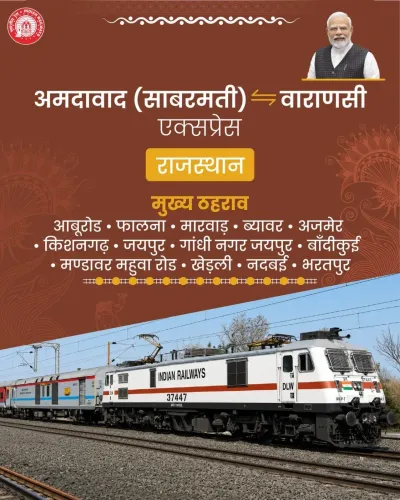
The Ahmedabad (Sabarmati)–Varanasi Express creates a direct rail link between Gujarat and the Kashi Vishwanath temple city.
The new express improves connectivity across Gujarat, Rajasthan, and Uttar Pradesh .
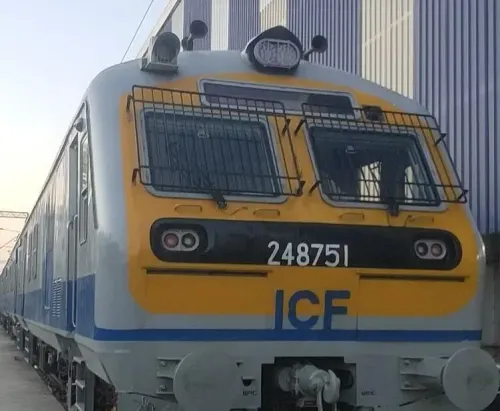
The Mehsana–Becharaji–Sabarmati MEMU targets North Gujarat commuters, including workers at the Becharaji auto manufacturing hub .
Gujarat CM Bhupendra Patel described the launches as 'a new link between faith and development.' The announcements continue the central government's pattern of linking rail infrastructure investment with religious tourism destinations since 2014 .
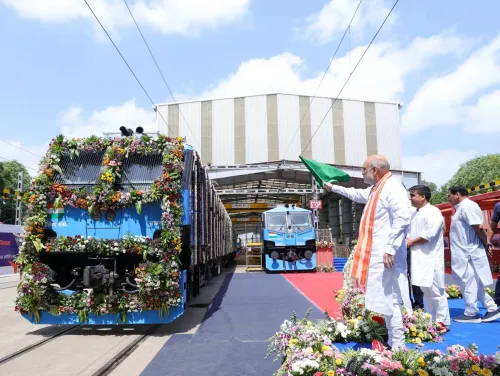
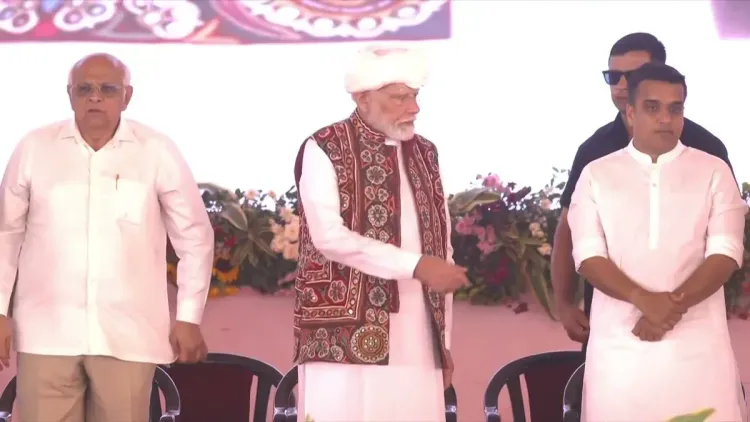
A steel thread now stretches from the banks of the Sabarmati to the ghats of Kashi. Gujarat Chief Minister Bhupendra Patel celebrated as Prime Minister Narendra Modi flagged off two new rail services on Friday, 30 October 2026 — the Ahmedabad (Sabarmati)–Varanasi Express and the Mehsana–Becharaji–Sabarmati MEMU — knitting together three states and millions of travellers in a single ceremonial green flag.
CM Patel framed the moment in a phrase that captured its dual symbolism: 'साबरमती से काशी तक, आस्था और विकास की नई कड़ी' — 'from Sabarmati to Kashi, a new link between faith and development.' The Varanasi Express will strengthen rail connectivity across Gujarat, Rajasthan, and Uttar Pradesh, bridging both pilgrimage and commerce along one of India's busiest inter-state corridors.
Sabarmati to Kashi: the pilgrim corridor gets a direct line
Varanasi, revered as Kashi and home to the Baba Vishwanath temple, has sat at the centre of the central government's religious-tourism infrastructure push for over a decade. The Kashi Vishwanath Corridor, inaugurated in 2019, transformed the precinct around the ancient shrine, and sustained rail investment has since funnelled pilgrims from western India toward it. This new direct express from Sabarmati station in Ahmedabad is the latest — and most direct — link in that chain.
For Gujarati devotees who previously navigated multi-leg journeys or relied on congested routes, a direct express represents a meaningful reduction in travel time and hassle. Rajasthan, sandwiched between Gujarat and Uttar Pradesh along the route, stands to benefit from improved inter-state economic movement as well.
MEMU service targets North Gujarat's daily commuters
The second service flagged off — the Mehsana–Becharaji–Sabarmati MEMU — addresses a different, more everyday need. MEMU (Mainline Electric Multiple Unit) trains are the workhorses of short-to-medium distance commuter travel, and this corridor through North Gujarat connects an industrially significant stretch: Becharaji hosts one of India's largest automobile manufacturing hubs, and Mehsana is a key commercial and agricultural centre in the region.
By improving frequency and reliability on this belt, the MEMU service directly eases the daily commute for workers, traders, and students — the unglamorous but essential infrastructure that keeps an economy moving.
Rail as BJP's preferred state-to-state narrative
Since 2014, the central government has systematically added express and MEMU services connecting Gujarat with Rajasthan and Uttar Pradesh — states where the BJP holds political and electoral stakes. Linking rail infrastructure to religious destinations such as Kashi has become a recognisable storytelling device: development and devotion, presented as inseparable. CM Patel's post lands squarely in that tradition.
The rollout timelines, train numbers, and early occupancy data for both services will be the real measure of their impact — and will almost certainly feature in the next railway budget's showcase of delivered promises.
Point of View
One commuter MEMU for an industrial belt — is a textbook example of how the BJP packages infrastructure: aspirational and devotional at once. By anchoring the Varanasi Express in the Kashi brand rather than just a railway timetable, CM Patel and the central government reinforce a political narrative in which rail development and Hindu identity are mutually reinforcing. The MEMU addition, quieter in symbolism but arguably higher in daily utility, signals that the connectivity pitch is also grounded in economic pragmatism. Watch whether occupancy data and service reliability ultimately validate the fanfare — that will determine whether the 'faith and development' frame sticks beyond the launch cycle.
NationPress
30 Oct 2026
Frequently Asked Questions
What is the Ahmedabad Sabarmati–Varanasi Express?
It is a new direct train service flagged off by PM Narendra Modi on 30 October 2026, connecting Ahmedabad's Sabarmati station to Varanasi (Kashi) in Uttar Pradesh, passing through Rajasthan.
What is the Mehsana–Becharaji–Sabarmati MEMU train?
It is a new Mainline Electric Multiple Unit commuter service launched on 30 October 2026 to improve short-distance rail connectivity in North Gujarat, linking Mehsana and the Becharaji industrial corridor to Sabarmati.
Why did Gujarat CM Bhupendra Patel welcome these train launches?
CM Patel highlighted the services as a new link between faith and development, noting that the Varanasi Express improves pilgrim access to the Baba Vishwanath temple while the MEMU eases travel for North Gujarat commuters.
Which states benefit from the new Sabarmati–Varanasi Express?
The express connects Gujarat, Rajasthan, and Uttar Pradesh, strengthening both economic and pilgrimage travel across these three states.
What is the significance of Varanasi as a rail destination?
Varanasi, known as Kashi, is home to the Baba Vishwanath temple and saw major infrastructure investment with the Kashi Vishwanath Corridor inaugurated in 2019, making it a key destination for religious tourism from western India.