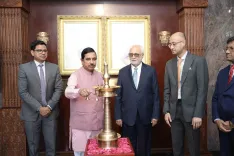
CM Bhupendra Patel Holds Jan Sunavani in Dahod's Garbada
Synopsis
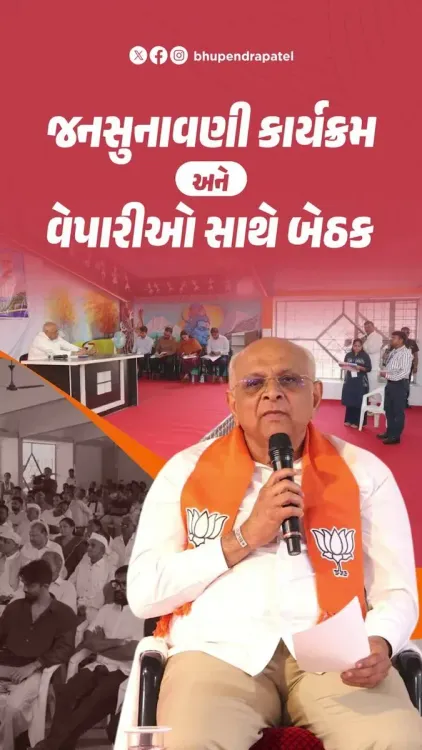
Gujarat Chief Minister Bhupendra Patel held a Jan Sunavani public hearing in Dahod's Garbada region on 20 November 2026, personally receiving citizen grievances and directing officials on swift resolution, while also meeting saints, mahants, and trade representatives on district development.
Key Takeaways
Gujarat CM Bhupendra Patel visited Garbada, Dahod on 20 November 2026 for a Jan Sunavani public hearing.
Citizens of the Garbada region presented grievances directly to the Chief Minister, who issued on-the-spot instructions to relevant officials.
Separate meetings were held with saints and mahants and trade community representatives on district development priorities.
Dahod is an eastern Gujarat tribal district bordering Madhya Pradesh and Rajasthan, historically underserved on development metrics.
The Jan Sunavani format is designed to bypass bureaucratic delays by placing citizen representation before executive decision-makers.
Follow-through by Dahod district officials on directives issued during the hearing will be the key measure of the visit's impact.
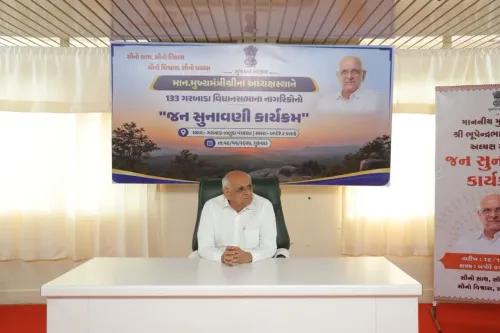
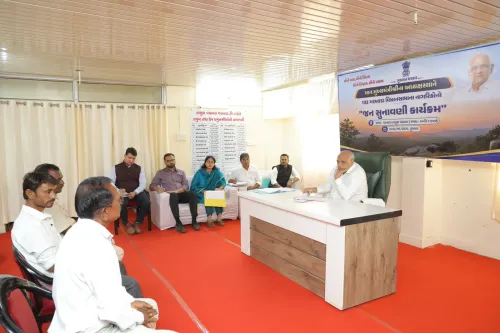
In the tribal heartland of eastern Gujarat, Gujarat Chief Minister Bhupendra Patel turned up in person on Friday, 20 November 2026 — not for a rally, but to listen. A Jan Sunavani (public hearing) in the Garbada area of Dahod district put citizens face-to-face with the state's top executive, their grievances heard and routed directly to officials for swift resolution.
What happened in Garbada today
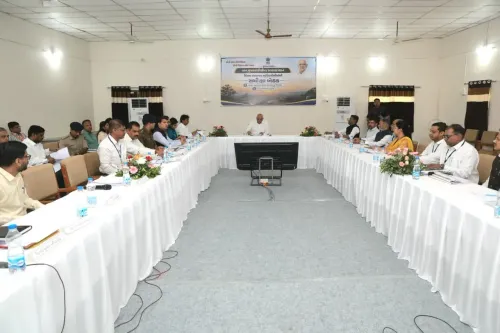
Chief Minister Patel convened a public sitting with residents of the Garbada region, personally hearing local complaints and development requests. He described the occasion as a meaningful step towards 'development-oriented thinking and the positive resolution of representations' — framing the district as a unique confluence of virasat ane vikas (heritage and development). On the spot, he issued instructions to the relevant district officials for time-bound action on the concerns raised.
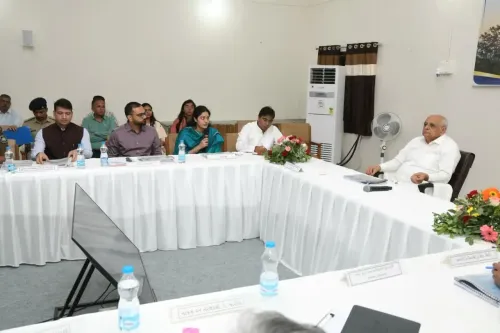
The session did not stop at ordinary citizens. Saints and mahants — representing the region's deep religious fabric — along with trade and business community representatives met the Chief Minister separately for a focused dialogue on district-level development priorities. The dual format signalled a deliberate effort to capture both grassroots grievances and organised economic concerns in a single visit.
Dahod's place in Gujarat's development map
Dahod sits on Gujarat's eastern edge, bordered by Madhya Pradesh and Rajasthan, and carries one of the state's highest concentrations of tribal communities. The district has historically lagged on development indicators even as the broader Gujarat growth story was written elsewhere. That gap makes direct executive engagement — where a chief minister personally hears complaints rather than delegating them — carry weight beyond the symbolic.
The Jan Sunavani format itself is a structured public-hearing mechanism, designed to bypass bureaucratic bottlenecks by placing citizen representation directly in front of decision-makers. When a chief minister chairs it, the implicit message to officials is clear: accountability runs upward, fast.
A BJP governance pattern — and what Dahod's officials must now deliver
District tours combining public hearings with cultural and economic dialogue have become a signature feature of BJP-governed Gujarat's administrative style. Chief ministers have routinely rotated through districts, particularly those with tribal or border demographics, to signal attentiveness and collect on-ground intelligence. Bhupendra Patel, since taking office in 2021, has continued the practice as a core governance tool.
The real test, as always, lands with Dahod district officials. Instructions issued at a public hearing are only as good as their follow-through. What was promised in Garbada today will be measured in the weeks ahead — in infrastructure cleared, in applications processed, in development files actually moved.
Point of View
Maintaining visibility in Dahod — a constituency with a large Adivasi population — is as much electoral maintenance as it is administrative duty. The Jan Sunavani format amplifies this by making grievance redressal public and attributable, raising the political cost of official inaction. How quickly Dahod's bureaucracy delivers on today's directives will ultimately determine whether the optics of the visit translate into durable trust.
NationPress
20 Nov 2026
Frequently Asked Questions
What is a Jan Sunavani?
A Jan Sunavani is a structured public hearing where citizens present their grievances and development requests directly to senior officials or elected representatives, who then issue instructions for time-bound resolution — bypassing normal bureaucratic channels.
Why did CM Bhupendra Patel visit Dahod?
CM Bhupendra Patel visited Dahod on 20 November 2026 to hold a Jan Sunavani public hearing in the Garbada area, personally hearing citizen complaints, and to meet with saints, mahants, and trade representatives on district development issues.
Where is Dahod district located?
Dahod is located in eastern Gujarat, bordering Madhya Pradesh and Rajasthan. It has one of Gujarat's highest concentrations of tribal communities and has historically faced development gaps compared to other parts of the state.
Who is Bhupendra Patel?
Bhupendra Patel is the Chief Minister of Gujarat and a BJP leader. He has held the office since 2021 and is known for continuing the BJP's tradition of district-level administrative outreach across the state.
What decisions were taken at the Garbada Jan Sunavani?
CM Patel heard citizen grievances and representations at the Garbada public hearing and issued instructions to relevant district officials for swift resolution. Specific outcomes and resolutions have not yet been officially detailed.