CM Bhupendra Patel Launches Gujarat Shipbuilding Policy 2026
Synopsis
Gujarat CM Bhupendra Patel launched the Gujarat Shipbuilding and Repair Policy-2026 on 27 July 2026, aligned with Maritime Vision 2047 and SBFAS. A greenfield cluster at Kuchhdi, Porbandar — already approved by the Centre — is expected to draw over ₹27,000 crore in investment, aiming to make Gujarat India's top maritime manufacturing hub.
Key Takeaways
Gujarat Shipbuilding and Repair Policy-2026 was launched by CM Bhupendra Patel on 27 July 2026 .
The policy aligns with Maritime Vision 2047 and the central government's Shipbuilding Financial Assistance Scheme (SBFAS) .
A greenfield Integrated Mega Shipbuilding Park at Kuchhdi, Porbandar district has received Government of India approval and is expected to attract over ₹27,000 crore in investment.
The policy covers shipbuilding and repair infrastructure, marine equipment manufacturing, green and smart shipyards, R&D, innovation, and skill development.
Gujarat's 2,340-km coastline and existing port infrastructure are cited as key competitive advantages for the initiative.
Large-scale employment generation and contribution to Viksit Bharat are stated objectives of the policy.
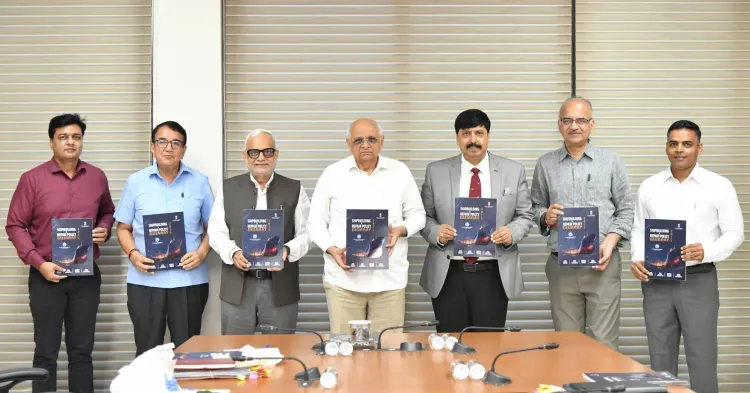
Gujarat Chief Minister Bhupendra Patel on Monday, 27 July 2026, announced the launch of the Gujarat Shipbuilding and Repair Policy-2026, positioning the state as India's foremost maritime manufacturing hub. The policy aligns with the central government's Maritime Vision 2047 and the Shipbuilding Financial Assistance Scheme (SBFAS), and envisages investments exceeding ₹27,000 crore anchored by a proposed greenfield cluster at Kuchhdi in Porbandar district.
Context
CM Patel framed the policy as a direct extension of Prime Minister Narendra Modi's Aatmanirbhar Bharat (self-reliant India) vision, stating that Gujarat is 'committed to making Gujarat India's leading shipbuilding hub and a globally competitive maritime manufacturing powerhouse.' The announcement underscores the state government's intent to translate national maritime ambitions into concrete industrial infrastructure at the state level. The policy covers world-class shipbuilding and repair infrastructure, marine equipment manufacturing, green and smart shipyards, research and development, innovation, and large-scale skill development.
Policy Backdrop
The new policy builds on a chain of central initiatives dating back to the Sagarmala Project of 2015, which promoted port-led development and maritime infrastructure clusters along India's coastline. The Aatmanirbhar Bharat initiative of 2020 further elevated shipbuilding as a strategic priority, aiming to reduce India's dependence on imported vessels for both commercial and defence purposes. The SBFAS provides direct financial assistance to shipbuilding and repair projects, and Gujarat's new policy is structured to allow state industries to access these central funds seamlessly.
The centrepiece of the policy is the Integrated Mega Shipbuilding Park proposed at Kuchhdi, Porbandar district, a greenfield cluster that has already received approval from the Government of India. The project is expected to attract investments of over ₹27,000 crore, making it one of the largest maritime industrial investments in the country's western coastline. Gujarat's 2,340-kilometre coastline and existing port infrastructure provide a natural competitive advantage for this cluster.
Stakeholders and Impact
The policy is expected to benefit the shipbuilding industry, maritime equipment manufacturers, port logistics operators, and a large pool of skilled and semi-skilled workers across coastal Gujarat. Large-scale employment generation is cited as a core objective, with skill development programmes forming an integral component of the policy framework. Investors and shipyard operators are expected to benefit from the state's 'transparent and policy-driven governance' and investor-friendly ecosystem, as cited by CM Patel.
Multiple coastal states have pursued similar maritime manufacturing policies in recent years, but Gujarat's combination of coastline length, existing port density, and early central approval for the Kuchhdi cluster gives it a structural head start. The emphasis on green and smart shipyards also aligns with global shipping industry transitions toward lower-emission vessel construction and repair standards.
What's Next
The immediate milestones to watch include land acquisition progress and private investment commitments for the Kuchhdi greenfield cluster, as well as the rollout of skill development programmes and green shipyard standards under the new policy. The broader test will be whether the policy framework translates into operational shipyard capacity within the timelines set by Maritime Vision 2047. Successful execution would position Gujarat as a key contributor to the national goal of Viksit Bharat — a developed India — through maritime industrial self-reliance.
Point of View
Arriving at a moment when the Centre is actively channelling financial support through SBFAS to build domestic shipyard capacity. The Kuchhdi cluster, with central approval already secured, signals that this is not merely aspirational policy but a project with institutional momentum behind it. For the BJP, anchoring a ₹27,000 crore maritime investment in Gujarat — the Prime Minister's home state — carries both economic and political weight, reinforcing the 'Viksit Gujarat as engine of Viksit Bharat' narrative ahead of future electoral cycles. The real test will be execution speed on land acquisition and private investment conversion, areas where India's large industrial park projects have historically faced delays.
NationPress
27 Jul 2026
Frequently Asked Questions
What is the Gujarat Shipbuilding and Repair Policy-2026?
The Gujarat Shipbuilding and Repair Policy-2026 is a state government policy launched by Chief Minister Bhupendra Patel on 27 July 2026 to develop world-class shipbuilding, repair, and marine equipment manufacturing infrastructure in Gujarat, aligned with the central government's Maritime Vision 2047 and the Shipbuilding Financial Assistance Scheme.
Where is the proposed shipbuilding cluster in Gujarat?
The proposed greenfield Integrated Mega Shipbuilding Park is located at Kuchhdi in Porbandar district, Gujarat. The project has received approval from the Government of India and is expected to attract investments of over ₹27,000 crore.
How much investment is expected from the Kuchhdi shipbuilding project?
The greenfield shipbuilding cluster at Kuchhdi, Porbandar is expected to attract investments of over ₹27,000 crore, according to the announcement made by Gujarat CM Bhupendra Patel.
What is India's Maritime Vision 2047?
Maritime Vision 2047 is a national framework established by the Government of India for the long-term development of India's maritime capabilities, including shipbuilding infrastructure, port modernisation, and green and smart shipyard development, with a target horizon of India's centenary of independence in 2047.
What is the Shipbuilding Financial Assistance Scheme (SBFAS)?
The Shipbuilding Financial Assistance Scheme, or SBFAS, is a central government programme that provides direct financial support to shipbuilding and repair projects in India, aimed at making domestic shipyards globally competitive and reducing dependence on imported vessels.