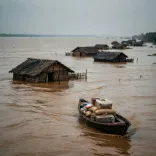
Assam CM Office: Relief supplies flowing uninterrupted to flood-hit areas
Synopsis
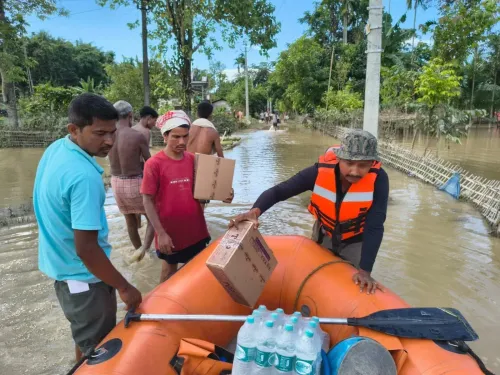
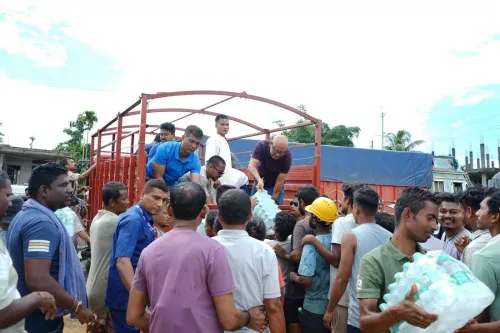
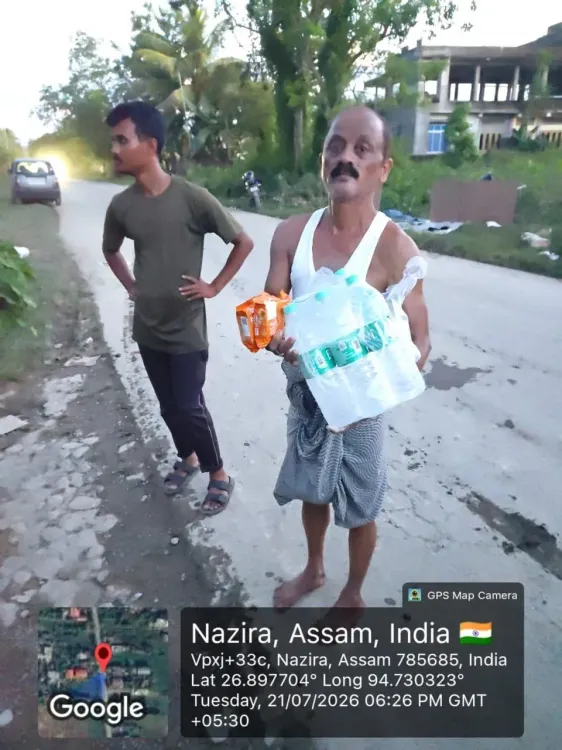
The Chief Minister's Office of Assam on 27 July 2026 confirmed uninterrupted delivery of food, drinking water, medicines, and sanitary napkins to flood-affected residents, crediting NGOs and local organisations for sustaining last-mile relief distribution during the ongoing monsoon crisis.
Key Takeaways
The Chief Minister's Office of Assam confirmed on 27 July 2026 that relief supplies are flowing without interruption to flood-hit areas.
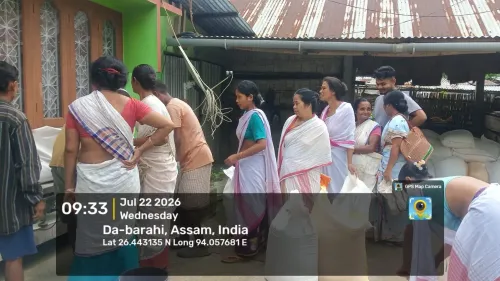
Items being distributed include food, safe drinking water, medicines, and sanitary napkins .
Local organisations and NGOs are credited with providing 'valuable support' in sustaining the relief effort.
Assam faces annual monsoon flooding driven by the Brahmaputra river system, displacing large populations each year.
The operation aligns with India's National Disaster Management Act, 2005 framework for state-NGO co-governance during disasters.
Attention will next turn to the transition from emergency relief to rehabilitation once floodwaters recede.
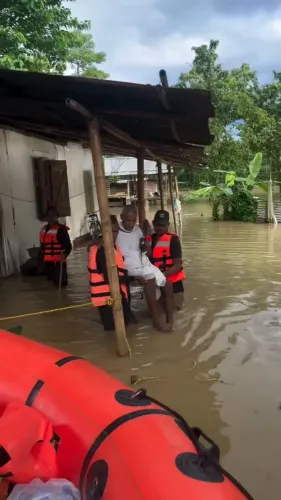
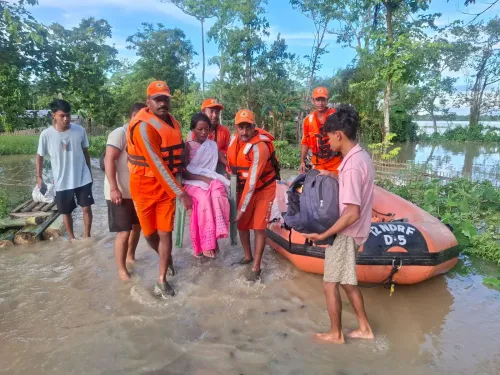
The Chief Minister's Office of Assam confirmed on Monday, 27 July 2026 that essential relief materials are being distributed without interruption to flood-affected communities across the state, with active support from local organisations and NGOs.
What is being supplied
The CMO's update lists food, safe drinking water, medicines, and sanitary napkins among the essential items reaching affected residents. The statement emphasises that supply has been continuous, crediting 'valuable support from local organisations and NGOs' for sustaining last-mile delivery. Sanitary napkins being named explicitly alongside food and medicine signals an effort to address the often-overlooked needs of women and girls during disaster relief operations — a standard the National Disaster Management Authority (NDMA) has increasingly pushed state governments to meet in recent years.Context
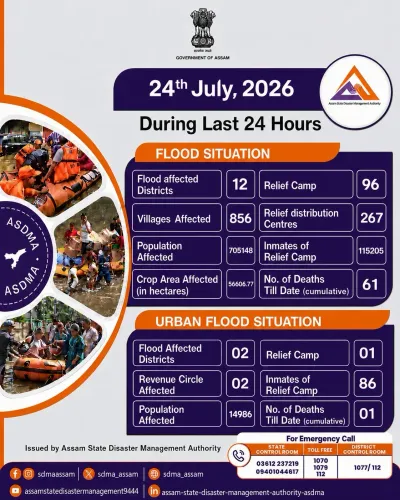
Assam is one of India's most flood-prone states, battered by the Brahmaputra and its tributaries every monsoon season. Annual flooding displaces hundreds of thousands of residents across dozens of districts, straining state logistics and requiring coordinated responses that stretch from district administrations down to village-level volunteers. Chief Minister Himanta Biswa Sarma, who has led the state since 2021, has consistently positioned direct CMO communication on social media as a tool for real-time accountability during such crises. The 27 July post continues that pattern, offering the public a direct window into relief operations.Policy backdrop
India's disaster relief framework under the National Disaster Management Act, 2005 mandates state governments to maintain pre-positioned stocks and coordinate with civil society during emergencies. Assam's State Disaster Management Authority (SDMA) typically activates multi-tier supply chains that pair government logistics with NGO distribution networks — precisely the model the CMO's post references. The inclusion of NGOs and local organisations in official communications is significant: it reflects a co-governance model where civil society groups fill gaps that government machinery alone cannot cover, particularly in remote or marooned villages cut off by floodwaters.Stakeholders and impact
The primary beneficiaries are flood-displaced communities sheltering in relief camps or stranded in inundated areas. For these populations, the continuity of supply — especially drinking water and medicines — is a matter of immediate health and survival. Local NGOs gain formal recognition in the state's relief narrative, which can strengthen future coordination and resource-sharing arrangements. The post implicitly acknowledges that government capacity alone is insufficient, a candid admission that tends to build public trust during prolonged crises.What's next
The critical question for relief managers will be sustaining supply continuity as the monsoon season progresses and floodwaters potentially spread to new districts. Attention will also shift to whether the state moves from emergency relief to medium-term rehabilitation — rebuilding homes, restoring livelihoods, and repairing damaged infrastructure — once waters recede. How quickly that transition happens will define the longer-term human cost of the 2026 Assam floods.Point of View
The statement reflects an evolved co-governance posture that acknowledges the limits of state capacity in geographically difficult terrain. The inclusion of sanitary napkins in the relief list is a small but telling policy signal — it suggests the state is inching toward gender-responsive disaster management, an area where Indian administrations have historically underperformed. Whether this continuity of supply holds through the remainder of the monsoon will be the real test of the framework being described.
NationPress
27 Jul 2026
Frequently Asked Questions
What relief materials is the Assam government supplying to flood-affected people?
The Chief Minister's Office of Assam has confirmed that food, safe drinking water, medicines, and sanitary napkins are among the essential items being distributed to flood-affected residents without interruption.
Is Assam facing floods in July 2026?
Yes. The CMO's 27 July 2026 post indicates an active flood relief operation is underway in Assam, consistent with the state's pattern of annual monsoon flooding caused by the Brahmaputra river system.
Are NGOs helping in Assam flood relief 2026?
Yes. The Chief Minister's Office specifically credited local organisations and NGOs with providing 'valuable support' in distributing relief materials to affected communities.
Who is responsible for flood relief in Assam?
The state government, led by Chief Minister Himanta Biswa Sarma , oversees disaster response through the Assam State Disaster Management Authority, which coordinates with NGOs and local bodies under India's National Disaster Management framework.
Why does Assam flood every year?
Assam is situated in the floodplain of the Brahmaputra river and its tributaries. Heavy monsoon rainfall causes the river to overflow annually, inundating large parts of the state and displacing hundreds of thousands of people.