Assam Govt Intensifies Flood Relief Ops Across State
Synopsis
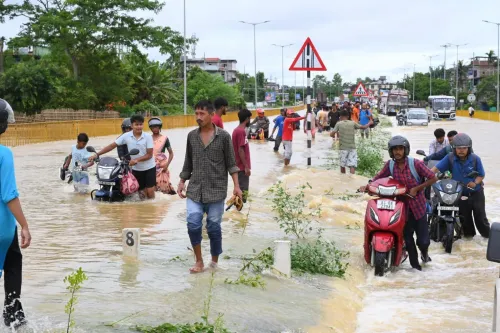
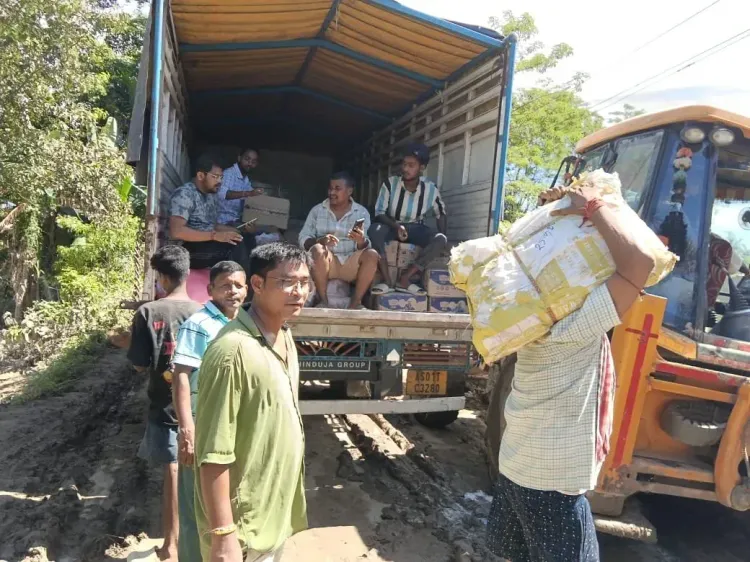
The Government of Assam is conducting active relief and rescue operations across flood-affected areas as of 27 July 2026, with the Chief Minister's Office affirming that all efforts are being directed toward reaching affected families during the monsoon season.
Key Takeaways
The Chief Minister's Office of Assam confirmed on 27 July 2026 that relief and rescue operations are ongoing across flood-affected areas.
The government stated that 'every effort' is being made to reach affected families.
Assam faces recurrent annual flooding driven by the Brahmaputra River and its tributaries during the June–September monsoon.
The Assam State Disaster Management Authority (ASDMA) leads coordination with NDRF and SDRF teams under the Disaster Management Act, 2005 .
Damage assessments, central fund requests, and potential cabinet decisions on compensation are expected in the coming days.
The Chief Minister's Office of Assam confirmed on Monday, 27 July 2026 that the Government of Assam is actively conducting relief and rescue operations across flood-affected areas, with a stated commitment to reaching every affected family.
Context
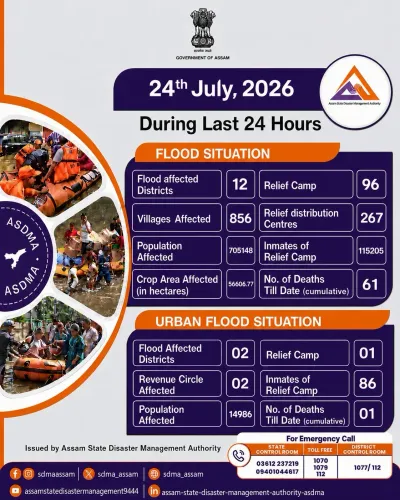
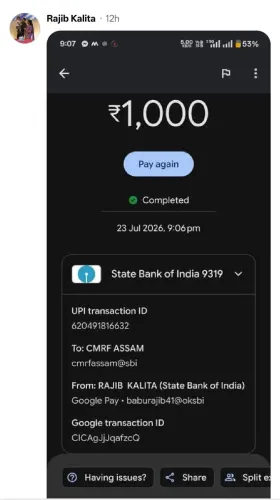
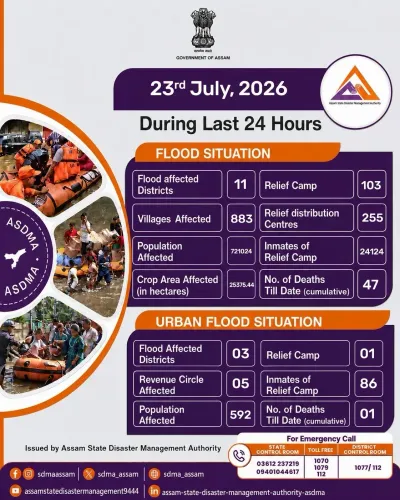
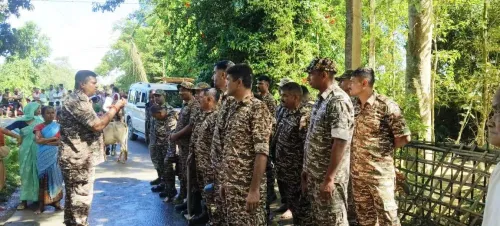
The CMO's post, shared on 27 July 2026, states: 'Government of Assam continues to carry out relief and rescue operations across flood-affected areas, with every effort being made to reach affected families.' The communication, accompanied by four images, signals that operations are ongoing rather than newly launched — pointing to a sustained, multi-day response effort during the peak monsoon period.
Assam is among India's most flood-prone states, with the Brahmaputra River and its tributaries inundating large swathes of territory during the June–September monsoon season virtually every year. The timing of this update falls squarely within the annual high-risk window.
Policy Backdrop
The state's disaster response framework is anchored in the Disaster Management Act, 2005, which mandates structured coordination between state and central agencies during emergencies. The Assam State Disaster Management Authority (ASDMA) leads on-ground rescue, relief distribution, and the deployment of National Disaster Response Force (NDRF) and State Disaster Response Force (SDRF) teams.
Successive state governments have maintained standing protocols for mass evacuations, operation of relief camps, and distribution of essential supplies. Chief Minister Himanta Biswa Sarma, who has led the state since 2021, has overseen multiple annual flood cycles and has regularly used official channels to communicate the government's response posture to the public.
Stakeholders and Impact
The primary stakeholders are the flood-affected families and riverine communities spread across Assam's low-lying districts. For these communities, the speed and reach of relief operations — food, drinking water, medical aid, and safe shelter — are immediate priorities during inundation.
The broader administrative machinery involved includes district administrations, the ASDMA, central paramilitary forces, and the Indian Army and Air Force, which are periodically called in for aerial rescue in severely cut-off areas. Relief camps serve as the primary safety net for displaced residents until floodwaters recede.
What's Next
Observers will watch for formal damage assessments from the ASDMA, requests for enhanced central assistance from the National Disaster Response Fund (NDRF), and any cabinet-level decisions on compensation packages or longer-term infrastructure measures such as embankment reinforcement.
The recurrent nature of Assam's flooding has kept long-term mitigation — including dredging of the Brahmaputra, strengthening of river embankments, and improved early-warning systems — on the state's policy agenda. How the government translates the current relief cycle into durable structural investment will be the key question in the weeks ahead.
Point of View
The government is managing public expectations while keeping political accountability visible. The post sits within a longer arc of Assam administrations seeking to demonstrate proactive disaster governance, even as critics have consistently pressed for structural solutions over reactive relief. Whether this cycle produces any lasting policy shift — on embankments, early-warning infrastructure, or Brahmaputra management — will be the real measure of the state's disaster preparedness evolution.
NationPress
27 Jul 2026
Frequently Asked Questions
Is Assam facing floods in July 2026?
Yes. The Chief Minister's Office of Assam confirmed on 27 July 2026 that the state is conducting active relief and rescue operations across flood-affected areas, consistent with the annual monsoon flooding pattern driven by the Brahmaputra River and its tributaries.
What is the Assam government doing for flood relief?
The Government of Assam is carrying out relief and rescue operations across flood-affected districts, with the stated aim of reaching every affected family. The Assam State Disaster Management Authority coordinates these efforts alongside NDRF and SDRF teams.
Which river causes most flooding in Assam?
The Brahmaputra River is the primary cause of large-scale flooding in Assam. Its annual monsoon surge, combined with overflow from dozens of tributaries, inundates low-lying areas across the state between June and September each year.
Who is in charge of flood relief in Assam?
Chief Minister Himanta Biswa Sarma heads the state government overseeing flood response. On the ground, the Assam State Disaster Management Authority (ASDMA) leads rescue and relief coordination, supported by NDRF, SDRF, and district administrations.
What is the NDRF and how does it help during Assam floods?
The National Disaster Response Force (NDRF) is a central government agency specialised in disaster rescue operations. During Assam floods, NDRF teams are deployed alongside the state's own SDRF to conduct boat rescues, evacuate stranded residents, and distribute emergency relief in cut-off areas.