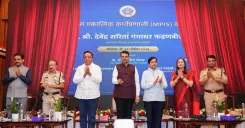
CM Bhupendra Patel Opens Labour Ministers' Chintan Shibir in Gandhinagar
Synopsis
Chief Minister Bhupendra Patel inaugurated a two-day national Chintan Shibir of state and UT labour ministers at Mahatma Mandir, Gandhinagar, focusing on implementing India's Four Labour Codes and aligning state rules under the Reform-Perform-Transform framework toward Viksit Bharat 2047.
Key Takeaways
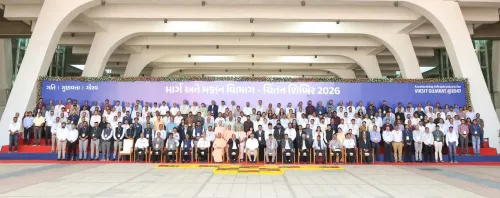
CM Bhupendra Patel inaugurated the two-day national labour ministers' Chintan Shibir at Mahatma Mandir, Gandhinagar on 21 November 2026 .
Mansukh Mandaviya and ministers from all states and Union Territories attended the conclave.
The event focuses on implementing four Labour Codes that consolidate 29 central labour laws passed between 2019 and 2020.
Gujarat has already finalised and operationalised its own state-level rules under the new labour codes.
CM Patel called the shibir a 'take-off platform' for good governance, linking it to PM Modi's mantra of 'Reform, Perform, Transform.' The retreat is framed around 'Shramev Jayate' and the Viksit Bharat 2047 national development goal.
A two-day national conclave on labour and employment has opened at Mahatma Mandir, Gandhinagar, bringing together labour ministers from every state and Union Territory under one roof — a gathering that could meaningfully shape how India's Four Labour Codes finally reach workers on the ground.
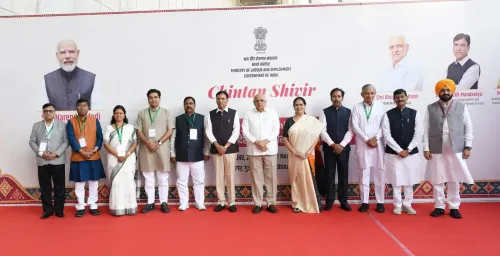
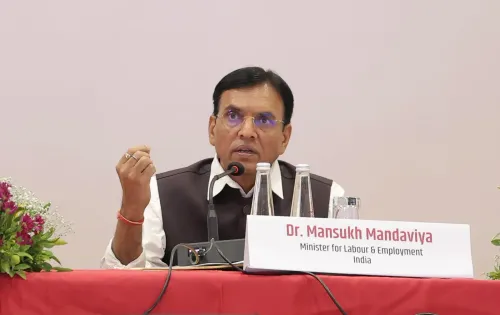
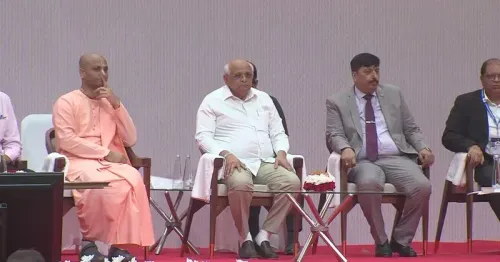
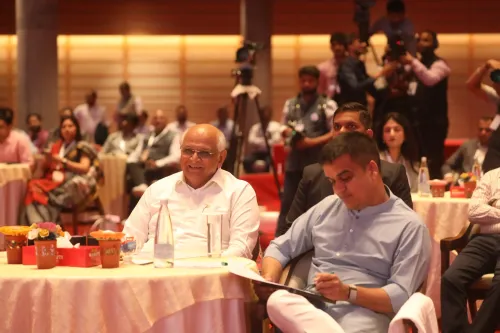
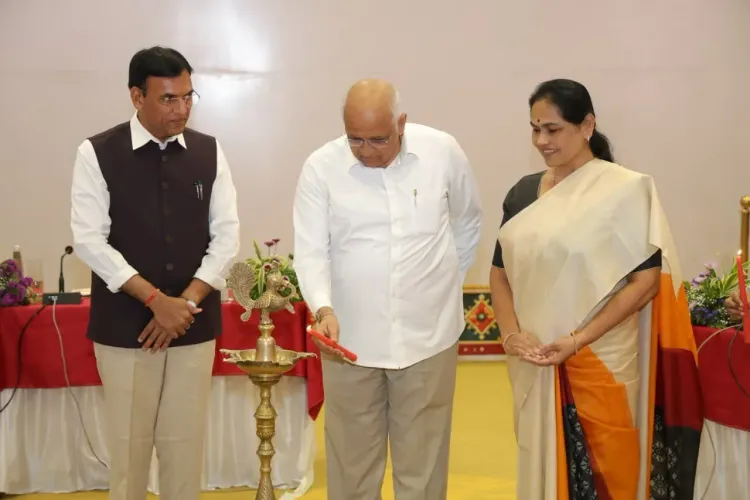
Chief Minister Bhupendra Patel inaugurated the Chintan Shibir (policy brainstorming retreat) organised by the Union Ministry of Labour and Employment on Saturday, 21 November 2026. Union Labour and Employment Minister Dr. Mansukh Mandaviya, Union Minister of State Shrimati Shobha Karandlaje, Gujarat's own Labour and Employment Minister Kunvarji Bavaliya, and Minister of State Kantibhai Amrutiya were among those present alongside their counterparts from across India.
A 'Take-Off Platform' for Good Governance
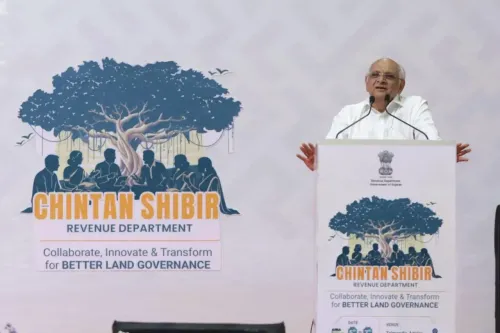
Addressing the gathering, CM Patel described such Chintan Shibirs — pioneered under Prime Minister Narendra Modi's vision — as a 'take-off platform' for good governance. He said the retreat would serve as a space for 'collective deliberation to make India's labour system stronger, more transparent, and more beneficial to workers.'
The sentiment is deliberate. Chintan Shibirs have become a recurring instrument of Modi-era cooperative federalism, designed to synchronise Centre-state implementation of large reforms. Labour is a concurrent subject under the Indian Constitution, which means both Parliament and state legislatures can legislate on it — making alignment meetings like this one essential.
Four Codes, 29 Old Laws, and Gujarat's Early Move
The centrepiece of discussion is the consolidation of 29 central labour laws into four codes — covering wages, industrial relations, social security, and occupational safety — passed between 2019 and 2020. CM Patel credited PM Modi's mantra of 'Reform, Perform, Transform' as the driving force behind this landmark overhaul, calling the four codes 'a step toward strengthening workers' social security.'
Importantly, he highlighted that Gujarat has already finalised and operationalised its own rules under the new labour codes — positioning the state as an early mover. The central codes require every state to notify matching rules before they can take effect within that state's jurisdiction, making Gujarat's proactive stance significant in the national rollout picture.
'Shramev Jayate' and the Viksit Bharat 2047 Link
Patel invoked PM Modi's phrase 'Shramev Jayate' — a labour-focused adaptation of the national motto — to frame workers as indispensable contributors to India's development journey. He expressed confidence that the retreat would 'provide direction' for the country's workforce to become a pillar of the Viksit Bharat 2047 vision, the government's ambitious blueprint to make India a developed nation by its centenary of independence.
The 'Shramev Jayate' framing is not incidental. It signals an attempt to give labour reform the same aspirational weight as other flagship national programmes, connecting shop-floor realities to a 21-year macro-economic arc.
With states at wildly different stages of rules notification, what this shibir agrees upon — and what timelines it sets — will tell observers whether India's most sweeping labour reform in decades is finally moving from statute to reality.
Point of View
The Centre is using cooperative-federalism forums to push laggard states toward implementation without invoking legislative coercion. Gujarat's early operationalisation of its rules is being showcased as a template, reinforcing the BJP's dual Centre-state narrative of governance efficiency. Framing the entire exercise under 'Viksit Bharat 2047' and 'Shramev Jayate' also serves a political purpose — tying a complex, contested reform to an aspirational national mission that is harder to oppose publicly.
NationPress
21 Nov 2026
Frequently Asked Questions
What is the Labour Ministers Chintan Shibir held in Gandhinagar?
It is a two-day national policy retreat organised by the Union Ministry of Labour and Employment, bringing together labour and employment ministers from all states and Union Territories to discuss the implementation of India's Four Labour Codes and worker welfare schemes.
What are India's Four Labour Codes?
The Four Labour Codes consolidate 29 older central labour laws into four statutes covering wages, industrial relations, social security, and occupational safety and health. Parliament passed them between 2019 and 2020 .
What is Mahatma Mandir in Gandhinagar?
Mahatma Mandir is a large convention and exhibition centre in Gandhinagar, Gujarat , regularly used for national and state-level policy conferences and summits.
Has Gujarat implemented the new Labour Codes?
Yes. Chief Minister Bhupendra Patel stated that Gujarat has already finalised and operationalised its state-level rules under the new Labour Codes, making it among the earlier states to do so.
What is 'Shramev Jayate' and how does it connect to this event?
'Shramev Jayate' is PM Narendra Modi's phrase honouring the centrality of labour to India's growth, adapted from the national motto 'Satyamev Jayate.' At the Chintan Shibir, CM Patel used it to link worker welfare reforms to the broader Viksit Bharat 2047 development vision.