CM Chandrababu Hails Vikram-1 Rocket's Debut Success
Synopsis
Andhra Pradesh Chief Minister Chandrababu Naidu praised the successful debut of Skyroot Aerospace's Vikram-1 rocket on 18 July 2026, congratulating ISRO, IN-SPACe and NSIL and calling the achievement proof that India's private space sector can compete globally.
Key Takeaways
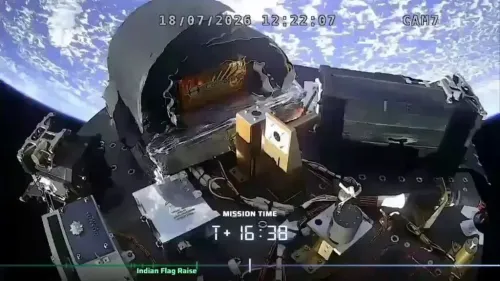
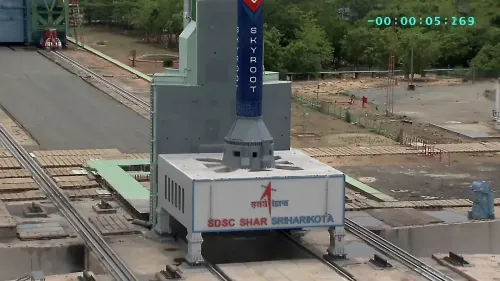
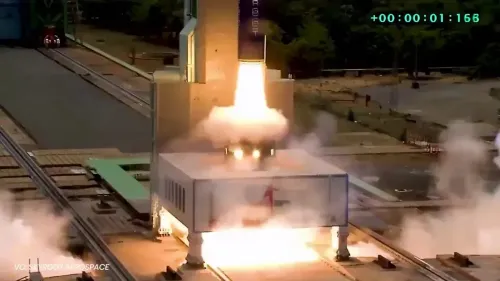
Vikram-1 , developed by Skyroot Aerospace , achieved a successful maiden orbital launch, hailed by Andhra Pradesh CM Chandrababu Naidu on 18 July 2026 .
Naidu congratulated Skyroot Aerospace , ISRO , IN-SPACe , and NSIL for the achievement.
The CM said the launch proves India's private space sector has risen to compete with the world's best nations.
Skyroot Aerospace was founded in 2018 in Hyderabad and signed an MoU with ISRO in 2020 for technical support.
India's 2020 space liberalisation policy enabled private companies to build and operate launch vehicles under IN-SPACe oversight.
Naidu framed the milestone as an inspiration for future generations of Indian scientists and innovators.
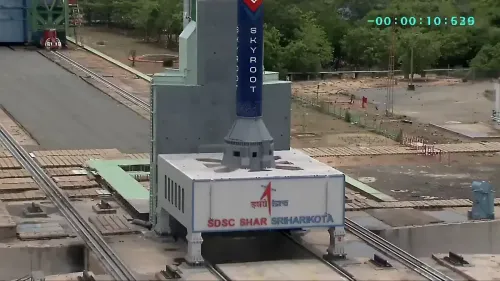
The Chief Minister's Office of Andhra Pradesh announced on Saturday, 18 July 2026 that Chief Minister Nara Chandrababu Naidu has expressed elation over the successful maiden launch of the Vikram-1 rocket, congratulating Skyroot Aerospace, ISRO, IN-SPACe, and NSIL on the milestone achievement.
Context
Posting on 18 July 2026, the Chief Minister's Office shared Naidu's remarks in Telugu, stating: 'ఈ విజయం ప్రతి భారతీయుడు గర్వపడే క్షణం' — 'This success is a moment every Indian can be proud of.' He added that the achievement would serve as 'a great inspiration for future generations of young scientists and innovators.' Naidu further said the launch proves that India's private space sector has risen to the level of competing with the best nations in the world.
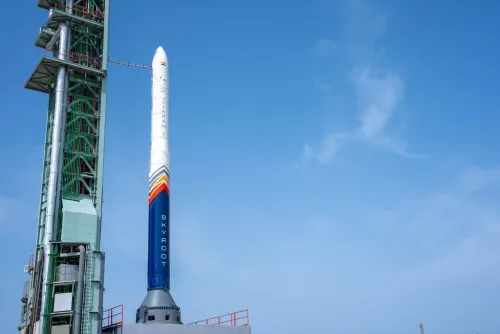
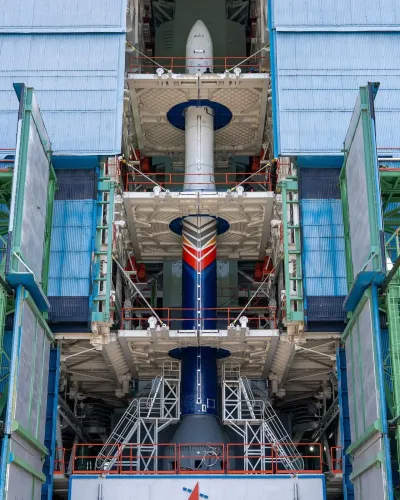
Vikram-1 is the first orbital launch vehicle developed by Hyderabad-based startup Skyroot Aerospace, designed to carry small satellites into low-Earth orbit. A successful debut flight marks a significant commercial and technological milestone for India's emerging private space industry.
Policy Backdrop
The launch comes against the backdrop of a landmark 2020 policy liberalisation in which the Government of India opened the space sector to private players, placing regulatory and promotional oversight under IN-SPACe — the Indian National Space Promotion and Authorisation Centre. NewSpace India Limited (NSIL), incorporated in 2019 as the commercial arm of the Department of Space, was mandated to facilitate technology transfer and public-private partnerships.
Skyroot Aerospace, founded in 2018, signed a formal MoU with ISRO in 2020 to access launch facilities and technical expertise for its Vikram-series rockets. The company has since attracted private capital and built an indigenous propulsion programme aimed at reducing the cost of placing satellites in orbit.
Stakeholders and Impact
A successful Vikram-1 flight directly benefits a growing ecosystem of private space startups across India, many of them concentrated in Hyderabad, Andhra Pradesh and Bengaluru. Investors, satellite operators, and defence-adjacent technology firms all stand to gain from demonstrated domestic launch capability at competitive costs.
For Andhra Pradesh specifically, the development aligns with Chief Minister Naidu's long-standing push — dating back to the 1990s — to position the state as a hub for technology-driven industries. A thriving private space sector could attract manufacturing clusters, high-skill employment, and foreign investment to the state.
Young engineers and scientists are also a named constituency in Naidu's remarks; the Chief Minister explicitly framed the launch as an inspiration for the next generation of Indian innovators.
What's Next
Attention will now turn to subsequent commercial flights of the Vikram-1 vehicle and the broader pipeline of private launch vehicles under development in India. Analysts and industry stakeholders will watch whether state governments, including Andhra Pradesh, announce dedicated incentives — such as land allocation, infrastructure support, or fiscal concessions — to attract space manufacturing units.
India's ambition to capture a meaningful share of the global small-satellite launch market, estimated to grow substantially through the decade, hinges on consistent launch cadence and reliability from vehicles like Vikram-1. A proven first-flight success strengthens that case considerably.
Point of View
Effusive congratulations reflect a calculated alignment with India's new space economy at a moment when the sector is transitioning from government monopoly to a hybrid public-private model. For a Chief Minister who built his political identity around technology-led growth in the 1990s, celebrating a Hyderabad-origin rocket's success is both genuine and strategically useful — it reinforces Andhra Pradesh's claim to the space-tech corridor. The framing around 'inspiring future scientists' also signals an attempt to link state governance with national pride, a recurring motif in Indian political communication around science milestones. The broader arc here is India's deliberate effort to commercialise its space heritage and compete in the global small-satellite launch market — Vikram-1's success, if sustained, accelerates that timeline.
NationPress
19 Jul 2026
Frequently Asked Questions
What is the Vikram-1 rocket?
Vikram-1 is the first orbital launch vehicle developed by Hyderabad-based private startup Skyroot Aerospace, designed to carry small satellites into low-Earth orbit at competitive costs.
Who is Skyroot Aerospace?
Skyroot Aerospace is a Hyderabad-based private space startup founded in 2018 to develop small satellite launch vehicles for Indian and global markets. It signed an MoU with ISRO in 2020 for facility access and technical support.
What did Chandrababu Naidu say about the Vikram-1 launch?
Chief Minister Naidu said the successful maiden launch proves India's private space sector can now compete with the best nations in the world, and called it a moment every Indian can be proud of and an inspiration for future young scientists.
What is IN-SPACe and what role does it play?
IN-SPACe, the Indian National Space Promotion and Authorisation Centre, was created in 2020 as the nodal agency to regulate and promote private sector participation in India's space activities.
How does the Vikram-1 success affect India's space ambitions?
A successful debut flight strengthens India's case for capturing a share of the global small-satellite launch market and validates the 2020 policy liberalisation that opened the sector to private companies.