CM Chandrababu Meets Surbana Jurong, IIT Kanpur on Swarna Kuppam Vision 2029
Synopsis
Chief Minister Chandrababu Naidu met Surbana Jurong and IIT Kanpur on 4 July 2026 to discuss a master plan under Swarna Kuppam Vision 2029, focusing on industry, horticulture, and skill development for the Kuppam constituency in Andhra Pradesh.
Key Takeaways
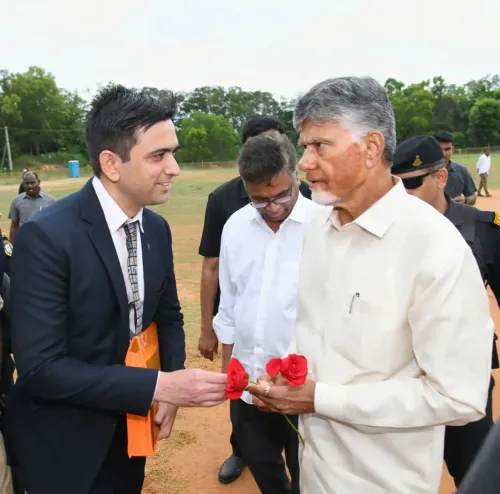
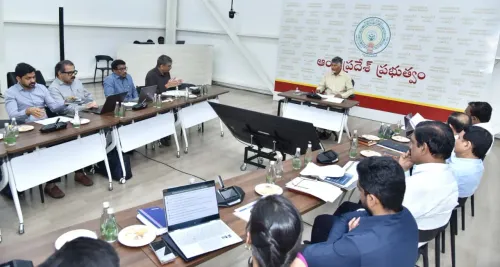
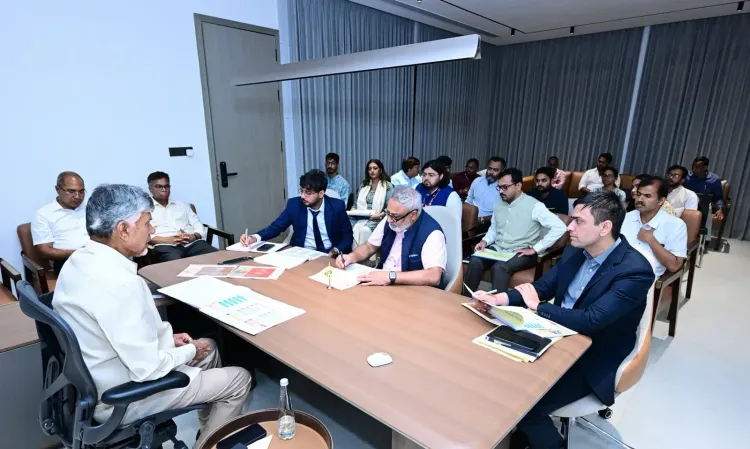
CM Nara Chandrababu Naidu met representatives of Surbana Jurong and IIT Kanpur on 4 July 2026 to advance Swarna Kuppam Vision 2029 .
Naidu briefed delegates on Kuppam's geography, transport, horticulture, crops, livestock, and primary income sources.
Both institutions were tasked with preparing a comprehensive master plan for holistic development of Kuppam constituency.
CM directed focus on skill development for local youth, creation of economic opportunities, and efficient use of existing resources.
Surbana Jurong previously prepared the Amaravati capital city master plan for Andhra Pradesh in 2015 .
Large-scale industries arriving in the region make the master plan critical for workforce readiness and infrastructure alignment.
The Chief Minister's Office of Andhra Pradesh announced on Saturday, 4 July 2026 that Chief Minister Nara Chandrababu Naidu held a meeting with representatives of Surbana Jurong (SJ) and IIT Kanpur to advance the Swarna Kuppam Vision 2029, a comprehensive development framework for the Kuppam assembly constituency in Chittoor district, Andhra Pradesh.
Context
During the meeting, CM Naidu briefed the delegations on Kuppam's geographical profile, transport connectivity, horticulture produce, crops, livestock, livelihoods, and primary income sources of its residents. The briefing was aimed at giving both institutions a ground-level picture of the constituency before they begin preparing a comprehensive master plan. Naidu represents Kuppam in the Andhra Pradesh Legislative Assembly and has been associated with the constituency for several decades.
Policy Backdrop
The engagement of Surbana Jurong for this assignment follows an established pattern in Andhra Pradesh's planning history. The Singapore-based urban planning and infrastructure consultancy was previously commissioned by the state government in 2015 to prepare the master plan for Amaravati, the state's proposed capital city. IIT Kanpur, a premier technical institute, brings expertise in engineering, integrated planning, and skill-development frameworks to complement Surbana Jurong's urban design capabilities.
The Swarna Kuppam Vision 2029 is positioned as an integrated regional development initiative targeting industry, horticulture, and skill-building in a constituency that lies at the tri-junction of Andhra Pradesh, Karnataka, and Tamil Nadu. The framework reflects the state government's broader strategy of extending structured, consultant-backed planning beyond major urban centres to semi-rural constituencies.
Stakeholders and Impact
CM Naidu specifically directed the representatives of both institutions to focus on skill enhancement among local youth, creation of new economic opportunities, and efficient utilisation of existing natural and agricultural resources. The directive underscores that the master plan must be people-centric, not merely infrastructure-centric. With large-scale industries reported to be arriving in the region, the plan is expected to address workforce readiness alongside physical infrastructure.
Key stakeholders include Kuppam's farming community — particularly horticulture growers — local youth seeking employment, and small businesses dependent on the constituency's existing resource base. A well-executed master plan could position Kuppam as a model for constituency-level integrated development in Andhra Pradesh.
What's Next
The immediate deliverable from Surbana Jurong and IIT Kanpur is the preparation of a master plan for the holistic development of Kuppam constituency. Observers will watch for the formal release of the plan, any investment commitments tied to it, and follow-up announcements on funding mechanisms by the state government. The 2029 horizon of the vision framework suggests a phased rollout, with near-term milestones likely to be tied to the state's ongoing industrial policy cycle.
If executed as envisioned, Swarna Kuppam Vision 2029 could serve as a replicable blueprint for constituency-level planning across Andhra Pradesh, particularly in regions where industrial investment is beginning to arrive ahead of supporting infrastructure.
Point of View
Master-plan-driven approach to his home constituency that he earlier used for Amaravati — a strategy that has defined his administrations' development philosophy. Bringing in both an international urban consultancy and a premier domestic technical institute reflects an attempt to blend global planning standards with locally grounded engineering expertise. The explicit emphasis on skill development alongside industrial attraction suggests the government is conscious of past criticism that large infrastructure projects bypassed local communities. Whether the master plan translates into measurable outcomes for Kuppam's farmers and youth by 2029 will be the real test of this model.
NationPress
4 Jul 2026
Frequently Asked Questions
What is Swarna Kuppam Vision 2029?
Swarna Kuppam Vision 2029 is an integrated regional development framework for the Kuppam assembly constituency in Andhra Pradesh, targeting growth through industry, horticulture, skill development, and efficient use of local resources, with a target horizon of 2029.
Why is Surbana Jurong involved in Kuppam's development?
Surbana Jurong, a Singapore-based urban planning and infrastructure consultancy, has been engaged to prepare a master plan for Kuppam constituency. The firm previously worked on the Amaravati capital city master plan for Andhra Pradesh in 2015.
What role will IIT Kanpur play in the Kuppam master plan?
IIT Kanpur representatives participated in the 4 July 2026 meeting with CM Chandrababu Naidu and are expected to contribute expertise in engineering, integrated planning, and skill-development frameworks to the Kuppam master plan.
What did CM Chandrababu Naidu instruct the consultants to focus on?
CM Naidu directed Surbana Jurong and IIT Kanpur to prioritise skill enhancement for local youth, creation of new economic opportunities, and efficient utilisation of Kuppam's existing natural and agricultural resources in the master plan.
Where is Kuppam constituency located?
Kuppam is an assembly constituency in Chittoor district, Andhra Pradesh, situated at the tri-junction of Andhra Pradesh, Karnataka, and Tamil Nadu. It is represented in the state legislature by Chief Minister Nara Chandrababu Naidu.