CM Chhattisgarh Pushes Eco-Tourism at Bhoramdev
Synopsis
The Chhattisgarh Chief Minister's Office announced on 4 July 2026 that Bhoramdev — home to an 11th-century Shiva temple and a wildlife sanctuary in Kawardha district — is being developed as a flagship eco-tourism destination under the SuShasan Sarkar governance initiative.
Key Takeaways
The Chief Minister's Office of Chhattisgarh announced on 4 July 2026 that Bhoramdev is being positioned as a flagship eco-tourism destination.
Bhoramdev in Kawardha district houses an 11th-century Shiva temple complex alongside a wildlife sanctuary with teak forests and diverse fauna.
The push is framed under the state government's SuShasan Sarkar (Good Governance Government) initiative, which links welfare delivery with sustainable resource use.
Local tribal communities , nature tourists and private tourism operators are the primary stakeholders expected to benefit from formalised eco-tourism infrastructure.
Chhattisgarh has one of India's highest forest-cover ratios and has promoted regulated eco-tourism at multiple sanctuary sites since the 2010s .
Specific details on trails, funding and timelines are yet to be disclosed by the state tourism department.
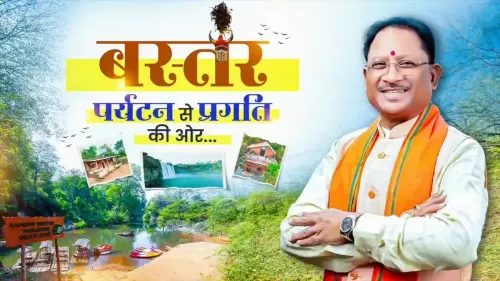
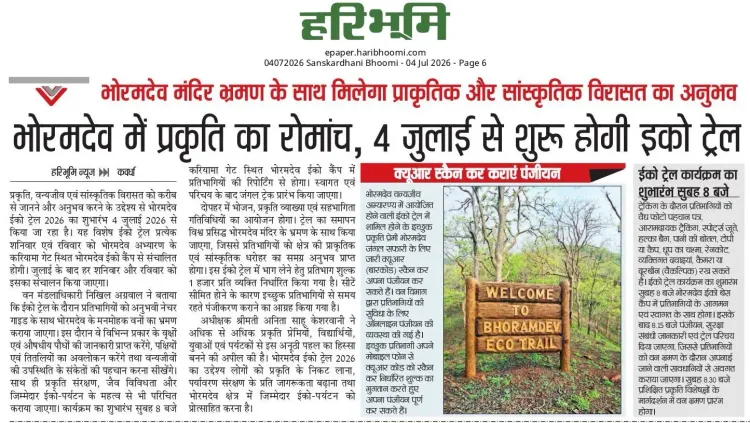
The Chief Minister's Office of Chhattisgarh announced on Saturday, 4 July 2026 that Bhoramdev in Kawardha district is being developed as a flagship eco-tourism destination, combining adventure, nature and heritage under the state government's SuShasan Sarkar (Good Governance Government) initiative.
The post declared: 'At Bhoramdev, you will now get a wonderful confluence of nature and heritage along with adventure. The SuShasan Sarkar initiative is giving new direction to eco-tourism — Chhattisgarh is becoming the preferred destination for nature lovers.'
Context
Bhoramdev, often called the 'Khajuraho of Chhattisgarh', is anchored by an 11th-century Shiva temple complex of significant archaeological value. Surrounding it is the Bhoramdev Wildlife Sanctuary, a stretch of teak and mixed forests in Kawardha (Kabirdham) district that supports leopards, wolves, migratory birds and rich plant diversity. The combination of a heritage monument and a functioning wildlife corridor makes it an unusual asset for the state's tourism planners.Policy Backdrop
Chhattisgarh carries one of India's higher forest-cover ratios, with roughly 44 per cent of its geographical area under forests. Since the 2010s, successive state administrations have pursued regulated eco-tourism at sites including Barnawapara Wildlife Sanctuary and Indravati National Park, seeking to translate biodiversity into local economic activity. The current government's SuShasan Sarkar branding consolidates welfare delivery, sustainable resource use and infrastructure development under a single governance identity, and the Bhoramdev push fits squarely within that frame. Across central India, states with comparable forest and heritage assets — Madhya Pradesh, Odisha, Jharkhand — have pursued similar dual-asset tourism models to diversify revenue beyond mining and agriculture.Stakeholders and Impact
The most direct beneficiaries of expanded eco-tourism infrastructure at Bhoramdev are local tribal and forest-fringe communities, who stand to gain from guide services, homestays and ancillary trade if development is managed with adequate community participation. Nature tourists and heritage travellers from within India represent the primary demand segment, particularly as weekend and short-break travel from cities such as Raipur, Bilaspur and Nagpur grows. Private tourism operators and state-run hospitality units are also positioned to scale activity around formalised nature trails and interpretation facilities.What's Next
The announcement signals intent but specifics — trail maps, visitor capacity limits, funding envelopes and timelines — remain to be detailed by the state tourism department. Observers will watch for public-private partnership agreements, the designation of regulated nature trails and the establishment of interpretation centres that contextualise both the wildlife sanctuary and the temple complex. Quarterly visitor-arrival and revenue data from the Chhattisgarh Tourism Board will be the clearest early measure of whether the initiative translates into on-ground impact. If the Bhoramdev model delivers results, it could serve as a template for similar dual-heritage-and-wildlife sites elsewhere in the state.Point of View
The Chhattisgarh government is clearly signalling that eco-tourism is now a governance deliverable, not merely a departmental programme. The move also carries implicit pressure on the forest and tribal affairs bureaucracy to ensure that community benefit-sharing keeps pace with commercial development — a tension that has derailed similar projects elsewhere. Whether Bhoramdev becomes a genuine model or a marketing exercise will depend on the institutional scaffolding — trail management, carrying-capacity norms and revenue-sharing — that the state puts in place over the coming months.
NationPress
4 Jul 2026
Frequently Asked Questions
What is Bhoramdev and why is it significant?
Bhoramdev is a site in Kawardha (Kabirdham) district of Chhattisgarh comprising an 11th-century Shiva temple complex — often called the 'Khajuraho of Chhattisgarh' — and the adjoining Bhoramdev Wildlife Sanctuary, which contains teak forests, leopards and migratory birds.
What is the SuShasan Sarkar initiative in Chhattisgarh?
SuShasan Sarkar, meaning 'Good Governance Government', is the branding framework used by the current Chhattisgarh state government to consolidate its development, welfare and sustainable-resource programmes under a single governance identity.
What eco-tourism sites does Chhattisgarh already have?
Chhattisgarh has promoted eco-tourism at several sites since the 2010s, including Barnawapara Wildlife Sanctuary and Indravati National Park, leveraging the state's high forest cover of roughly 44 per cent of its geographical area.
How will local communities benefit from Bhoramdev eco-tourism?
Local tribal and forest-fringe communities are expected to benefit through guide services, homestays and ancillary trade, provided the development model includes adequate community participation and benefit-sharing mechanisms.
What should visitors expect at Bhoramdev under the new initiative?
The government has indicated a combination of adventure activities, nature trails and heritage experiences at Bhoramdev; specific infrastructure details such as trail maps and visitor facilities are yet to be formally announced by the state tourism department.