Chhattisgarh CMO: Tourism Bridges Development, Cultural Pride
Synopsis
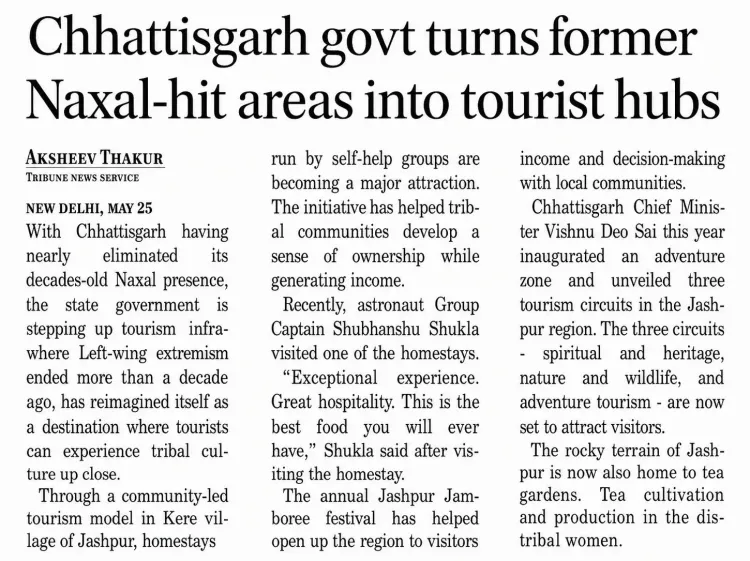
The Chhattisgarh Chief Minister's Office on 26 May 2026 articulated a vision of community-led tourism — spanning homestays, tea gardens, eco-tourism, and adventure circuits — as the state's bridge between peace, cultural pride, and last-mile development for tribal communities, women-led SHGs, and local youth.
Key Takeaways
The Chief Minister's Office of Chhattisgarh posted on 26 May 2026 framing tourism as central to the state's development vision.
Tribal communities, women-led self-help groups, and local youth are identified as the primary beneficiaries and drivers of tourism initiatives.
Tourism formats highlighted include homestays, tea gardens, eco-tourism, and adventure circuits rooted in local cultural identity.
The post connects improved peace conditions in the state to new economic opportunities reaching remote communities.
The approach aligns with the national Swadesh Darshan scheme framework for thematic tourism circuits, including tribal and eco-tourism tracks.
Scaling these initiatives will depend on state-central coordination on infrastructure in historically underserved areas.
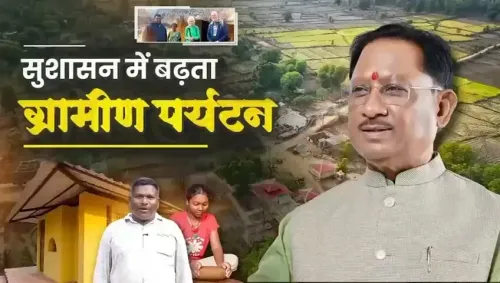
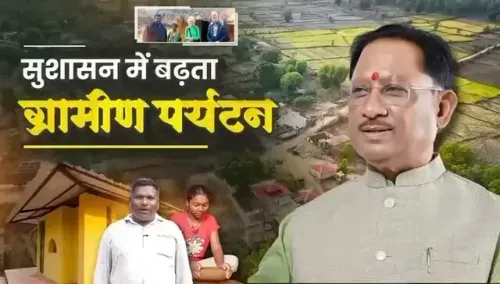
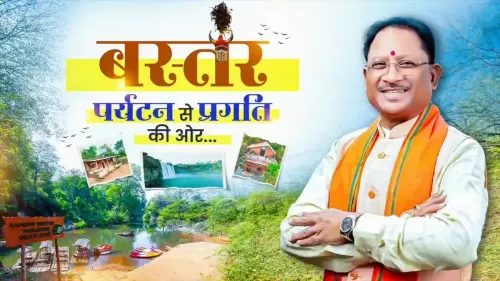
The Chief Minister's Office of Chhattisgarh on Tuesday, 26 May 2026, outlined the state government's vision of community-centred development, highlighting how tourism is being used as a vehicle to connect prosperity with cultural identity across the state. The post emphasised that peace in the region is now 'opening doors to prosperity' and that development is reaching the last mile with people at its centre.
Context
The statement from the Chief Minister's Office of Chhattisgarh frames tourism not merely as an economic sector but as a bridge between development and the preservation of local heritage. The post notes that tribal communities, women-led self-help groups, and local youth are at the forefront of this push, finding livelihoods through homestays, tea gardens, eco-tourism, and adventure circuits rooted in local identity. The language signals a deliberate pivot from viewing Chhattisgarh primarily through the lens of its historical challenges to projecting it as a destination for sustainable, community-led tourism.
Policy Backdrop
Chhattisgarh was carved out of Madhya Pradesh in November 2000 to enable more focused governance of its large tribal population and resource-rich hinterland. For much of its early existence, significant parts of the state were affected by left-wing extremism, which constrained infrastructure development and economic activity in remote areas. The current emphasis on peace as a precondition for prosperity reflects a broader state-level strategy of converting improved security conditions into tangible economic opportunity.
At the national level, the Swadesh Darshan scheme, launched in 2014-15 by the Union Ministry of Tourism, provides a framework for developing thematic circuits — including eco-tourism and tribal circuits — in states with significant natural and cultural assets. Chhattisgarh, with its dense forests, waterfalls, and indigenous cultural traditions, is well positioned to leverage such central schemes for community-based tourism development.
Stakeholders and Impact
The three groups explicitly named — tribal communities, women-led self-help groups, and local youth — represent the state's most economically vulnerable populations in remote and semi-urban areas. By anchoring tourism initiatives in homestays and eco-tourism circuits, the model attempts to keep revenue within local communities rather than routing it through external operators. Women-led self-help groups in particular have been central to livelihood programmes across central and eastern India, and their inclusion in tourism supply chains can provide a more stable income stream than agriculture alone.
The reference to tea gardens alongside eco-tourism and adventure circuits suggests a diversified rural economy model, where multiple tourism typologies operate in parallel, reducing dependence on any single attraction or season.
What's Next
The immediate focus will be on whether state and central agencies translate the vision articulated in the post into measurable infrastructure investment — particularly in connectivity, accommodation standards, and digital booking access for remote community-run facilities. Coordination between Chhattisgarh's tourism and tribal welfare departments, alongside central schemes, will be critical to scaling these initiatives beyond pilot clusters. Observers will watch for budget allocations and implementation timelines that give substance to the community-tourism framework the CMO has outlined.
Point of View
Women-led SHGs, and youth rather than large operators, the government is signalling a preference for distributed economic models that are harder to critique as exclusionary. This fits a pattern visible across mineral-rich, tribal-majority states where post-conflict administrations use community tourism as a soft-power instrument to demonstrate governance dividends. The real test will be whether capital expenditure and policy bandwidth follow the rhetoric into remote clusters where connectivity remains the primary constraint.
NationPress
23 Sept 2026
Frequently Asked Questions
What is Chhattisgarh's new tourism vision about?
The Chhattisgarh government's vision centres on community-led tourism — including homestays, eco-tourism, tea gardens, and adventure circuits — designed to generate livelihoods for tribal communities, women-led self-help groups, and local youth while preserving cultural identity.
How are tribal communities benefiting from tourism in Chhattisgarh?
Tribal communities in Chhattisgarh are being positioned as hosts and operators in homestay networks and eco-tourism circuits, allowing them to earn directly from visitors rather than depending solely on agriculture or government welfare schemes.
What is the Swadesh Darshan scheme and how does it relate to Chhattisgarh?
Swadesh Darshan is a central government scheme launched in 2014-15 to develop thematic tourism circuits, including eco-tourism and tribal circuits. Chhattisgarh, with its forests and indigenous heritage, can leverage this scheme for infrastructure funding in community tourism zones.
Why is peace mentioned alongside tourism development in Chhattisgarh?
Chhattisgarh has historically faced left-wing extremism in parts of the state, which restricted movement and investment in remote areas. The government's reference to peace 'opening doors to prosperity' signals that improved security conditions are now enabling development and tourism activity in previously inaccessible regions.
What role do women-led self-help groups play in Chhattisgarh's tourism push?
Women-led self-help groups are cited as active participants in the tourism economy, particularly through homestay management and local hospitality services, providing a more stable and diversified income source for rural women beyond traditional agriculture.